

When a digital scale drifting slowly during measurement, or zero point shifts between uses, most operators assume sensor failure. But field data shows over 80% of drift issues stem from environmental, operational or calibration factors — not hardware damage — and most can be fixed in under 15 minutes.
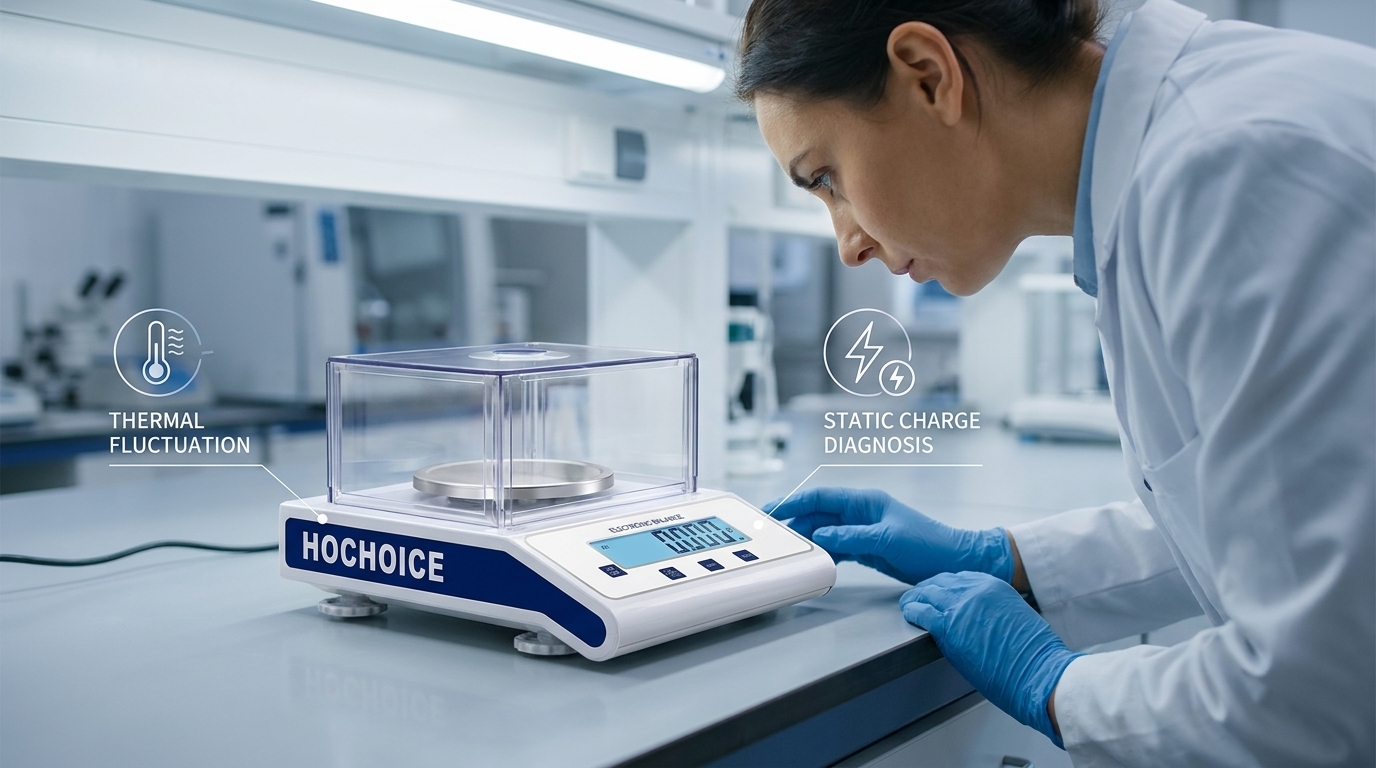
Insufficient warm-up timeThis is the single most overlooked cause of drift. Internal sensor components generate heat during operation and expand microscopically until reaching thermal equilibrium. Weighing before this point causes readings to drift continuously as temperature rises.Fix: Allow full warm-up before use: 15–30 minutes for precision balances, 30–60 minutes for 0.1mg analytical balances.
Room temperature fluctuationsRapid changes in room temperature, direct sunlight, or nearby heat sources cause the sensor to expand or contract, shifting the baseline steadily over time. Even ±2°C changes can create measurable drift on high-precision units.Fix: Keep the balance away from vents, windows and heaters. Maintain stable room temperature within ±1°C during critical weighing.
Static electricity buildupIn dry environments, electrostatic charge on samples, containers or the weighing pan creates subtle attraction or repulsion forces, causing readings to drift slowly upward or downward. This is especially common with powder samples and plastic vessels.Fix: Maintain 40–60% room humidity. Use anti-static containers and ground the balance properly.
Airflow and convection currentsAir currents from AC vents, fume hoods or open doors exert tiny forces on the weighing pan. Samples taken directly from fridges or ovens also create convection currents as they equalize temperature.Fix: Close all draft shield doors during weighing. Allow samples to reach room temperature before measurement.
Calibration drift over timeAll sensors drift naturally with use and time. If calibration is skipped for too long, the baseline gradually shifts and readings become progressively more inaccurate.Fix: Recalibrate on a scheduled basis with traceable certified weights. Adjust frequency based on usage intensity.
Mechanical obstruction or debrisSpilled sample, dust or debris trapped under the weighing pan can create subtle friction or added weight that shifts as the unit settles, appearing as slow drift.Fix: Remove and clean the weighing pan and chamber thoroughly. Check for damage or misalignment.
Work from simplest to most complex to minimize downtime:
Confirm full warm-up is complete
Close all draft shields and block drafts
Clean and reseat the weighing pan
Verify level adjustment
Perform zero reset and full calibration
Contact technical support if drift persists
Related Guide:How to Calibrate Electronic Balance Step-by-Step
Related Product:Hochoice Precision Balances with Temperature-Compensated Sensors
Get Support:Contact technical support for persistent drift issues
All Hochoice balances carry full international certifications and feature temperature-compensated sensor design, minimizing drift and delivering stable performance for daily lab and QC use.








