

A laboratory balance should provide suitable measurement performance across its intended weighing range. However, the position of a load on the weighing pan can influence the indication.
An eccentricity test, sometimes called a corner-load test, evaluates how the balance responds when the same test load is placed at different positions on the weighing pan.
It is useful when assessing balance performance during installation, routine verification, or troubleshooting.
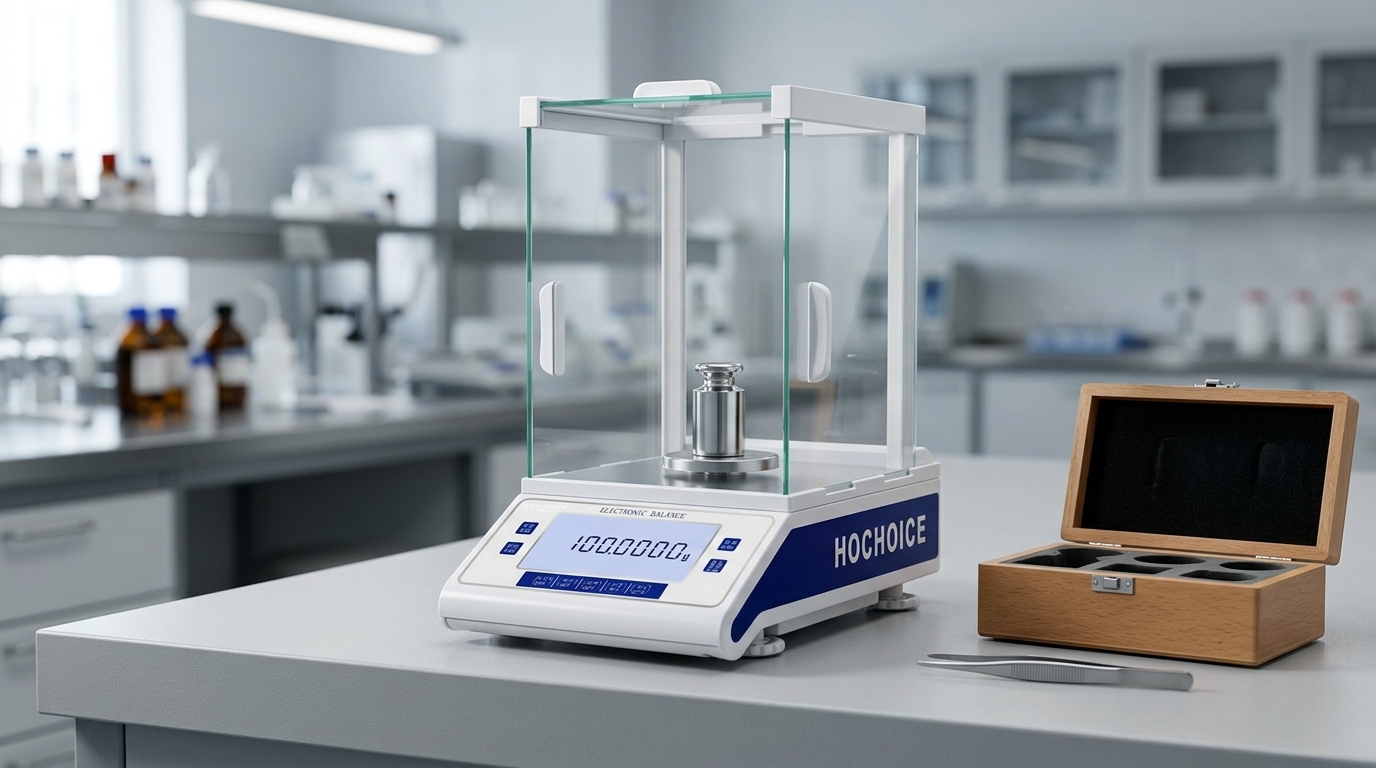
An eccentricity test compares the balance indications obtained when a test load is placed at specified positions on the weighing pan.
The test commonly includes a central position and several off-center positions. The exact number and location of test points should follow the applicable standard or laboratory procedure.
The objective is to identify whether the position of the load causes a meaningful change in the displayed result.
Prepare the following:
A suitable test weight with appropriate traceability and uncertainty
A clean, stable laboratory balance
A level, vibration-controlled installation
A documented test procedure and recording sheet
Select a test load that is suitable for the balance and the applicable procedure. Do not assume that one load or one set of positions is suitable for every model.
Place the balance on a stable surface and follow the manufacturer's operating instructions. Allow the instrument to reach the required operating condition.
Place the test weight at the center of the pan. Allow the indication to stabilize and record the result.
Place the same weight at each required off-center position. Avoid touching the pan or allowing the weight to contact the draft shield.
Record the displayed result for every position. If the procedure requires repeated measurements, complete the specified repetitions.
Calculate the difference between each position's indication and the reference reading, using the comparison method specified by your procedure.
The observed differences should be assessed against the applicable acceptance criteria—not against an arbitrary tolerance.
Potential causes include:
An uneven or unstable installation
Mechanical contact involving the pan or surrounding structure
Contamination or obstruction beneath the weighing pan
Instrument damage or a performance issue requiring technical inspection
Test conditions or procedures that are not consistent
First check the installation and follow the manufacturer's troubleshooting instructions before assuming that the balance needs repair.
There is no single frequency appropriate for every laboratory. The schedule should be based on the balance's use, measurement risk, applicable requirements, and the laboratory's quality system.
A laboratory may include eccentricity testing in installation checks, periodic performance verification, or investigations following an unexpected measurement result.
A useful record identifies the balance, test weight, test date, environmental or operating conditions where relevant, test positions, recorded indications, calculation method, acceptance criteria, and final result.
This documentation helps the laboratory compare performance over time and investigate changes.
Conclusion
An eccentricity test provides useful information about the effect of load position on a laboratory balance. A consistent procedure, suitable test weight, and clearly defined acceptance criteria are essential for interpreting the result correctly.








