

A halogen moisture analyzer measures moisture content by weighing a sample and heating it under controlled conditions. As the sample loses mass during heating, the instrument uses the change in mass to calculate the result according to its measurement method.
The instrument is only one part of the testing process. Sample preparation and consistent operating procedures are also important for obtaining useful, comparable results.
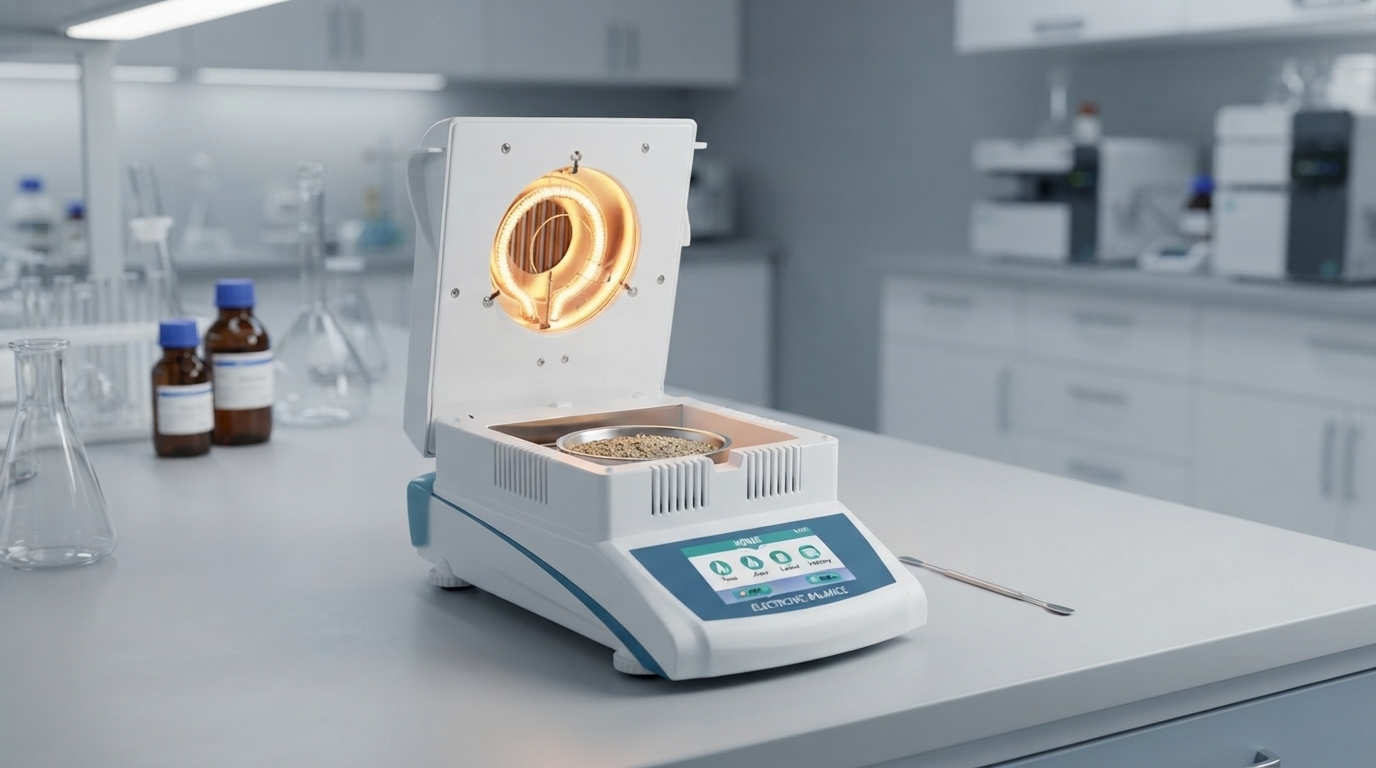
A sample should represent the material being tested.
Materials containing particles of different sizes, moisture levels, or compositions may produce inconsistent results if the test portion is not representative.
Where appropriate, homogenize the material using a validated preparation method. Avoid preparation methods that unintentionally remove moisture or change the sample's composition.
The correct sample quantity depends on the material, expected moisture content, instrument capacity, and approved test method.
Too little material may make the test more sensitive to handling and sample heterogeneity. Too much material may produce uneven heating or extend the drying process.
HOCHOICE offers halogen moisture analyzer models with different weighing capacities and readability options. For example, the product range listed on the company website includes 50 g and 100 g capacity versions. The suitable sample quantity must still be determined by the application and validated procedure.
Place the sample on the sample pan and distribute it in a consistent manner.
A thin, reasonably uniform layer often helps promote consistent heating, but the appropriate preparation depends on the sample type. Powders, granules, pastes, and other materials may require different handling methods.
Do not overload the pan or allow the sample to contact the heater or surrounding components.
Heating temperature and test duration can strongly influence the measured result.
A temperature that is too low may leave residual moisture, while excessive heating may cause decomposition or the loss of volatile substances other than water.
Choose the temperature and stopping criteria using a validated method appropriate to the material. Do not assume that one temperature setting is suitable for every sample.
Moisture-sensitive samples can gain or lose moisture while exposed to the surrounding environment.
To improve comparability:
Keep sample handling time consistent.
Use suitable containers and transfer procedures.
Follow the method's instructions for sample cooling and storage.
Clean the sample pan between tests.
Record the test temperature, duration, sample preparation, and relevant instrument settings.
A moisture analyzer's displayed result is based on mass change during the heating process. If a material loses other volatile components or undergoes thermal decomposition, the result may not represent water content alone.
For important quality-control applications, compare the method with an appropriate reference method and validate the conditions for the material being tested.
When sourcing a halogen moisture analyzer, consider:
Maximum sample capacity and weighing readability
Moisture display resolution and repeatability
Adjustable heating temperature and test modes
Pan dimensions and ease of cleaning
Data output and documentation needs
Technical support for method development and routine operation
The specifications should be evaluated against the intended sample and test procedure.
Conclusion
Reliable moisture testing begins with representative samples, consistent preparation, and suitable heating conditions. Selecting an appropriate halogen moisture analyzer is important, but a well-defined test method is equally essential.
HOCHOICE provides halogen moisture analyzers for laboratory testing and quality-control applications. Review the product specifications and discuss your sample type and testing requirements before choosing a model.








