

Choosing the right weighing equipment is one of the most underrated decisions in QC operations. The electronic weighing scale market offers everything from basic industrial bench scales to high-precision analytical balances, but many facilities select equipment based on price alone — and end up with poor repeatability, unnecessary downtime or compliance gaps.
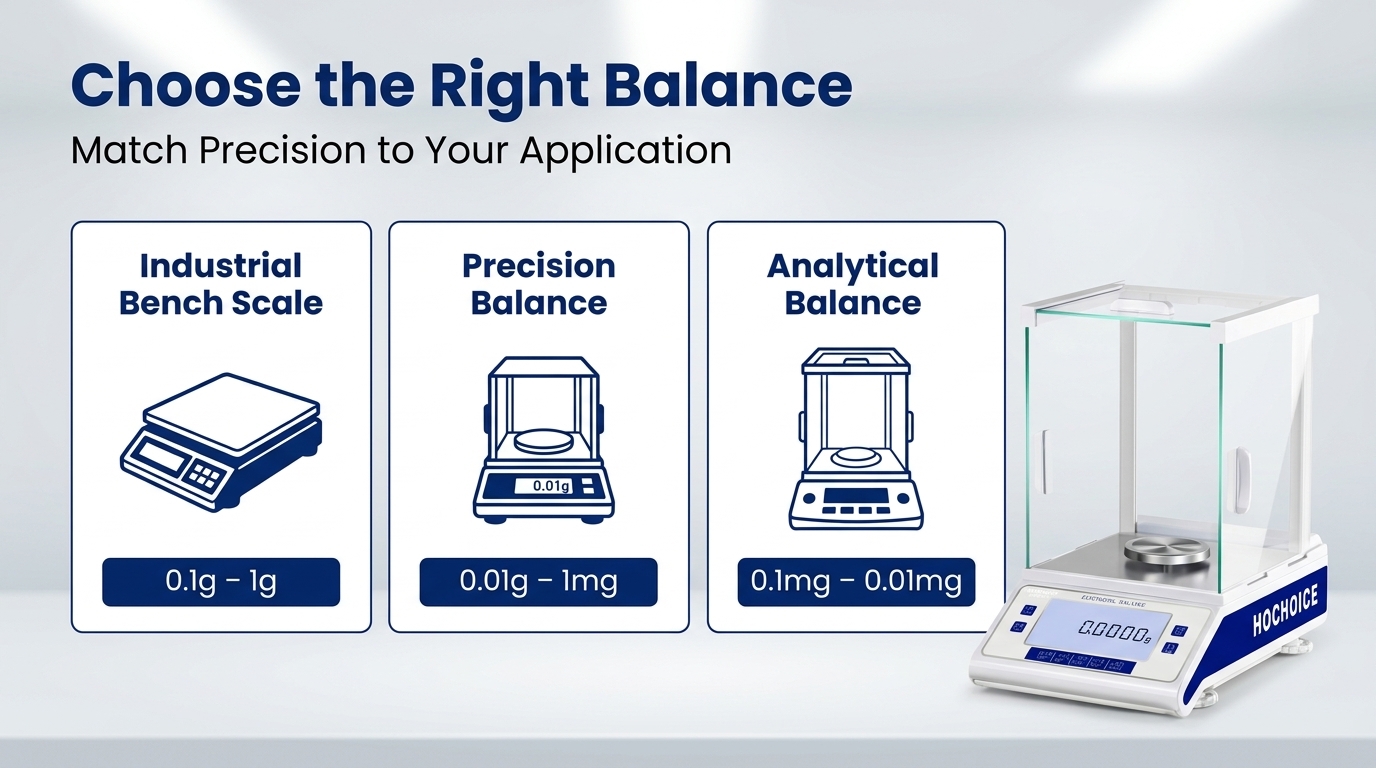
A better approach is to match the scale to your actual weighing task. Start by answering three questions:
What is my required readability?
What sample weight range do I normally test?
Do I need regulated documentation or traceable calibration?
Once you define those, you can narrow the choice more accurately than by browsing generic product lists.
| Precision Level | Typical Readability | Best For | Key Consideration |
|---|---|---|---|
| Industrial Bench Scale | 0.1g – 1g | Production checks, large samples, incoming goods | Durable build, simple operation |
| Precision Balance | 0.01g – 1mg | General QC, chemical testing, food testing | Stable calibration, easy cleaning |
| Analytical Balance | 0.1mg – 0.01mg | Pharma, analytical labs, low-moisture samples | Draft protection, stable environment |
For industrial use, prioritize robustness over ultra-high precision. Look for a durable housing, stable weighing pan, overload protection and easy-to-clean surfaces. A scale that is too precise for the task will often be more sensitive to vibration and airflow, causing unnecessary frustration.
These applications usually require a balance that is accurate, fast and easy to calibrate. Electronic weighing scale calibration should be straightforward, and the instrument should support regular traceable calibration without complex setup.
Regulated QC requires stronger emphasis on documentation, repeatability and calibration traceability. In these environments, calibration of electronic balance is not just a maintenance task — it is part of the quality system.
Readability: the smallest weight change the scale can display
Capacity: the maximum weight it can measure
Repeatability: how consistently it weighs the same sample
Calibration support: whether it supports external or internal calibration
Data management: whether results can be stored or exported for records
Build quality: overload protection, pan design, housing durability
In the Japan electronic weighing scale market, selection decisions tend to place heavy emphasis on long-term stability, after-sales support and consistent quality control. For this reason, many facilities prefer balances from manufacturers with strong service networks and clear calibration support.
If you are uncertain which scale to choose, start with your heaviest and lightest sample weights, then define your accuracy tolerance. From there, select the smallest precision level that still meets your requirement. This balances performance, cost and usability.
Hochoice offers a full range of precision balances and industrial weighing scales for different application requirements. Our equipment is backed by global quality certifications and calibration support, helping facilities operate with more consistent weighing results.
Related Guide:Balance Calibration: Complete Step-by-Step Procedure
Related Product:Hochoice Precision & Analytical Balances
Contact:Get a recommendation for your lab or industrial weighing application








