

Many cases of digital scale not reading weight correctly are not balance problems — they are sample handling problems. Different sample types introduce different errors: powders scatter, liquids evaporate, plastics build static charge. Using the right technique for each sample type eliminates most accuracy issues.
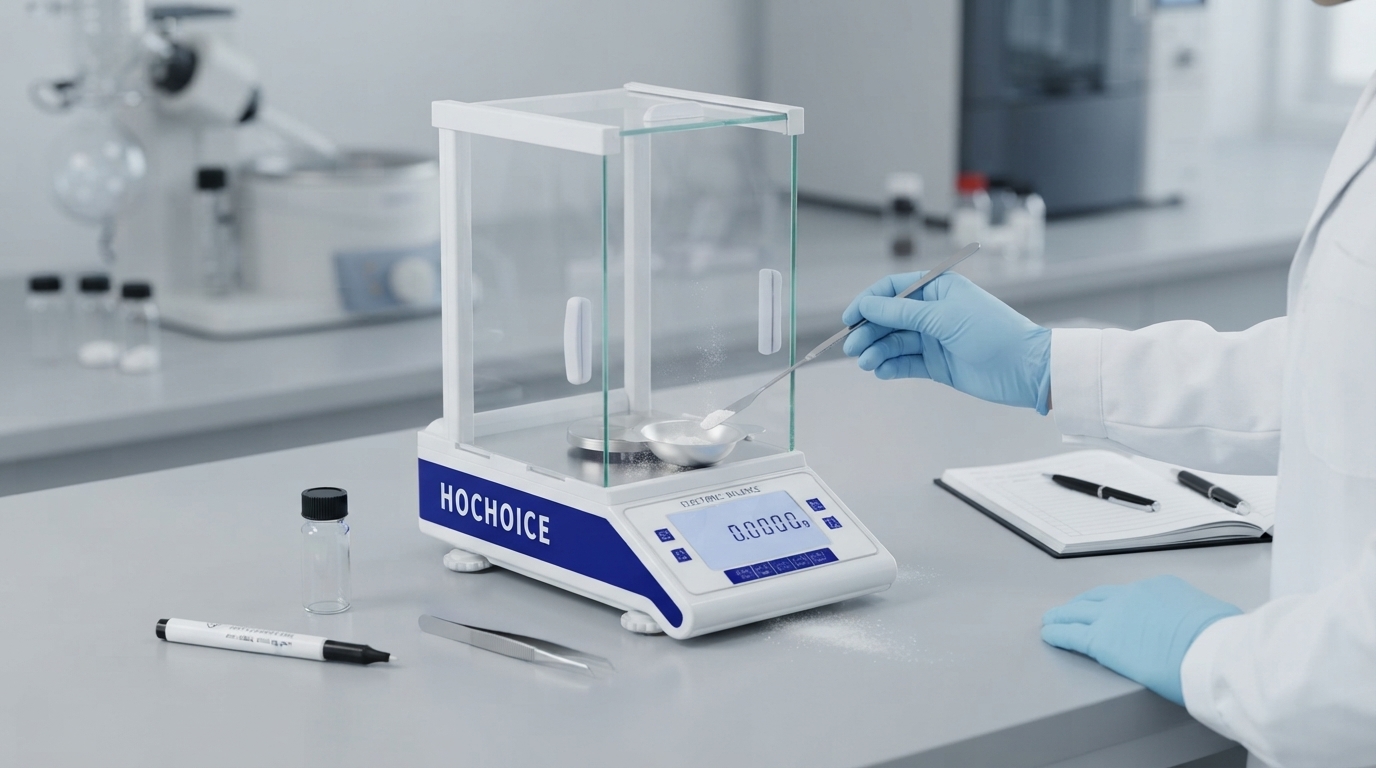
Powders are prone to scattering, static buildup and uneven distribution.
Use a weighing boat or weighing paper to contain the sample
Remove the boat from the balance to add powder, to avoid spilling inside the chamber
Spread powder thinly and evenly, not in a thick mound
Ground the container or use anti-static weighing boats for fine powders
Always use a spatula, never pour directly onto the pan
Liquids introduce evaporation, surface tension and spill risks.
Weigh in a sealed or covered container to prevent evaporation loss
Remove the container from the balance to add liquid
For small volumes, use a pipette for accurate transfer
Wipe any spills from the outside of the container before weighing
Never pour liquid directly onto the weighing pan — spills inside the housing cause permanent damage
Samples that evaporate or absorb moisture from air cause continuous drift.
Use sealed weighing bottles with caps
Work quickly to minimize exposure time
Use the difference method: weigh full bottle, remove portion, reweigh, calculate difference
Never leave these samples open on the balance pan
Plastic containers, fine powders and dry samples build electrostatic charge that pulls or pushes on the pan.
Maintain 40–60% room humidity
Use metal or anti-static containers
Ground the balance properly
Use an ionizer if static is a recurring issue
Large samples introduce eccentric load and shock risk.
Place gently at the exact center of the pan
Never drop or slide samples onto the pan
Ensure weight stays within rated capacity
Center the sample as evenly as possible to avoid side load error
Good sample handling technique often improves accuracy more than frequent recalibration. Even the best calibration of electronic balance cannot compensate for poor sample preparation.
Related Guide:Digital Scale Not Reading Weight? Complete Troubleshooting
Related Product:Hochoice Analytical & Precision Balances
Get Support:Operator training and standard procedure development
Hochoice balances are designed for reliable performance across a wide range of sample types, with draft protection, stable sensors and clear operation guides for consistent daily use.








