

Most precision balance failure and drift isn’t caused by major accidents. It builds up slowly, day after day, from small routine habits that seem harmless at the time. Over weeks and months, these habits degrade sensor performance, cause permanent drift, and lead to digital scale not reading weight correctly long before the expected service life.
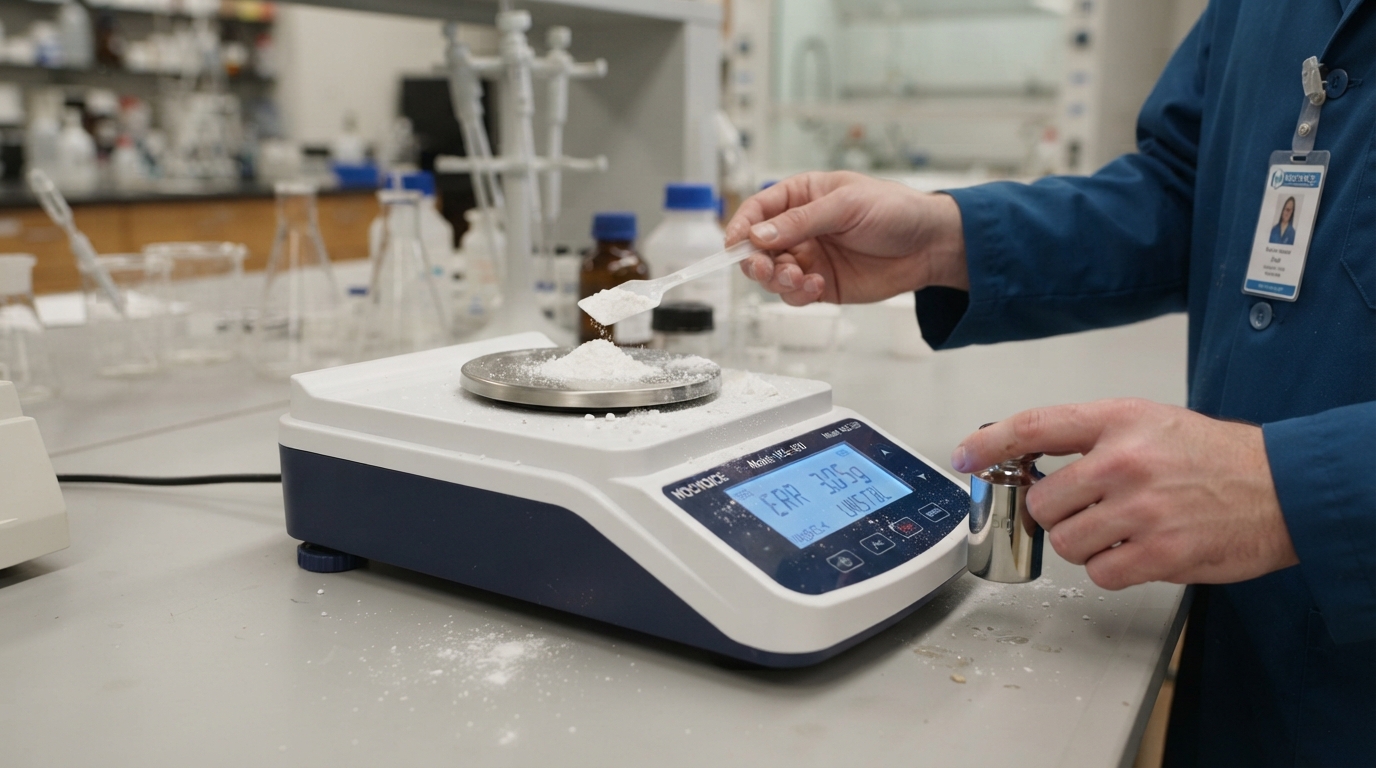
Many operators don’t connect these daily routines to long-term damage. But field service data shows that over 60% of premature balance failures can be traced back to repeated operational habits that are easily changed.
Repeated minor overloadsEven brief overloads that don’t trigger an error code still strain the load cell slightly. Repeated many times per day, this micro-strain adds up, causing permanent sensor drift and reduced accuracy over time. This is especially common in busy QC labs where operators quickly move samples on and off the pan.Fix: Check sample weight before placing. Never use the balance to estimate if a sample is within range.
Leaving samples on the pan between weighingsLeaving weight on the sensor for extended periods causes gradual mechanical creep. The load cell stays under constant stress, and over time it develops a permanent offset that balance calibration cannot fully correct.Fix: Remove samples immediately after weighing. Never use the weighing pan as temporary storage.
Skipping pan cleaningSample residue, dust and spills build up invisibly under the pan and around the sensor mechanism. They add ghost weight, cause friction, and attract moisture that corrodes internal components.Fix: Wipe the pan with a lint-free cloth after every use. Clean the weighing chamber weekly. Remove and clean under the pan monthly.
Weighing hot or cold samples directlySamples taken directly from ovens, fridges or freezers create convection currents inside the weighing chamber. The moving air exerts force on the pan, but more importantly, extreme temperatures slowly damage the sensor element over repeated exposures.Fix: Always allow samples to reach room temperature before weighing.
Bare hand contact with pans and weightsFingerprints transfer skin oils, moisture and salts. These add invisible weight in the short term and cause corrosion and surface degradation over months and years. Calibration weights with contaminated surfaces lose accuracy permanently.Fix: Always use tweezers or gloves. Never touch weighing pans or calibration weights with bare hands.
Slamming or dropping samplesEven samples within capacity create shock force when dropped onto the pan. This shock damages the load cell and suspension mechanism, gradually introducing play and hysteresis into the system.Fix: Place samples gently onto the center of the pan. Never slide or drop items.
Ignoring environmental factorsConstant vibration from nearby machinery, direct sunlight, temperature swings and drafts don’t just cause temporary reading fluctuation. Over long periods, they accelerate sensor wear and mechanical fatigue.Fix: Place the balance in a dedicated low-traffic, stable location. Keep away from vents, windows and heavy equipment.
Precision balances are designed for sensitivity. That same sensitivity that makes them accurate also makes them vulnerable to repeated small stresses. Changing these seven habits can extend service life significantly, reduce calibration drift, and avoid unexpected failures.
Related Guide:Balance Calibration Done But Still Inaccurate? 6 Hidden Causes
Related Product:Hochoice Precision Balances with Overload Protection
Get Support:Professional service and sensor inspection for damaged balances
All Hochoice balances are built with durable sensor design and overload protection, but proper daily operation remains the biggest factor in long-term accuracy and service life.








