

The electronic weighing scale market offers hundreds of models across every price and precision point, but headline specs like readability and capacity tell you very little about real-world performance. Many facilities select equipment based on displayed precision alone, then experience unstable readings, frequent digital balance calibration drift and short service life.
The difference between reliable long-term performance and ongoing issues lies in core technical design standards. Understanding these standards allows you to select equipment that matches your application, maintains accuracy and holds calibration reliably.
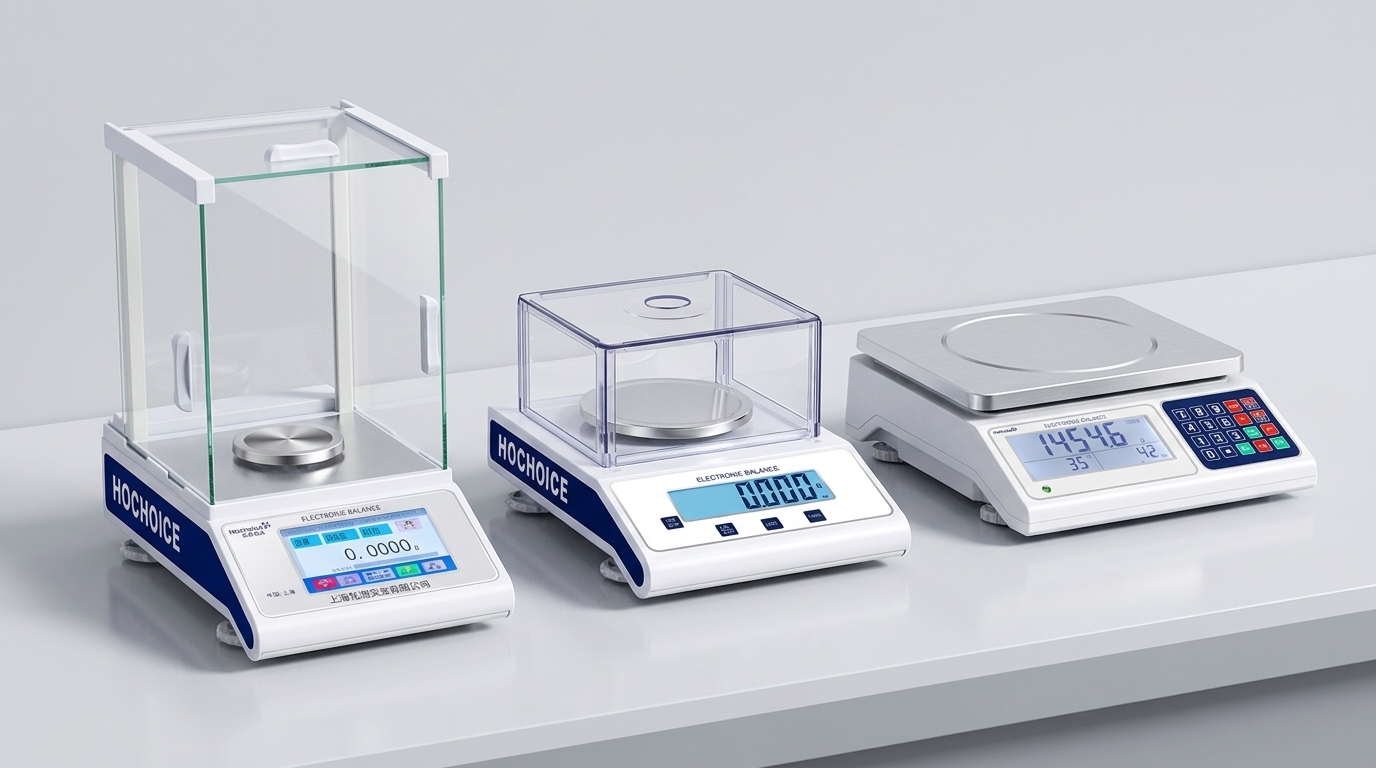
Beyond basic display readability, three technical indicators determine actual weighing performance:
RepeatabilityThe consistency of repeated measurements of the same load under identical conditions. Good repeatability ensures consistent results for batch testing and repeated sampling. Poor repeatability is the most common symptom of low-quality sensor design, and it cannot be fixed by balance calibration alone.
Linearity accuracyHow accurately the scale performs across its full weighing range. Many instruments perform well at mid-range but develop significant error at low or full capacity. High-quality balances maintain consistent error limits across the entire range.
Eccentric load performanceHow consistent readings are when weight is placed at different positions on the pan. Poor eccentric load performance is a major hidden cause of inconsistent results, even after complete calibration of electronic balance.
Laboratory and industrial environments present varying challenges. Good design maintains performance despite real-world conditions:
Temperature compensation: Sensor design that automatically offsets micro-deviations caused by ambient temperature changes, reducing drift.
Vibration and draft resistance: Built-in shock absorption and optimized wind shielding to resist bench vibration and air flow interference.
Static resistance: Anti-static design and grounding to prevent electrostatic forces from affecting readings with powder or plastic samples.
Digital balance calibration stability depends heavily on system design:
Dual calibration support: both internal automatic calibration and external weight calibration
Zero point stability: robust zero locking to prevent drift between calibrations
Traceability support: standardized records and data for compliance audit trails
Long-term reliability depends on build quality:
Overload protection: built-in sensor protection to prevent damage from accidental overloading
Sealed sensor design: isolation from dust, moisture and sample residue
Rigid construction: minimal mechanical play and wear over time
Industrial production QC: prioritize vibration resistance, dust protection and linear stability
Food and chemical testing: focus on temperature/humidity adaptation and repeatability
Pharmaceutical and analytical labs: require strict linearity, eccentric load performance and calibration traceability
Success in the electronic weighing scale market means selecting based on technical performance match, not just headline numbers. Evaluating repeatability, linearity, environmental adaptability and calibration design ensures you get equipment that delivers stable, reliable results long-term.
Hochoice balances are engineered to meet strict technical standards across all performance categories, with factory-verified specifications and reliable digital balance calibration stability for diverse laboratory and industrial applications.
Related Guide:Balance Calibration: Complete Step-by-Step Procedure
Related Product:Hochoice Full Range of Precision & Analytical Balances
Contact:Technical consultation and application matching support








