

It' s extremely common for a digital scale not reading weight accurately after being moved, even just a few feet across the lab. Many operators immediately assume sensor damage and schedule a service call, but field data shows over 70% of post-relocation accuracy issues stem from installation and environmental factors — not hardware failure — and most can be resolved with a standard balance calibration routine.
Precision balances are engineered to detect microgram-level forces, so even subtle changes in position, support surface or environment register as measurement error. Understanding these causes helps you troubleshoot quickly and avoid unnecessary downtime.
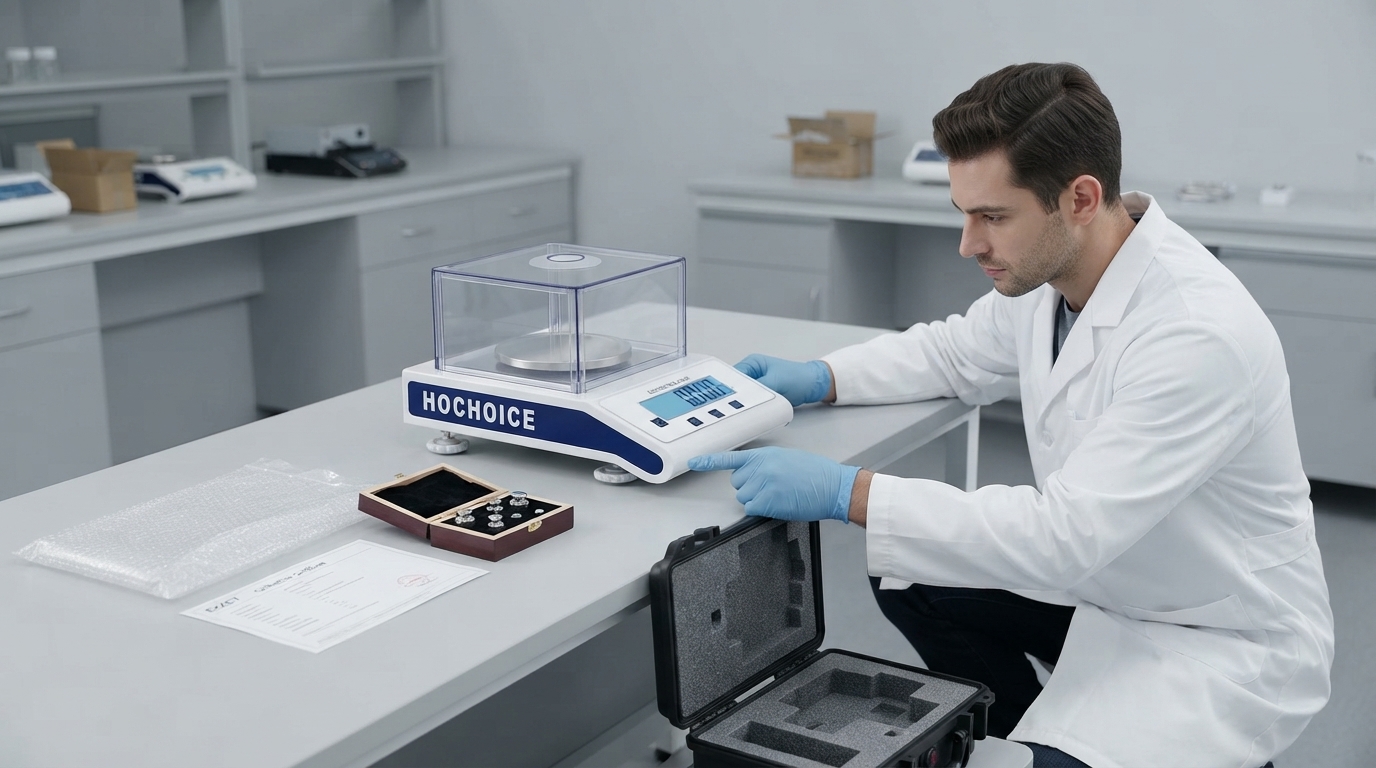
Lost leveling alignmentThis is the single most common cause of post-move inaccuracy. Even a 1° tilt introduces systematic offset error, because the load cell is designed to measure vertical force only. Tilt shifts the force vector, so part of the weight resolves sideways instead of straight down.Fix: Re-level the balance completely using the adjustable feet. Verify after every relocation, no matter how small the move.
Transport shock and vibrationEven careful moving subjects the sensor and suspension mechanism to shock and micro-vibration. This can temporarily shift the mechanical zero point and cause drift that persists until the system settles and recalibrates.Fix: Allow the balance to settle mechanically for 2–4 hours after moving. Then perform a full power reset and calibration.
Environmental temperature and humidity changeMoving between rooms, floors or buildings exposes the balance to different ambient conditions. Temperature changes cause microscopic thermal expansion in the sensor, shifting the baseline. Humidity changes affect static charge performance.Fix: Allow the balance to acclimate to the new environment for at least 4 hours, preferably overnight for analytical grades.
New location interference sourcesThe new position may have unseen vibration from nearby machinery, air drafts from vents, or direct sunlight. These factors cause fluctuation and drift that is often mistaken for calibration failure.Fix: Survey the new location before placement. Keep away from HVAC vents, windows, centrifuges and heavy equipment.
Disrupted thermal equilibriumMoving disturbs the internal operating temperature of the balance. The sensor was calibrated at a specific operating temperature, and relocation resets that equilibrium.Fix: Run full normal warm-up time before any calibration or weighing. 30–60 minutes for precision balances, 60–120 minutes for analytical models.
Left-over shipping protection materialsIf the balance was packed for transport, residual protective foam, film or tape can remain trapped under the pan or around the suspension, adding invisible weight and causing friction.Fix: Fully disassemble and inspect the weighing chamber, pan and suspension. Remove all packing materials before reassembly.
Work from simplest to most complex to minimize downtime:
Inspect and remove all packing materials
Re-level the balance completely
Allow full mechanical settling and thermal acclimation
Follow correct procedure for how to reset digital scale to zero
Perform full balance calibration with certified weights
Run multi-point verification
Contact service if issues persist
Related Guide:Calibration of Electronic Balance: Complete Step-by-Step Procedure
Related Product:Hochoice Precision Balances with Shock-Resistant Sensor Design
Get Support:Professional post-relocation calibration and validation service
Most post-move weighing issues are easy to resolve. Systematic troubleshooting and proper calibration restore accuracy quickly without service calls.








