

The global electronic weighing scale market is seeing increased demand driven by laboratory expansion, facility relocation and regulatory tightening across pharmaceutical, food safety and industrial QC sectors. For organizations moving laboratories, weighing equipment compliance is often one of the highest-risk elements of the relocation project.
Improper handling of calibration and validation during relocation can result in audit failures, product holds, regulatory penalties and weeks of QC downtime. Yet 62% of laboratories underestimate the compliance requirements for moving calibrated equipment, according to 2026 industry compliance data.
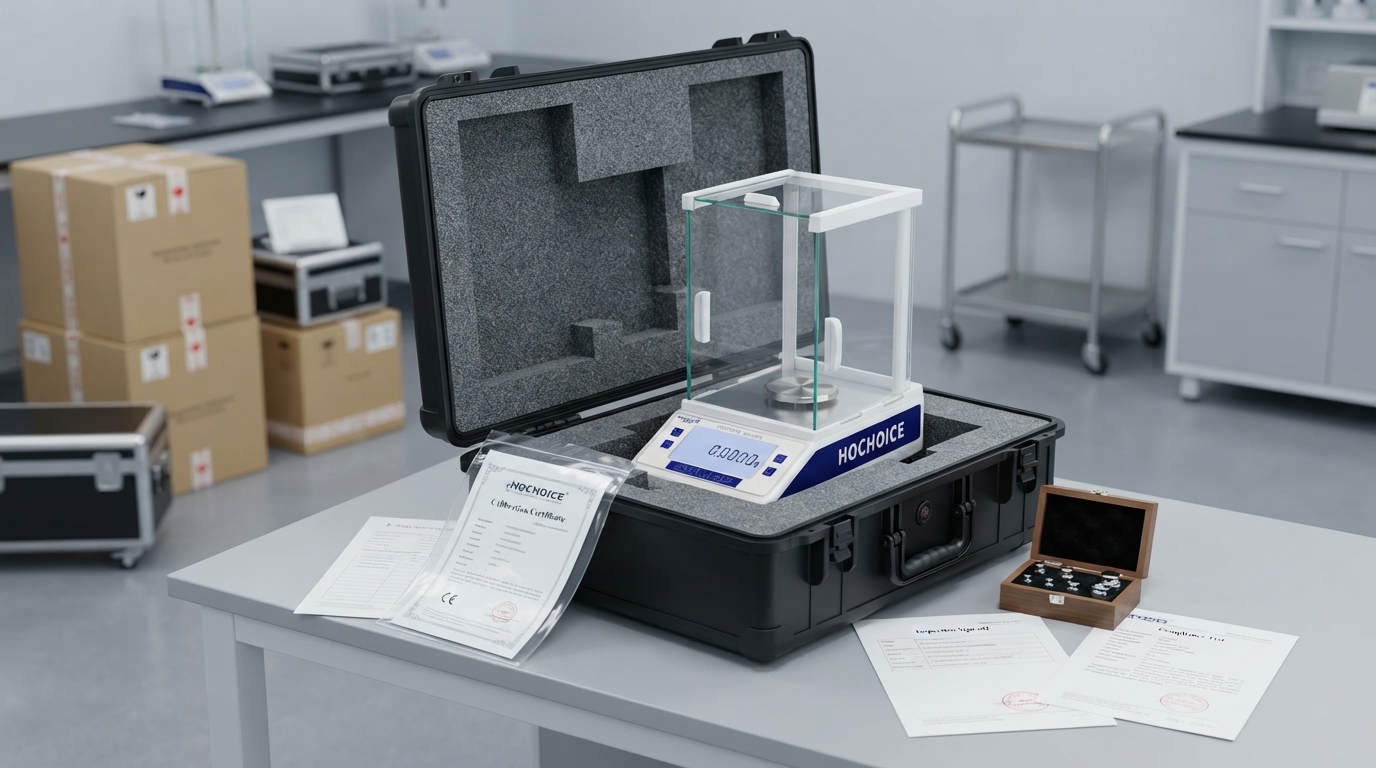
Successful relocation compliance starts before any equipment is moved:
Equipment inventory and status assessmentDocument every balance with: asset ID, serial number, model, current calibration status, calibration due date, and accuracy specification. Classify by criticality: mission-critical QC balances, general testing balances, industrial bench scales.
Calibration timing strategyFor balances due for calibration within 60 days of the move, perform full calibration shortly before relocation. This provides a fresh baseline for post-move comparison and maximizes remaining validity.
Documentation transfer packetAssemble a complete compliance packet for each instrument before moving:
Current calibration certificate with traceable reference
Full calibration history
Measurement uncertainty budgets
Previous maintenance and service records
Environmental operating specifications This maintains the traceability chain across the relocation.
Transport protection planningUse appropriate packaging, cushioning and upright transport for precision balances. Shock and vibration during transport cause invisible sensor drift that can persist for weeks.
After installation at the new facility, complete these steps to maintain compliance:
Mechanical and environmental acclimationAllow settling and acclimation time before any calibration or validation. Rushing this step produces calibration that does not hold.
Full acceptance calibration and verificationPerform complete calibration of electronic weighing balance following standardized procedure. Include multi-point verification, eccentric load test and zero return confirmation. For regulated facilities, this calibration must be performed by qualified personnel using traceable certified weights.
Documentation updateUpdate all calibration records, equipment logs and quality system documentation. Record the relocation event, post-move calibration results and new location details.
Scheduled follow-up verificationSchedule a follow-up verification 2–4 weeks after relocation to confirm calibration stability. Transport-induced mechanical drift can appear gradually over the first weeks in the new location.
The japan electronic weighing scale market has particularly strict expectations for relocation compliance. Facilities in the region prioritize:
Manufacturer-supervised relocation and calibration
Complete unbroken traceability documentation
Pre- and post-move verification by accredited metrology services
Extended stabilization and verification periods This emphasis on compliance and thoroughness is increasingly becoming a global benchmark as regulatory standards converge.
❌ Assuming calibration transfers with the balance — it does not
❌ Skipping acclimation time and calibrating immediately
❌ Only doing a quick single-point check instead of full verification
❌ Failing to update quality system documentation
❌ Not scheduling follow-up verification
Related Guide:Calibration of Electronic Balance After Relocation: Complete Acceptance Procedure
Related Product:Hochoice Compliant Precision Balances with Traceable Calibration
Contact:Relocation compliance consultation and calibration service planning
Proper planning and execution of weighing equipment relocation maintains compliance, preserves data integrity and minimizes QC downtime across the electronic weighing scale market.








