

The electronic weighing scale market offers a huge range of bench scales for industrial use, but not all models are built for production floor environments. Many laboratory-style scales fail quickly in industrial conditions due to vibration, dust, temperature variation and heavy use.
Selecting the right industrial bench scale means balancing precision, durability, throughput and ease of use. The best choice for a QC lab is rarely the best choice for a production floor. Understanding industrial-specific requirements ensures you get equipment that delivers reliable performance and long service life in tough conditions.
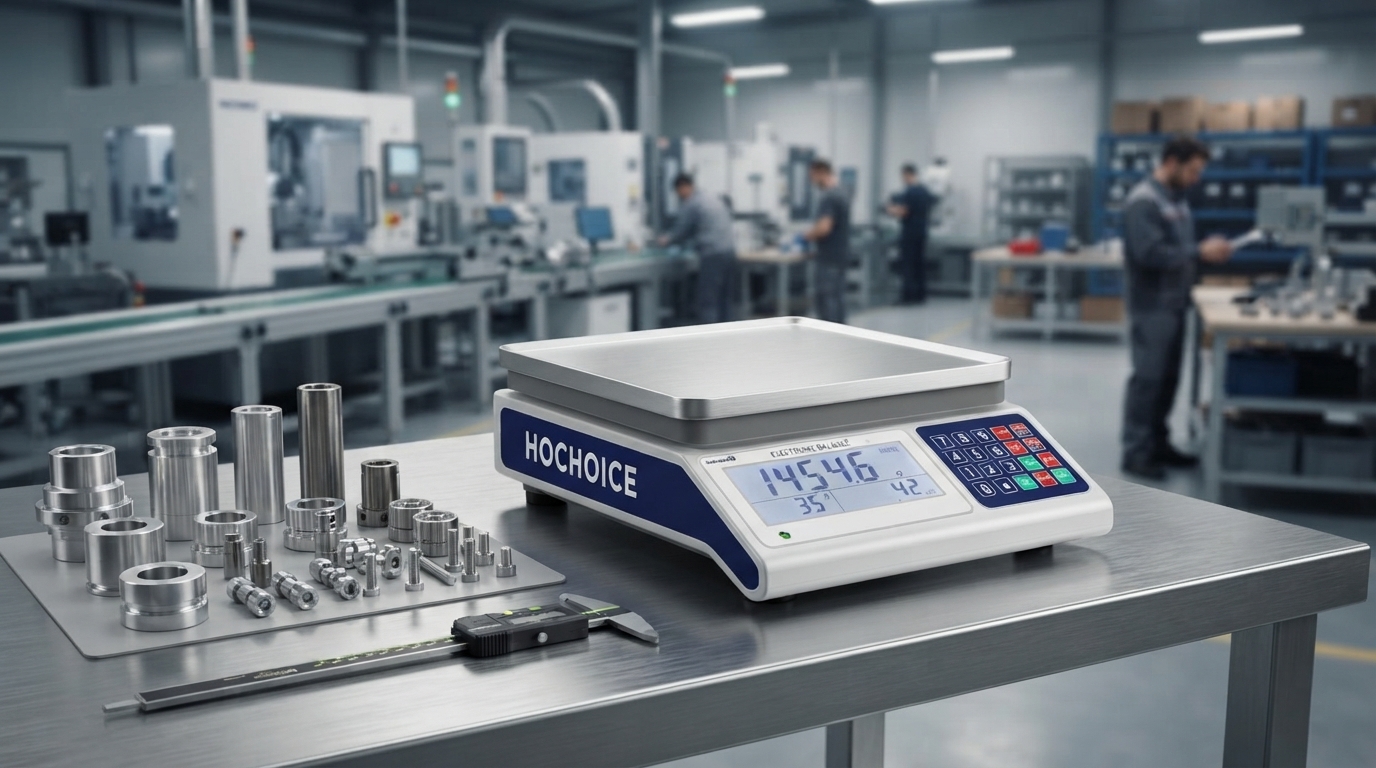
Unlike laboratory balances, industrial production scales must prioritize durability and throughput alongside accuracy.
Build quality and protection
Overload protection: essential for industrial environments where accidental overload is common. Good scales provide 200–500% overload protection.
Sealed housing: IP54 or better protection against dust, moisture and spills. Production floors have far more contaminants than clean labs.
Rugged construction: heavy-duty base, metal housing, reinforced pan support.
Weighing performance for industrial use
Typical readability: 0.1g to 1g for most production QC. Higher precision than necessary increases cost and environmental sensitivity.
Fast response time: critical for high-throughput incoming inspection and batch checks. Industrial operators cannot wait long for stabilization.
High capacity: match maximum sample and container weight, with sufficient headroom to avoid overloads.
Environmental resistance
Vibration resistance: built-in shock absorption and filtering for production floor vibration
Wide operating temperature range: stable performance across typical factory temperature variations
Draft and air flow tolerance: industrial environments often have significant air movement
Calibration and complianceIndustrial scales still require reliable electronic weighing scale calibration for QC purposes:
Simple one-button calibration for routine adjustment
Support for external calibration with certified weights
Calibration lockout to prevent unauthorized adjustment
Data output for QC record keeping
Operational features
Large, easy-to-read display for viewing from a distance
Simple, intuitive operation for production staff
Counting function for parts and piece counting
Unit conversion for different materials and standards
Incoming goods inspection: prioritize capacity, speed and durability
Production line QC: balance accuracy, speed and calibration traceability
Warehouse and shipping: focus on capacity, durability and battery option
Chemical and food production: require washdown design and food-safe materials
Mature markets like the japan electronic weighing scale market place particularly high emphasis on long-term durability, consistent calibration stability and manufacturer support in industrial environments.
❌ Buying the highest precision available — it will be overly sensitive to industrial conditions
❌ Choosing based only on price — cheaper industrial scales fail much sooner
❌ Ignoring overload protection — it is the #1 factor in service life
❌ Skipping calibration capability — all QC scales need verifiable calibration
Related Guide:Electronic Weighing Scale Market: Core Technical Standards for Selection
Related Product:Hochoice Industrial Bench Scales for Production QC
Contact:Industrial application consultation and scale recommendation
Selecting industrial bench scales based on actual production environment requirements delivers better long-term performance, lower downtime and lower total cost than selecting based on headline specs alone.








