

Frequent balance calibration isn’t a sign of a well-run lab — it’s often a sign of poor routine maintenance. Balances that are properly cared for hold calibration significantly longer, experience fewer drift issues, and deliver years longer service life.
Many operators treat calibration of electronic balance as the primary maintenance task, but daily and weekly upkeep does far more to preserve accuracy and prevent digital scale not reading weight issues long-term. Field data shows that a structured maintenance routine reduces calibration needs by 30–50% in most lab environments.
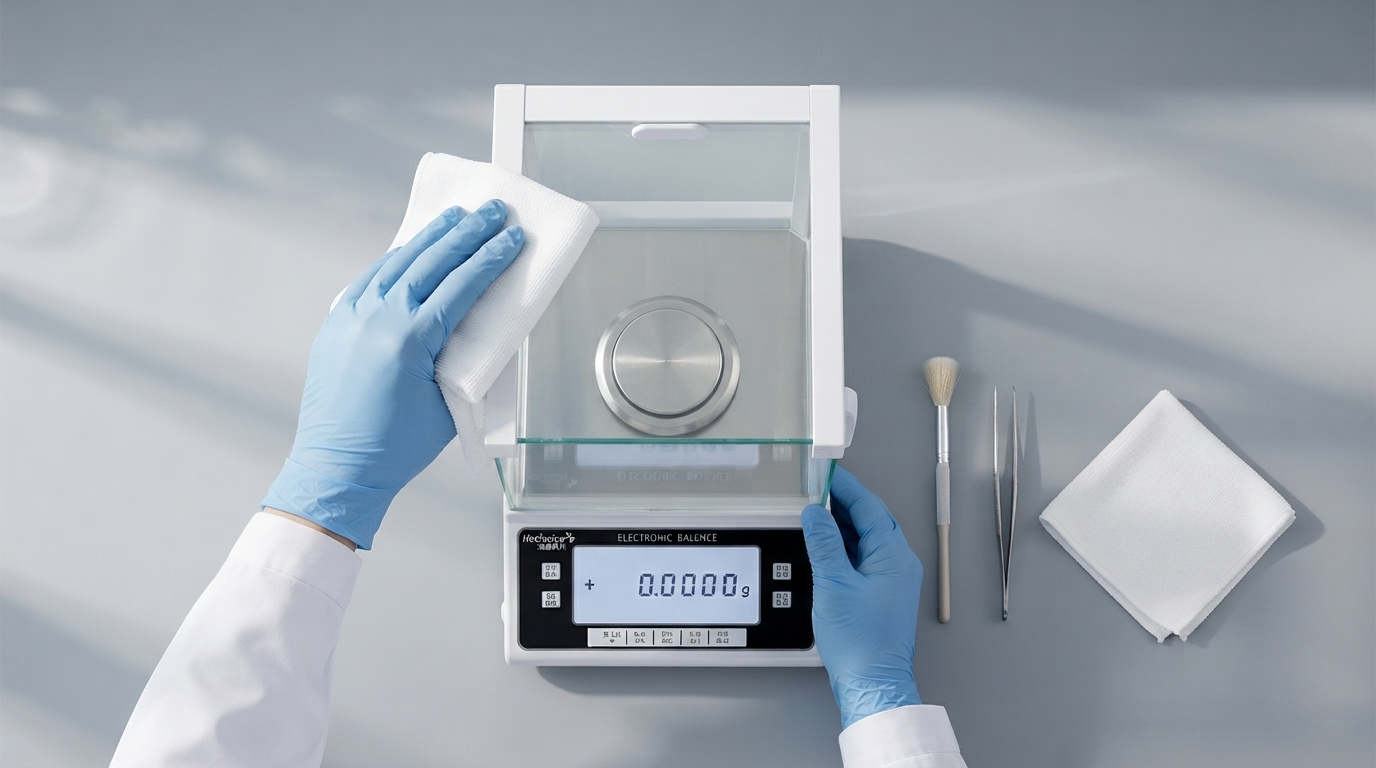
Visual inspectionCheck the weighing pan and chamber for spills, dust or debris. Remove any visible contamination.
Stability checkEnsure the balance sits firmly on the bench. Confirm no cables or objects touch the pan or housing.
Standard zero resetWith an empty clean pan and closed draft shields, wait for full display stabilization. Follow standard procedure for how to reset digital scale to zero: press once, wait for confirmation.
Quick performance checkPlace a known reference weight briefly to confirm readings fall within expected range.
Deep cleanRemove the weighing pan, pan support and draft shields. Clean all surfaces with a lint-free cloth. Wipe inside the weighing chamber carefully to remove dust and fine residue.
Hardware checkInspect pans for dents, scratches or deformation. Check draft shields for cracks or poor fit. Replace worn or damaged parts promptly.
Single-point verificationVerify accuracy with a certified reference weight. Record results to track drift trends over time.
Exterior careWipe the housing, display and keypad. Clean around leveling feet and the base.
Multi-point linearity checkTest accuracy at low, mid and high range weights. Verify linearity across the full weighing range.
Mechanical inspectionCheck leveling feet, suspension and pan support for play or wear. Adjust or tighten as needed.
Environmental assessmentCheck for new sources of vibration, drafts or temperature fluctuation near the balance. Relocate if necessary.
Performance record reviewReview calibration and verification records. Identify developing drift trends early before they become failures.
Extends service life by 30–40%
Reduces calibration frequency and cost
Minimizes unexpected downtime
Maintains consistent weighing accuracy
Prevents small issues from becoming permanent damage
Related Guide:How Often Should You Calibrate a Laboratory Balance?
Related Product:Hochoice Sealed-Sensor Precision Balances for Long Service Life
Get Service:Scheduled maintenance plans for laboratories and production facilities
A consistent maintenance routine keeps your balance performing reliably for years, minimizes downtime, and ensures balance calibration remains effective for longer between adjustments.








