

In the electronic weighing scale market, buyers almost always lead with two questions: what’s the capacity, and what’s the readability. But headline precision numbers tell you very little about how a balance will perform in real daily use. Many balances with impressive displayed precision deliver poor repeatability, fast calibration drift and short service life.
The difference between a reliable daily workhorse and a finicky instrument that needs constant adjustment lies in overlooked technical specifications. Understanding these specs helps you select a balance that holds digital balance calibration longer, delivers consistent results, and works reliably in your actual environment.
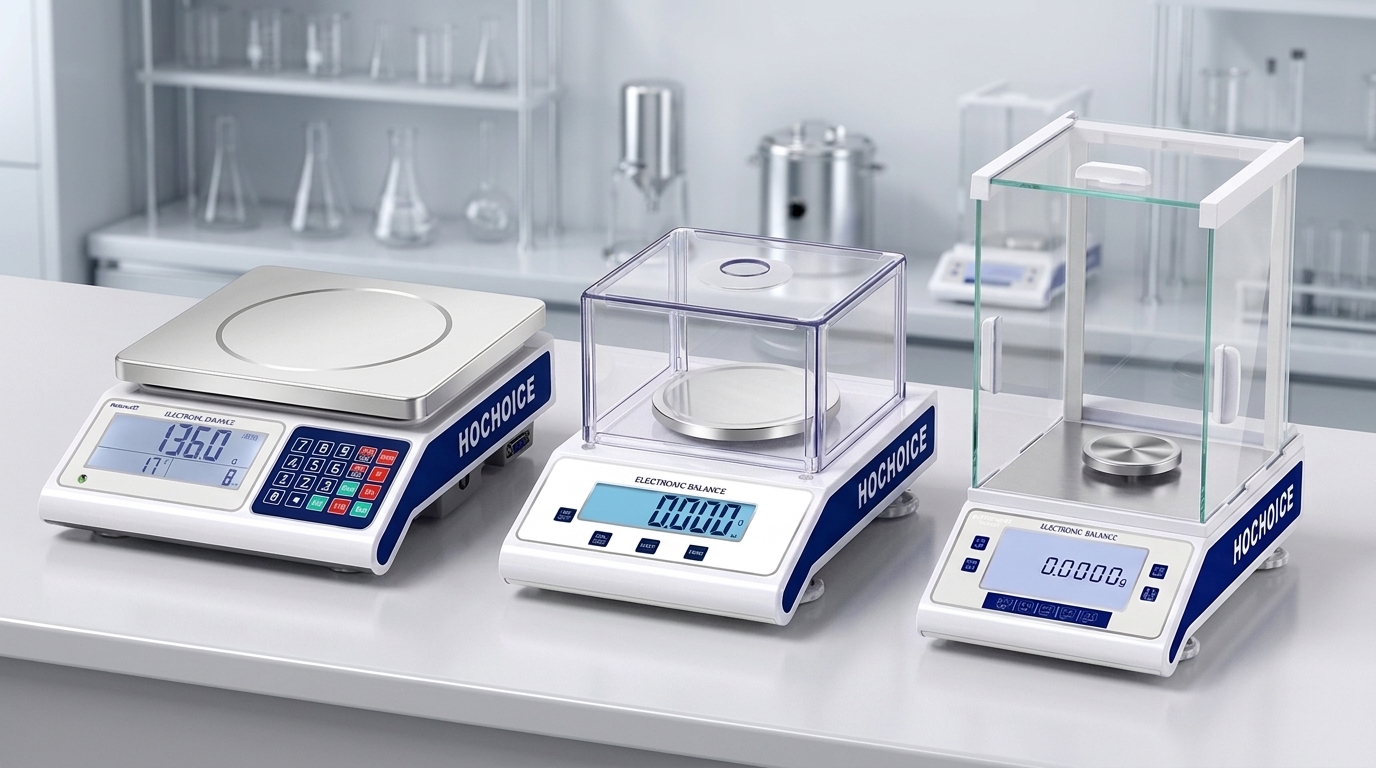
Repeatability, not just readabilityReadability is the smallest digit on the display. Repeatability is how consistently the scale weighs the same sample over multiple trials. A scale can show 0.001g on the display but deliver much worse actual consistency.What to look for: repeatability specification within one display division. This is the spec that matters for daily testing consistency.
Linearity accuracy across full rangeMany balances perform well at mid-range but develop significant error at low or full capacity. Poor linearity means your calibration only holds near the calibration point, not across the full weighing range.What to look for: linearity error specified across the entire capacity, not just at a single test point.
Environmental interference resistanceLaboratory and industrial environments have vibration, drafts, temperature swings and static charge. A balance that performs perfectly in a controlled showroom may drift constantly in your actual workspace.What to look for: temperature compensation, vibration damping, draft shielding and anti-static design matched to your environment.
Sensor technology and build quality
Strain gauge sensors: durable, cost-effective, suitable for industrial bench scales
Electromagnetic force restoration (EMFR): higher accuracy, better stability, required for precision and analytical balances Many budget scales advertise high readability but use cheaper sensor technology that cannot deliver matching real accuracy or stable balance calibration.What to look for: sensor type clearly stated, overload protection rating, sealed sensor design.
Calibration system designGood calibration design makes routine adjustment simple and reliable. Poor design means calibration never holds well or drifts quickly.What to look for: dual support for both internal quick calibration and external weight calibration, stable zero point design, clear calibration prompts.
Instead of chasing the highest displayed precision:
Define your actual required accuracy and capacity
Compare repeatability and linearity specifications
Match environmental resistance to your workspace
Evaluate sensor technology and build quality
Assess calibration system design and usability
Related Guide:Industrial Bench Scale Selection Guide for Production QC
Related Product:Hochoice Full Range of Precision & Analytical Balances
Contact:Technical consultation and application matching support
Selecting based on these real performance specifications delivers better long-term reliability, fewer calibration issues and lower total operational cost across the electronic weighing scale market.








