

Most users equate unstable weighing data with calibration failure and repeatedly perform calibration of electronic balance. However, repeated practice proves that most digital scale repeatability error problems have nothing to do with calibration accuracy. They stem from hidden mechanical fatigue and environmental interference that calibration cannot eliminate.
Calibration only corrects fixed systematic errors of the scale. Random repeatability fluctuations are caused by unstable external conditions and mechanical micro-changes, which is why many users still get inconsistent data immediately after accurate digital balance calibration.
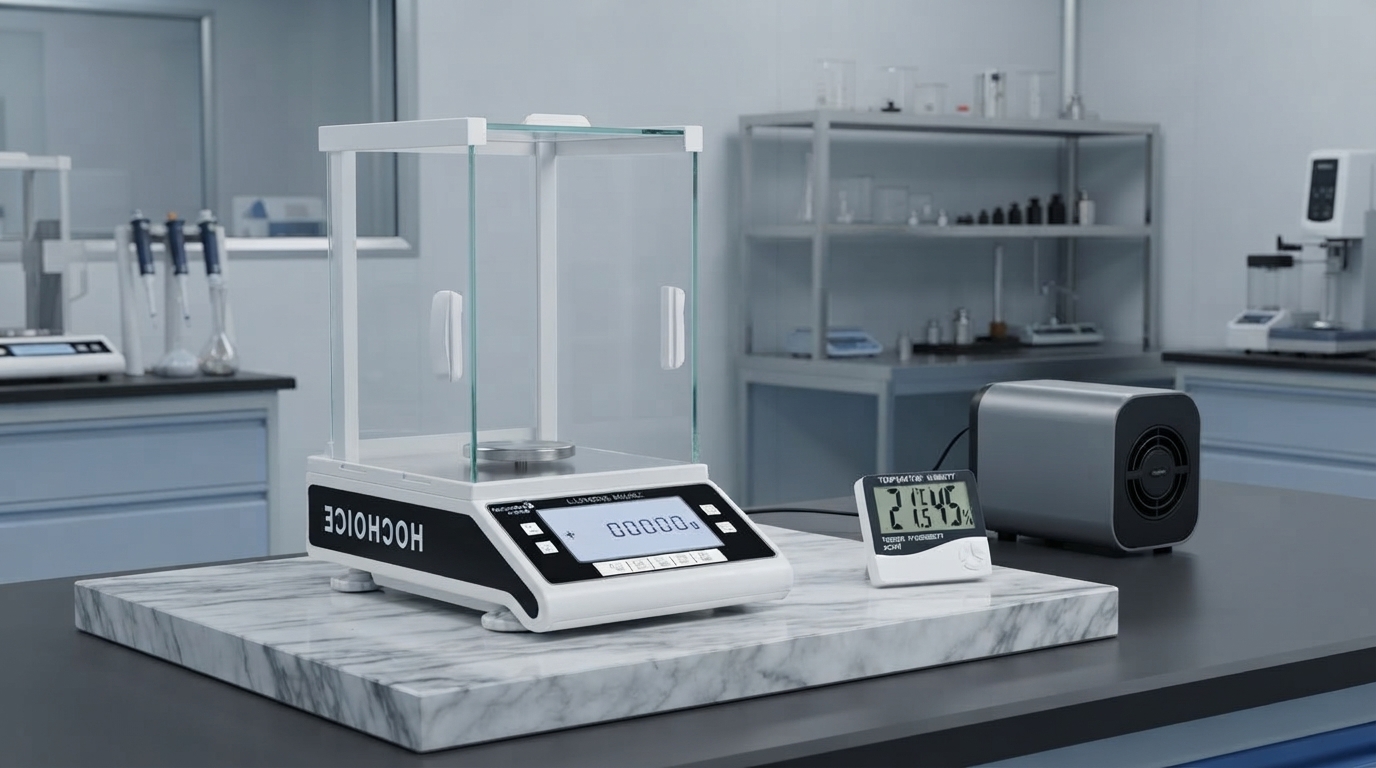
Long-term use, accidental minor collisions or frequent overloads cause tiny wear and looseness on the balance’s suspension structure, pan support and internal sensor components. These subtle mechanical changes do not affect single weighing accuracy but lead to inconsistent stress feedback during multiple tests, resulting in poor repeatability. Severe structural looseness will also cause eccentric load errors, making readings vary with sample placement positions.
When lab humidity drops below 40%, plastic weighing boats, glass containers and fine powder samples easily accumulate static charges. The electrostatic attraction and repulsion between the container and weighing chamber generates random invisible force interference. This force changes dynamically during each weighing, causing irregular reading fluctuations that cannot be solved by balance calibration.
Samples with temperature differences from room temperature produce continuous convection airflow around the container. Warm samples generate upward airflow (showing lighter weight), while cold samples produce downward airflow (showing heavier weight). The unstable convection state in each test leads to inconsistent repeatability.
Micro-vibrations from walking traffic, nearby pumps and centrifuges cause tiny pan shaking during weighing. Unstable placement of the balance base also leads to inconsistent horizontal stress. These random vibrations create discrete errors in multiple test data.
Volatile samples lose mass slowly while hygroscopic samples absorb ambient moisture. The continuous mass change during each weighing process makes it impossible to obtain consistent repeated data, which is often misjudged as digital scale not reading weight accurately.
Practical Solution Logic: Solve environmental and mechanical interference first, then perform electronic balance weight calibration. Only by eliminating random external factors can calibration maintain long-term stable repeatability.








