

A precision balance is often used for routine laboratory weighing where stable and repeatable measurements are important. However, even a high-quality precision electronic balance can develop unstable readings or weighing errors when it is not properly maintained.
Preventive maintenance is therefore not simply a service activity. It is part of a laboratory's overall weighing quality-control process.
A well-maintained precision balance can help reduce unnecessary recalibration, minimize measurement interruptions and provide more consistent weighing performance.
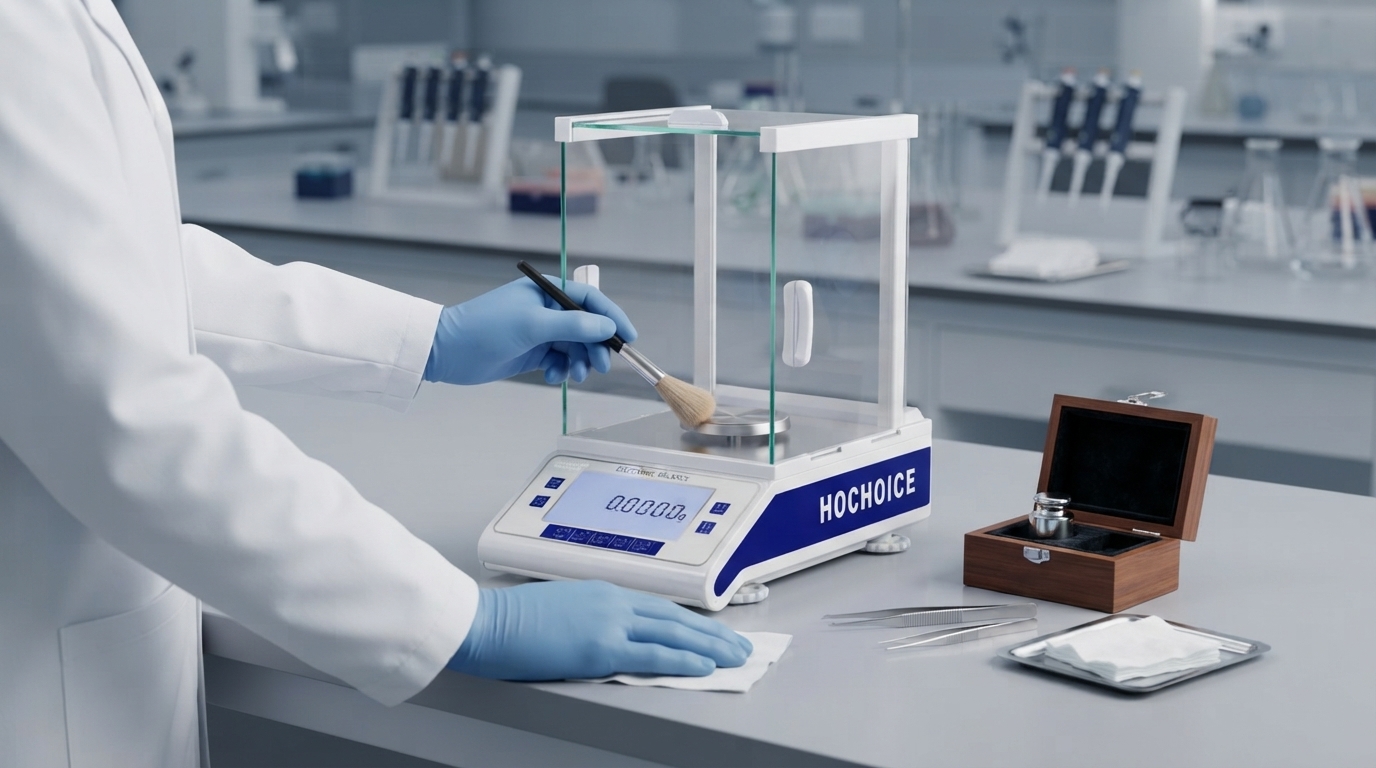
Here is a practical maintenance routine for laboratory users.
The weighing area should be kept clean and free from dust, powder and spilled samples.
Small particles can accumulate around the weighing pan or housing and may affect the movement of the weighing mechanism.
For routine cleaning:
Remove the weighing pan according to the manufacturer's instructions.
Use a suitable soft brush or lint-free cloth.
Clean sample residues promptly.
Avoid allowing liquids to enter the balance.
Do not use aggressive chemicals unless they are confirmed to be compatible with the instrument.
For laboratories handling powders or fine chemicals, cleaning should be performed particularly carefully.
A precision balance should be installed on a stable and level surface.
Check the built-in leveling indicator regularly. If the balance has been moved or the laboratory bench has been disturbed, verify the level before continuing with precision weighing.
An incorrectly positioned balance can contribute to measurement inconsistency.
Precision balances are sensitive instruments.
Environmental factors that can influence weighing include:
Air drafts
Temperature fluctuations
Vibrations
Static electricity
Direct sunlight
Rapid changes in humidity
For higher-resolution laboratory balances, environmental control becomes even more important.
This is particularly relevant for analytical balances with 0.0001g readability.
A precision electronic balance should normally be allowed to stabilize after power-up according to the manufacturer's specifications.
Warm-up allows the internal electronic and weighing system to reach a stable operating condition.
Laboratory users should follow the specific warm-up requirement provided for their balance model rather than applying the same time to every instrument.
Before starting a weighing session, check whether the display returns correctly to zero when the weighing pan is empty.
If the zero reading does not remain stable, investigate the possible causes before continuing.
Potential causes may include:
Environmental disturbance
Sample residue
Temperature changes
Calibration issues
Mechanical interference
A zero check is a simple but useful part of daily balance operation.
Calibration is an important part of precision balance maintenance.
Depending on the model, a balance may support:
External calibration
Internal calibration
Automatic calibration
The calibration procedure should follow the manufacturer's instructions and the laboratory's quality-management requirements.
Calibration should not be treated as a substitute for maintenance.
If a balance repeatedly loses stability after calibration, the laboratory should investigate environmental, mechanical and operational causes rather than simply recalibrating the instrument again.
Regularly inspect:
Weighing pan
Draft shield
Display
Keypad
Leveling feet
Power connection
Data interface
For laboratory analytical balances, also check the draft-shield doors and surrounding surfaces.
Mechanical damage or contamination can affect normal operation.
A simple maintenance schedule can be divided into three levels.
Daily
Check zero
Check cleanliness
Check level
Observe display stability
Weekly
Clean the weighing area
Inspect the weighing pan
Check environmental conditions
Review unusual weighing behavior
Periodically
Calibration verification
Performance checks
Mechanical inspection
Professional servicing when required
The actual frequency should depend on the balance, application, operating environment and laboratory quality requirements.
Precision balance preventive maintenance is not limited to calibration.
Reliable laboratory weighing requires a combination of:
Cleanliness + Leveling + Environmental Control + Warm-Up + Calibration + Regular Inspection
Following a structured maintenance routine can help laboratories reduce avoidable weighing errors and maintain consistent performance.
For laboratories, pharmaceutical facilities, research centers and quality-control departments, selecting the appropriate precision electronic balance is equally important.
HOCHOICE provides precision electronic balances, analytical balances and laboratory weighing equipment for professional weighing applications.








