

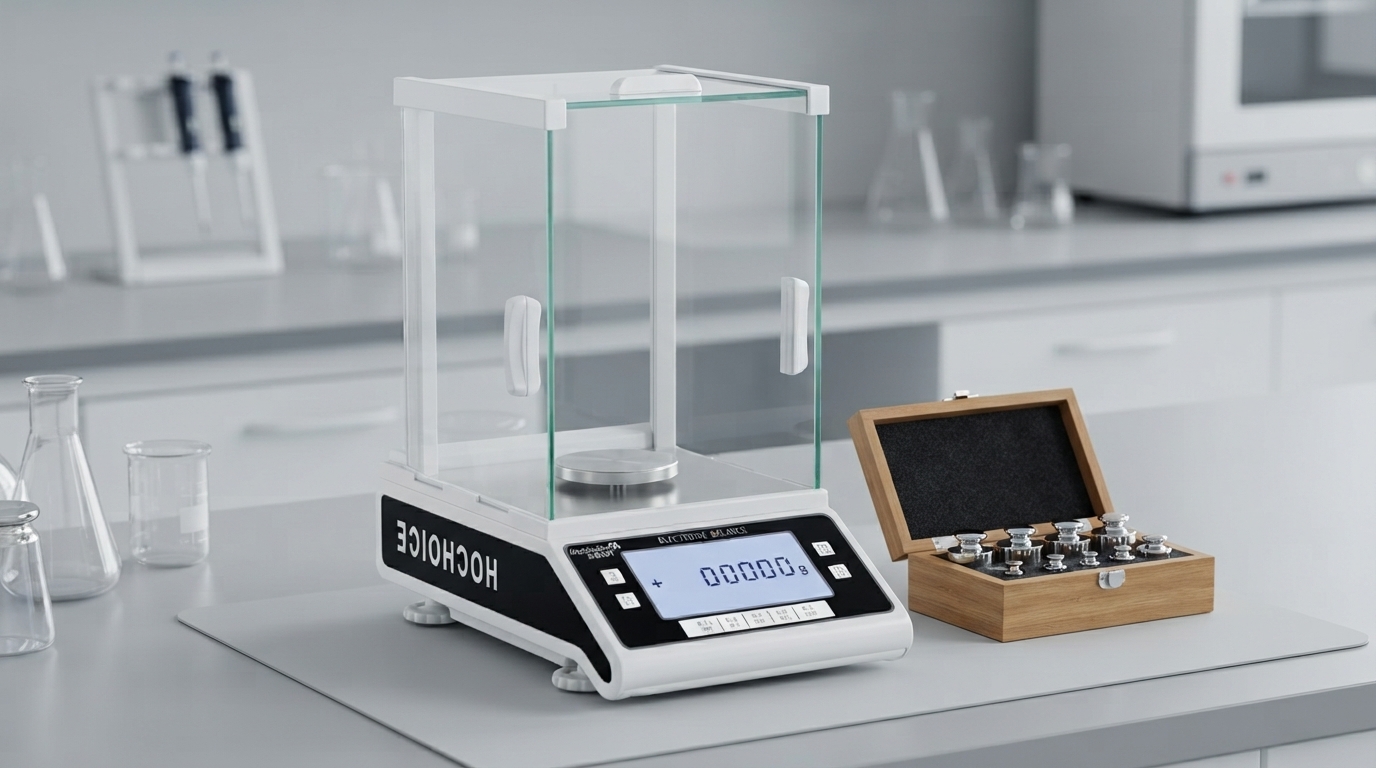
Analytical balance calibration is an important part of laboratory measurement management.
However, laboratories often ask the same question: should an analytical balance be calibrated every day, every week or every month?
The answer depends on the intended use of the instrument and the risks associated with incorrect weighing.
A balance used for critical pharmaceutical measurements may require a different verification schedule from a balance used for routine, low-risk laboratory tasks.
Calibration and routine verification are related, but they are not interchangeable.
Calibration establishes the relationship between an instrument's indication and reference values under specified conditions.
Verification checks whether the instrument meets defined acceptance criteria.
A laboratory may perform routine verification more frequently than formal calibration.
For example, an organization may require daily performance checks and arrange calibration at a separate interval defined by its quality system.
The appropriate terminology and procedures should follow the applicable standards and laboratory requirements.
A balance used throughout multiple shifts may require more frequent performance checks than one used occasionally.
Applications with strict measurement tolerances generally need more rigorous monitoring.
Temperature fluctuations, vibration, humidity and frequent movement can affect performance.
After moving a balance, verify its installation and performance before returning it to critical weighing tasks.
Repeated failures, drift or unsuccessful verification results may indicate that the current schedule is insufficient.
Pharmaceutical, research and quality-control laboratories should follow the applicable procedures, standards and documented requirements for their work.
Rather than selecting an arbitrary interval, laboratories should define a schedule based on the consequences of an incorrect measurement.
A practical framework may include the following:
Before routine use
Check cleanliness, leveling, zero stability and other requirements specified by the laboratory SOP.
During routine operation
Perform verification checks at the frequency required by the application and quality system.
After relocation or an abnormal event
Assess whether calibration or additional performance verification is necessary before using the balance for critical measurements.
At the scheduled calibration interval
Arrange calibration according to the instrument's history, laboratory requirements and applicable standards.
These are general planning principles, not a universal mandatory schedule. The actual frequency should be documented and justified for the specific application.
Depending on the laboratory's procedure, verification may include:
Zero indication
Repeatability
Indication error using suitable test weights
Performance across the working range
Eccentric loading where applicable
Compliance with predefined acceptance limits
The test weights and procedures must be suitable for the instrument and intended use.
For high-accuracy applications, the uncertainty and calibration status of the reference weights should also be considered.
Do not automatically continue using the instrument for critical measurements.
A practical response is to:
Confirm the balance is installed correctly.
Check environmental conditions.
Inspect the weighing pan and surrounding mechanism.
Repeat the check according to the documented procedure.
If the failure persists, follow the laboratory's out-of-tolerance procedure.
Assess whether previous measurement results may have been affected.
Arrange calibration, adjustment or technical inspection as required.
The laboratory should document the issue and the actions taken.
Some analytical balances provide internal calibration, while others use external calibration weights.
Internal calibration can simplify routine adjustment procedures, depending on the instrument design.
External calibration requires suitable reference weights and a defined procedure.
Neither configuration removes the need for appropriate performance verification and documented quality controls.
When purchasing an analytical balance, consider the calibration method alongside readability, capacity, repeatability, linearity and data-management requirements.
There is no single calibration interval suitable for every analytical balance.
The appropriate schedule should reflect instrument usage, measurement risk, environmental conditions, performance history and applicable quality requirements.
A documented calibration and verification program helps laboratories maintain confidence in weighing results and identify problems before they affect critical work.
HOCHOICE supplies analytical balances and precision electronic balances for laboratory and quality-control applications.








