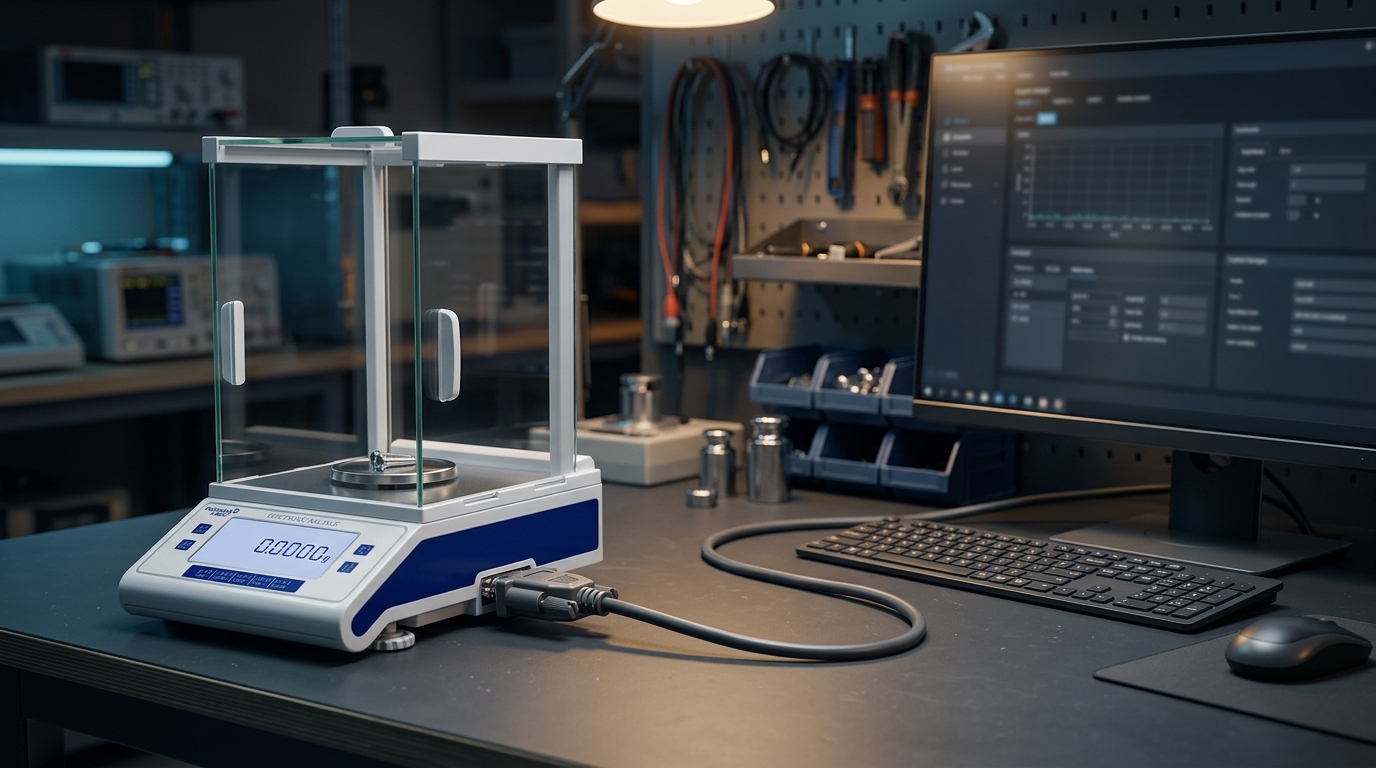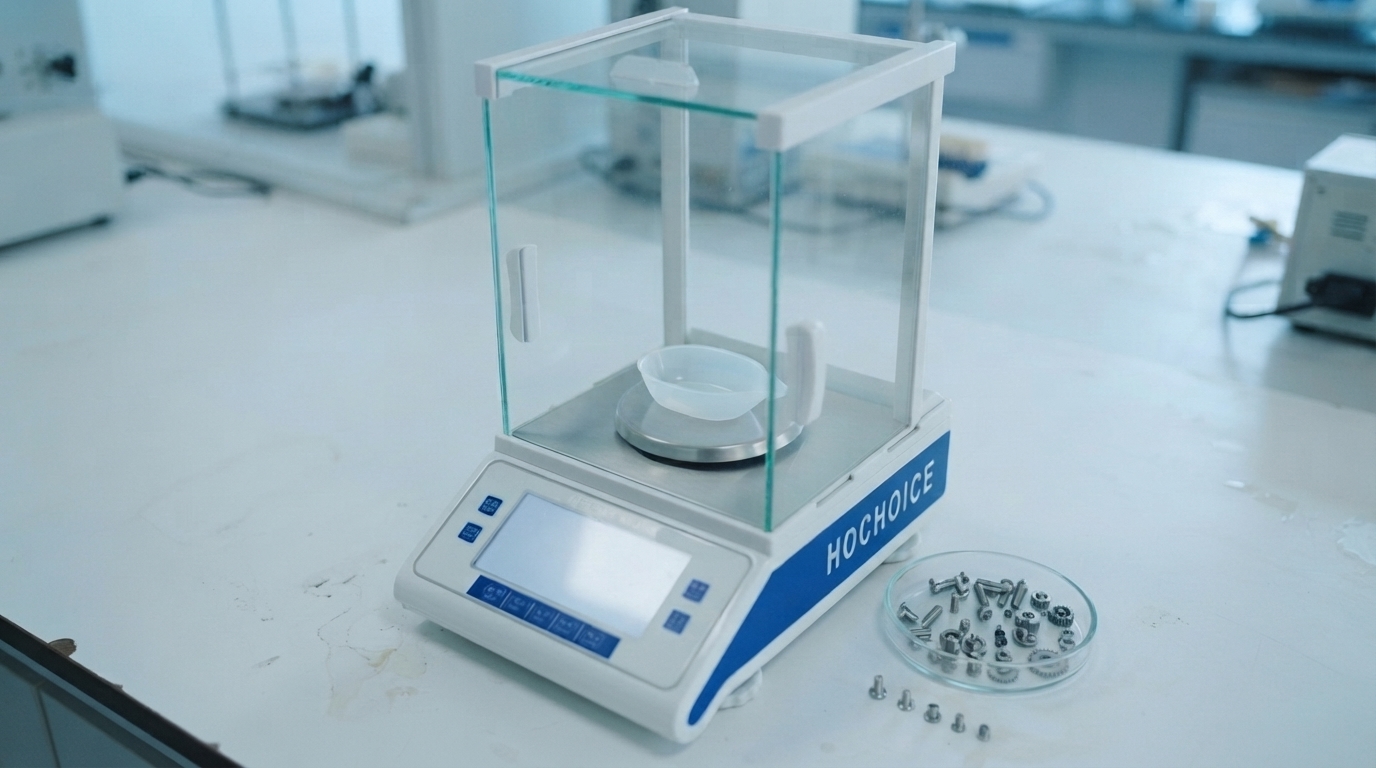
An analytical balance is designed to measure small masses with high precision. However, a balance may not respond identically across its entire weighing range. One important specification used to describe this behavior is linearity error.
Understanding linearity helps laboratory users evaluate instrument performance, interpret specifications, and identify potential weighing problems.
Linearity error describes the deviation between a balance's indicated value and the expected value across different points in its weighing range.
For example, a balance may perform well when weighing a small mass but show a larger deviation when measuring a heavier mass. Linearity testing helps reveal this type of measurement deviation.
The specified linearity error is usually expressed in grams or milligrams. A smaller absolute error generally indicates tighter limits on this particular aspect of weighing performance.
These specifications describe different characteristics.
Readability: The smallest increment displayed by the balance, such as 0.0001 g.
Linearity error: The maximum specified deviation from the expected weighing response across the tested range.
Repeatability: The closeness of repeated results when the same load is measured under the same conditions.
A balance with 0.0001 g readability does not automatically guarantee a linearity error of ±0.0001 g. Readability alone is not a complete measure of accuracy.
A typical linearity check involves comparing readings at several points across the balance's working range against suitable reference masses.
Place the balance on a stable, level surface.
Allow the instrument to warm up according to its specifications.
Check the zero reading and follow the manufacturer's calibration procedure.
Apply appropriate reference masses at selected points across the range.
Record the displayed readings and calculate deviations from the expected values.
Compare the results with the instrument specification and the laboratory's acceptance criteria.
Use suitable calibrated weights and a documented procedure. The exact test points, calculation method, and acceptance limits depend on the balance and the laboratory's quality requirements.
Potential contributors include mechanical interference, unsuitable installation conditions, contamination, temperature changes, and instrument faults. Incorrect or unsuitable reference weights can also undermine the validity of a test.
If results fall outside the acceptance criteria, repeat the check under controlled conditions before concluding that the balance requires service.
HOCHOICE's 0.0001 g analytical balance range lists a readability of 0.0001 g and a linearity error specification of ±0.0003 g. The relevant specifications should always be checked against the exact model and its official documentation.
For laboratories selecting a balance, linearity is one part of the overall performance assessment. Readability, repeatability, capacity, environmental conditions, and calibration requirements should also be considered.
Conclusion
Linearity error helps describe how consistently a balance responds across its weighing range. Understanding this specification enables laboratory users to interpret technical data more accurately and carry out more meaningful performance checks.