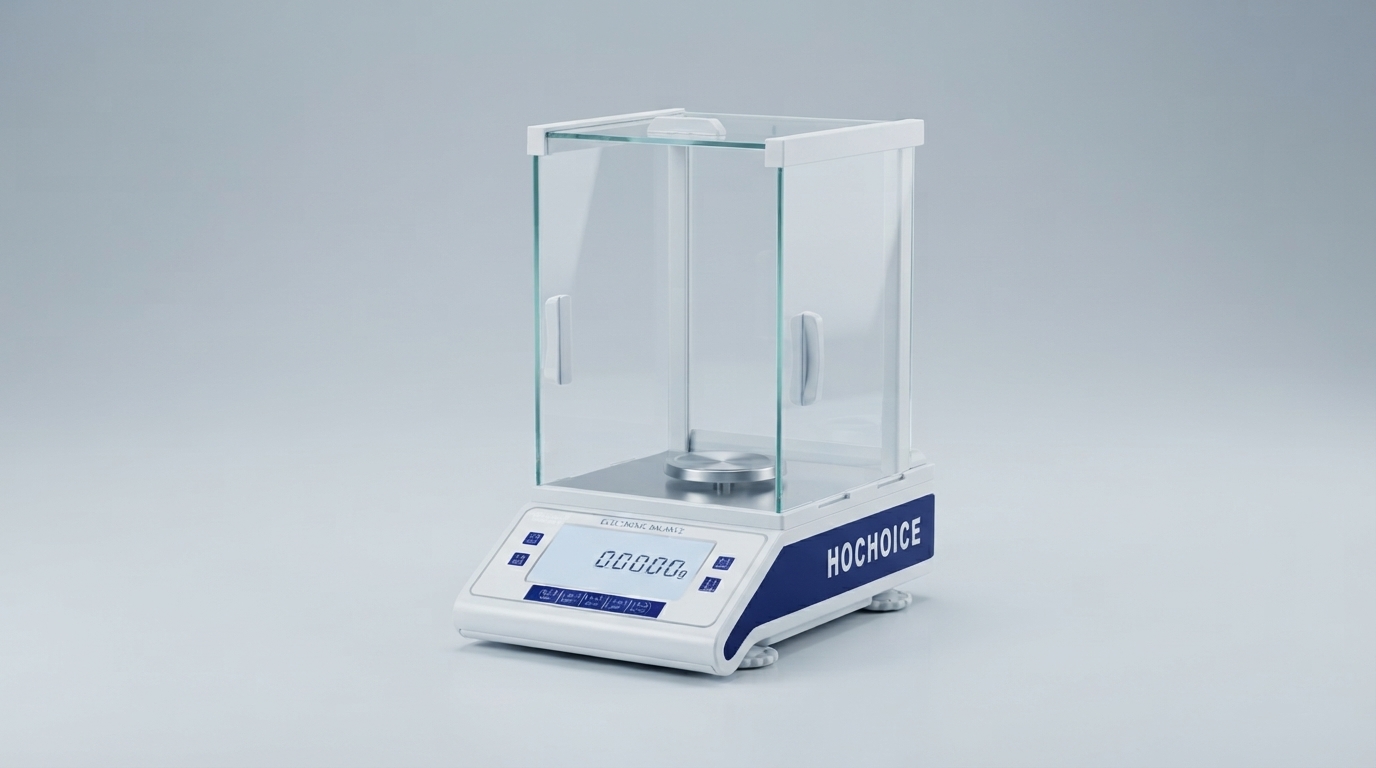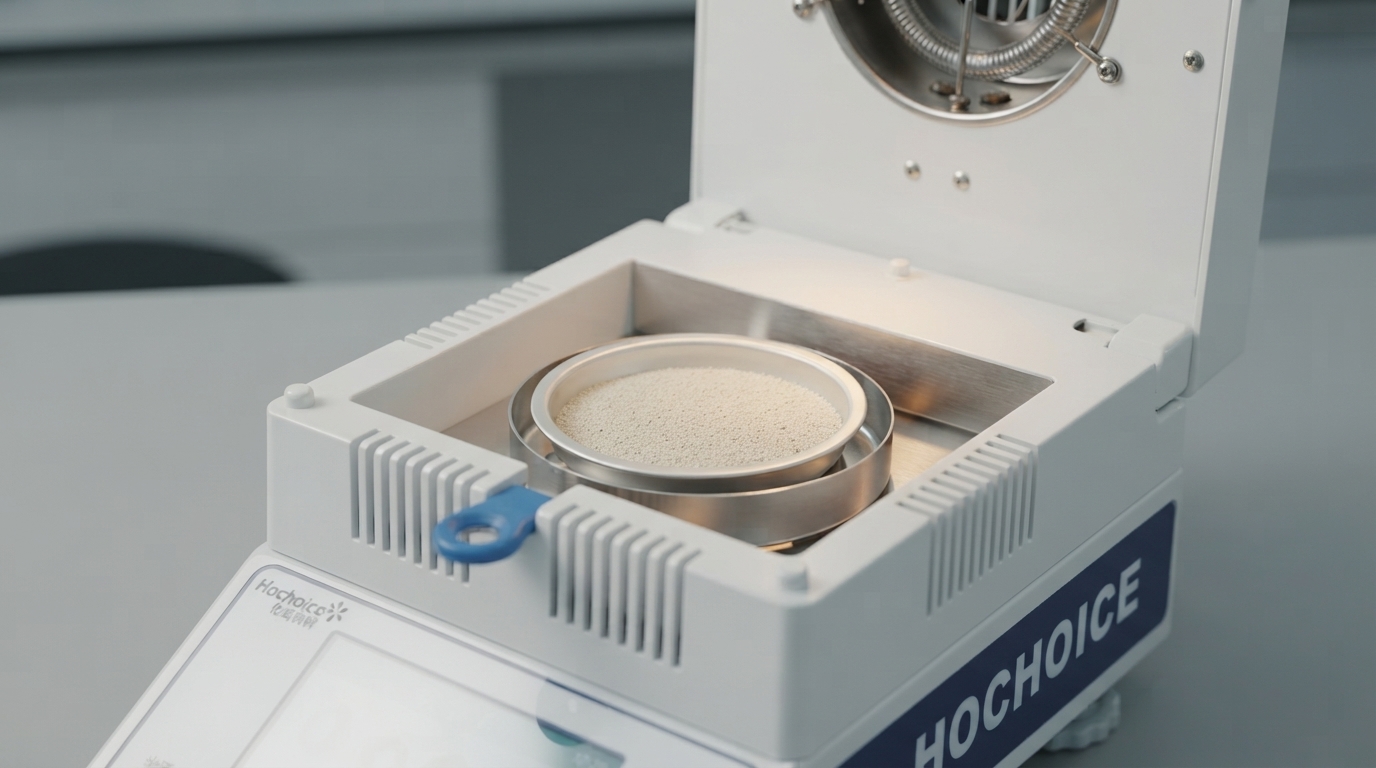
A halogen moisture analyzer determines moisture content by weighing a sample before and during heating. As moisture evaporates, the instrument tracks the mass change and calculates the result according to its configured measurement method.
One important parameter is the drying endpoint: the condition that determines when the measurement stops.
Choosing an appropriate endpoint helps balance test duration, result stability, and repeatability.
A moisture analyzer typically uses a defined drying program, which may include a target temperature and a stopping condition.
Depending on the instrument, the endpoint may be based on a predefined time or on a sufficiently small change in sample mass over a specified period. The available modes and parameter names vary by model.
A time-based method stops after the selected duration. An automatic endpoint method stops when the instrument detects that the mass change meets its configured stability condition.
If a test stops too early, the sample may retain moisture that would have been released under the intended method. This can lead to a result that does not represent the desired measurement endpoint.
If drying continues for too long, the sample may undergo other changes, such as loss of volatile components or thermal decomposition. These changes can affect the measured mass loss and therefore the calculated moisture result.
The correct endpoint depends on the sample and the method being used. A longer drying time is not automatically better.
Sample composition: Different materials retain and release moisture differently. Powders, granules, pastes, and food products may require different programs.
Sample quantity: Sample mass affects the amount of material being heated and the time needed to reach a stable endpoint.
Particle size and distribution: Large pieces or uneven layers may dry less uniformly than a thin, evenly distributed sample.
Heating temperature: Higher temperatures may accelerate moisture release but can also increase the risk of thermal changes in sensitive materials.
Sample preparation: Inconsistent mixing, grinding, or distribution can cause variation between repeated tests.
For a new sample type, start with the instrument manual and an established laboratory method where available.
Prepare a representative sample using a consistent procedure.
Use a defined sample mass and spread it evenly across the sample pan.
Select a temperature appropriate for the material and the intended method.
Choose a suitable endpoint mode or test duration supported by the instrument.
Run repeat measurements to evaluate the consistency of results.
Compare the results with an established reference method when required.
Document the sample preparation, temperature, endpoint settings, and observed results.
Change one major parameter at a time during method development so that its effect on the result can be evaluated.
If repeat tests produce different moisture values, check the sample first. Uneven particle size, poor mixing, inconsistent sample quantity, and different spreading patterns can all contribute to variation.
Next, confirm that the drying temperature and endpoint settings are unchanged between runs. Clean the sample pan, verify that the analyzer is operating correctly, and follow the manufacturer's procedure for performance checks.
Do not assume that an endpoint adjustment alone will solve every inconsistent result.
HOCHOICE halogen moisture analyzers offer heating and moisture-measurement functions for laboratory and quality-control applications. Available settings and specifications depend on the selected model, so confirm the instrument's supported drying modes before creating a test method.
Conclusion
The drying endpoint is a key part of a moisture analysis method. Consistent sample preparation, suitable heating conditions, and a validated stopping condition help produce more meaningful and repeatable results.