
Precision balances are used in laboratories, quality-control departments, manufacturing facilities, and research environments where reliable mass measurements are essential.
Choosing the right model involves more than comparing prices or selecting the balance with the smallest displayed increment. Capacity, readability, repeatability, sample size, and operating conditions all influence whether a balance is suitable for a particular task.
Two of the most important specifications are readability and maximum capacity.
Readability is the smallest increment shown on the display. A balance with 0.001 g readability displays mass in increments of 1 mg, while a model with 0.01 g readability displays increments of 10 mg.
Capacity is the maximum load the instrument is designed to weigh within its specified operating limits.
A balance with finer readability may be appropriate for small samples, but it may have a lower maximum capacity than a coarser model. The correct combination depends on both the sample mass and the measurement requirements.
Readability describes the display increment; it does not guarantee the accuracy of every measurement.
Other important performance characteristics include:
Repeatability: How closely repeated measurements agree under specified conditions.
Linearity: How the indication compares with reference values across the weighing range.
Eccentricity: How load position affects the indicated value.
Stabilization time: How long the instrument takes to produce a stable reading under specified conditions.
A balance should be assessed using the specifications and performance criteria relevant to the intended application.
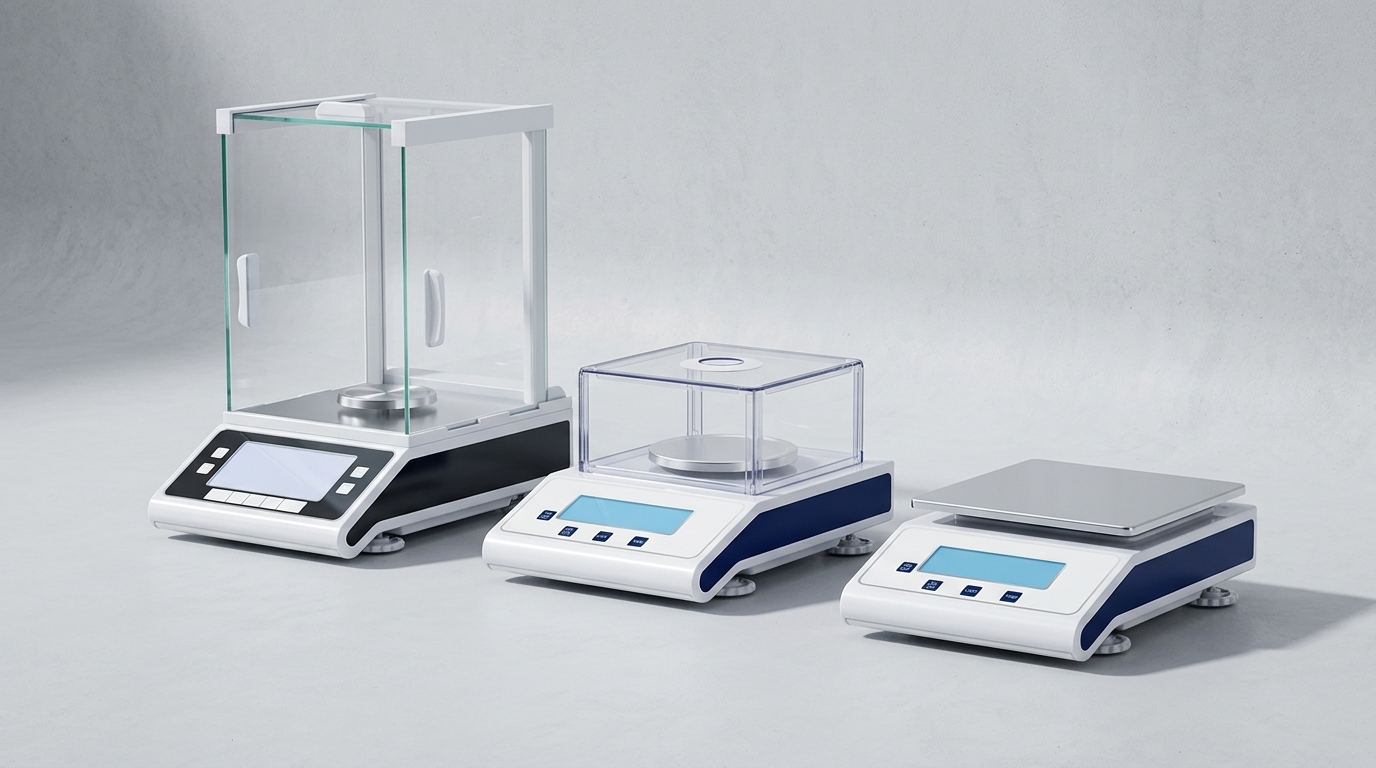
The pan should accommodate the sample vessel without creating handling difficulties or unnecessary interference.
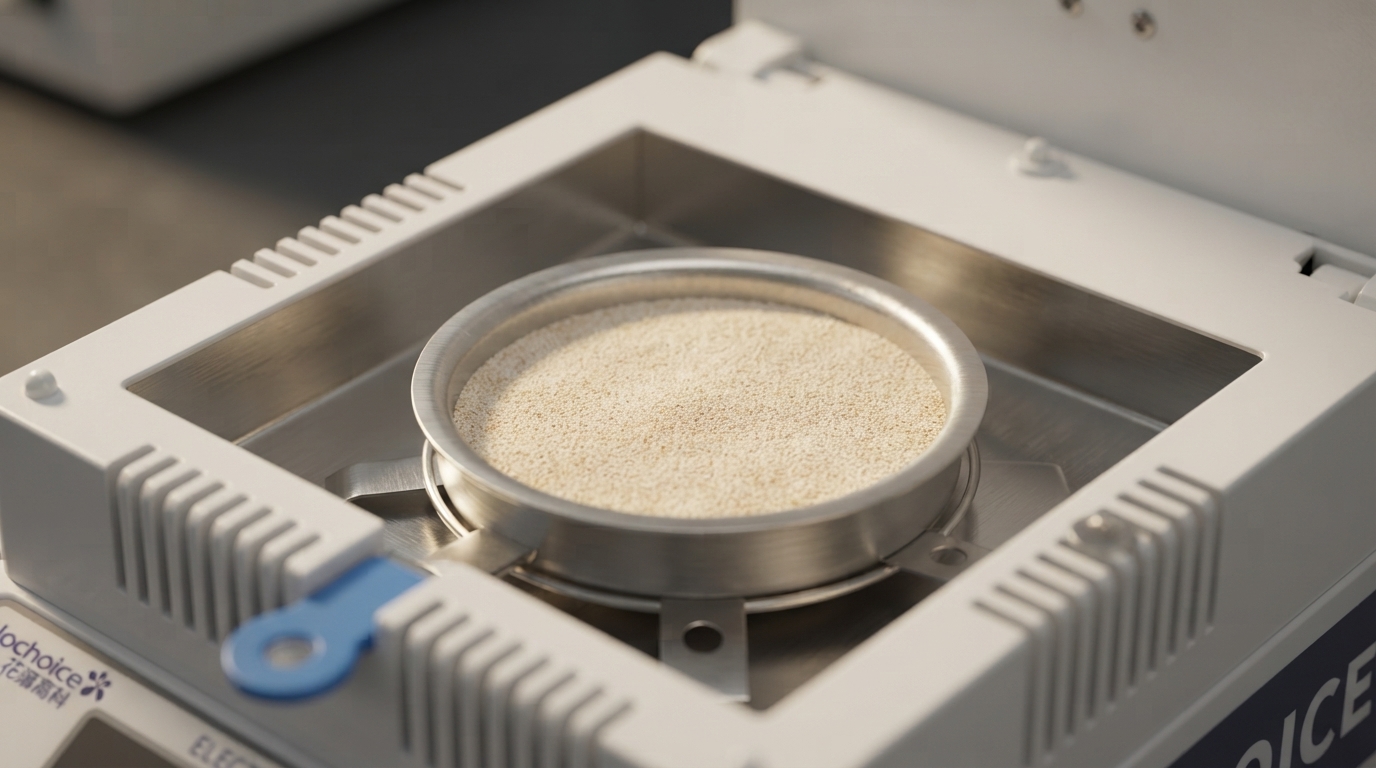
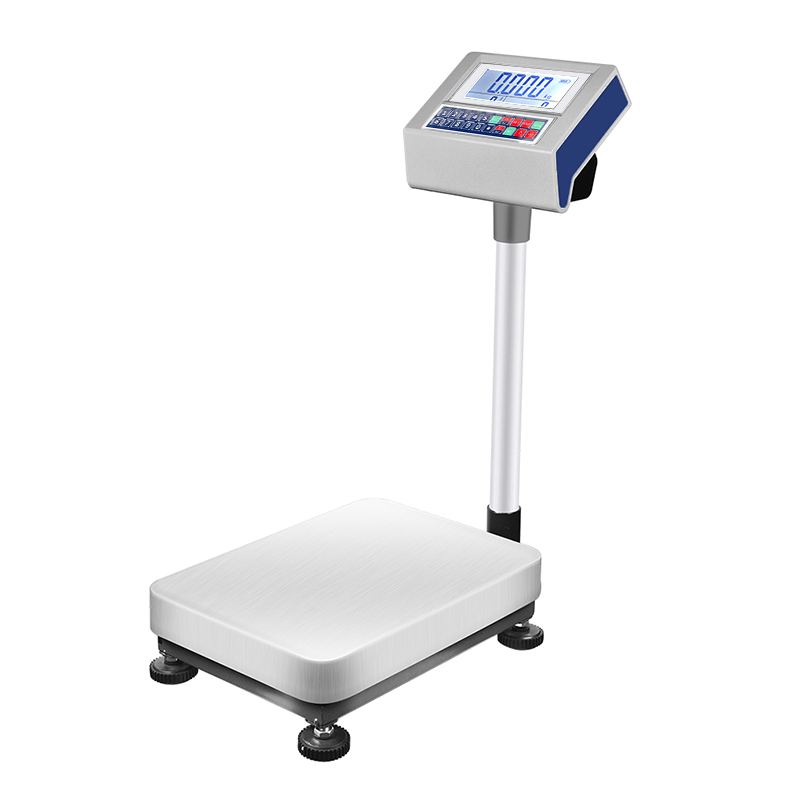
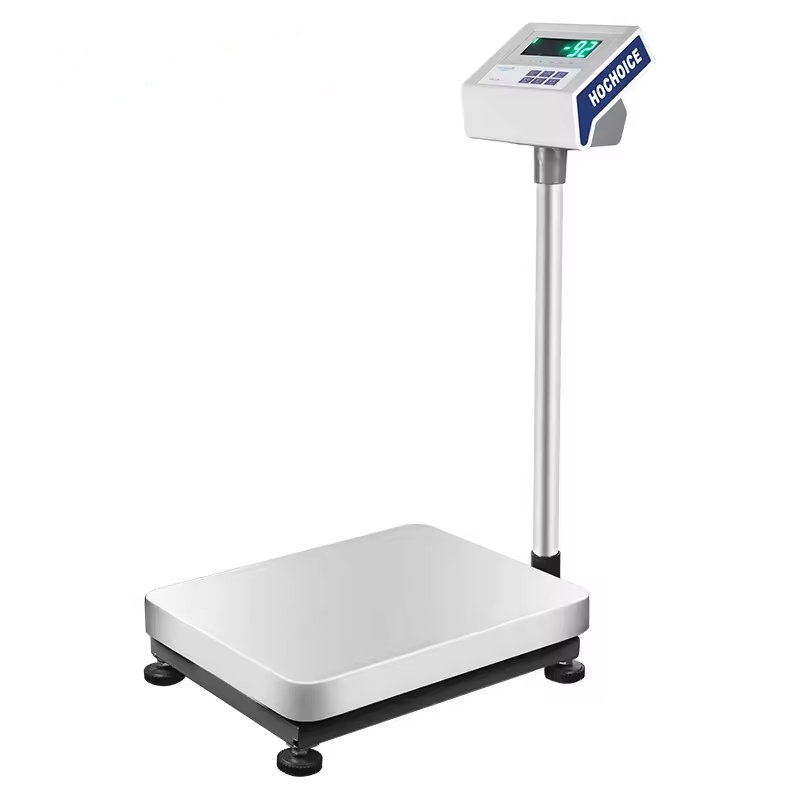
For routine powder weighing, a relatively small pan may be sufficient. Larger containers or production samples may require a different balance design and capacity.
Also consider the clearance around the pan, the size of weighing vessels, and how easily samples can be loaded without touching the surrounding housing.
Precision balances can be affected by environmental disturbances.
Air currents may cause unstable readings, while vibration can interfere with measurement stability. Temperature changes and static electricity may also influence results, particularly when weighing small masses.
Before selecting a balance, consider where it will be installed and whether the environment can support the required measurement performance.
Different models may provide different calibration methods and interfaces.
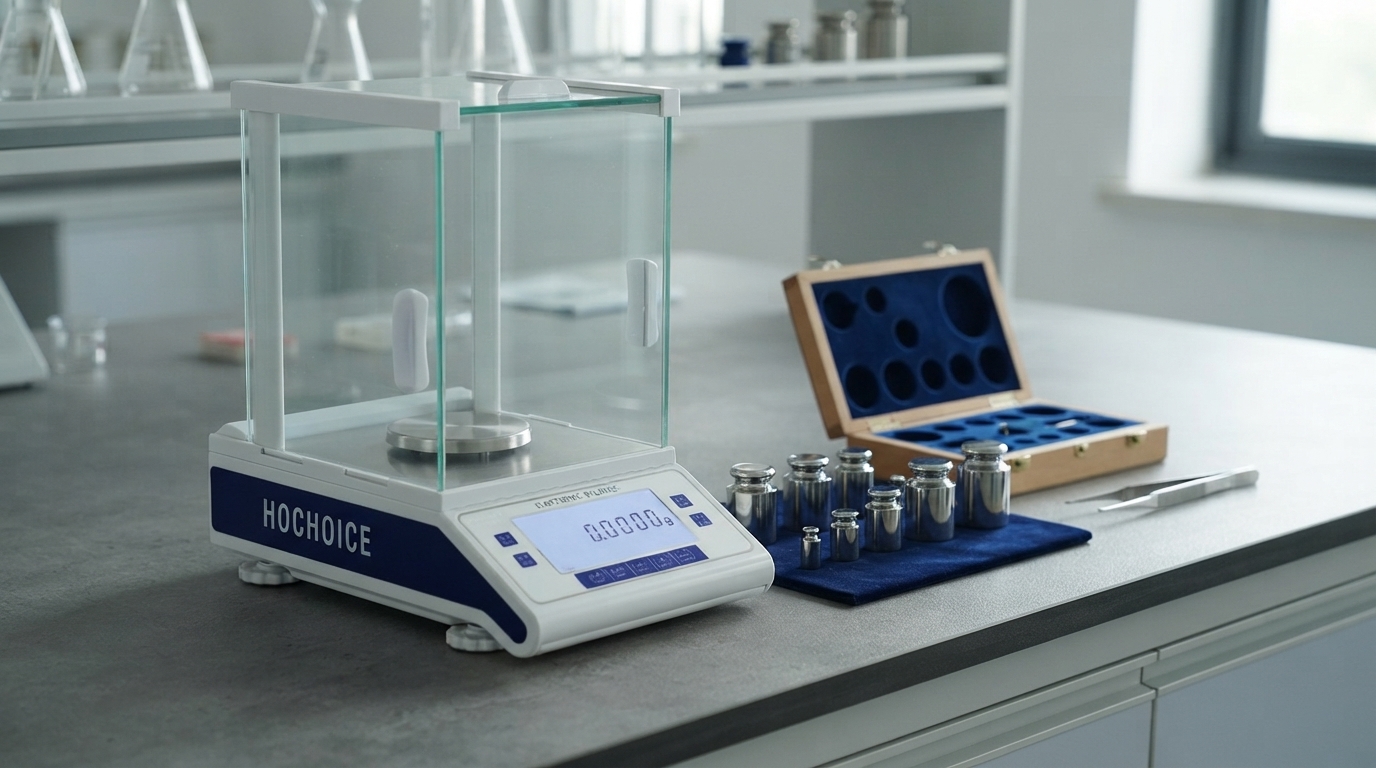
Some instruments support internal calibration, while others use external reference weights. Connectivity options may include serial communication interfaces, depending on the model and configuration.
If the balance will be connected to a computer, printer, or laboratory information system, verify the supported interface, data format, and software compatibility before deployment.
Application | Selection considerations |
|---|---|
Routine laboratory weighing | Suitable capacity, readability, and ease of use |
Pharmaceutical or chemical preparation | Defined performance requirements and documented verification |
Food and material testing | Sample size, repeatability, and environmental conditions |
Research and small-sample weighing | Finer readability, suitable minimum sample mass, and controlled conditions |
Production quality control | Workload, pan size, stability, and data-recording needs |
These are starting points rather than universal specifications. The actual requirements depend on the test method and acceptable measurement uncertainty.
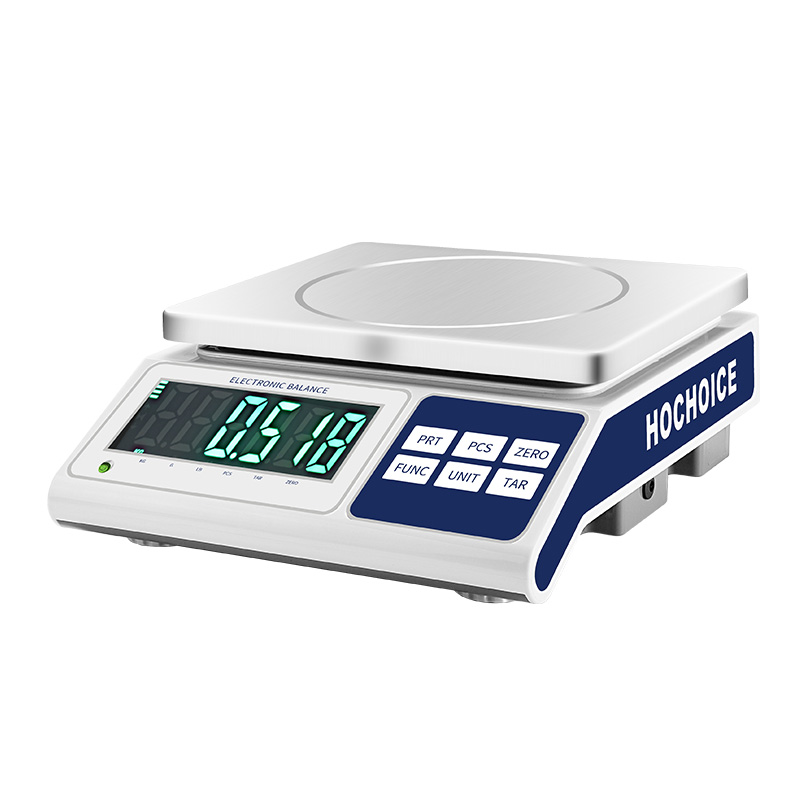
HOCHOICE's balance range includes models with different capacities, readability levels, sensor technologies, and calibration options. Compare the exact model specifications against the application's needs rather than assuming that all precision balances share the same features.
Conclusion
The best precision balance is the one whose capacity, readability, performance, and operating features match the real weighing task. A clear understanding of these factors helps laboratories select equipment that is suitable for their workflow and measurement requirements.