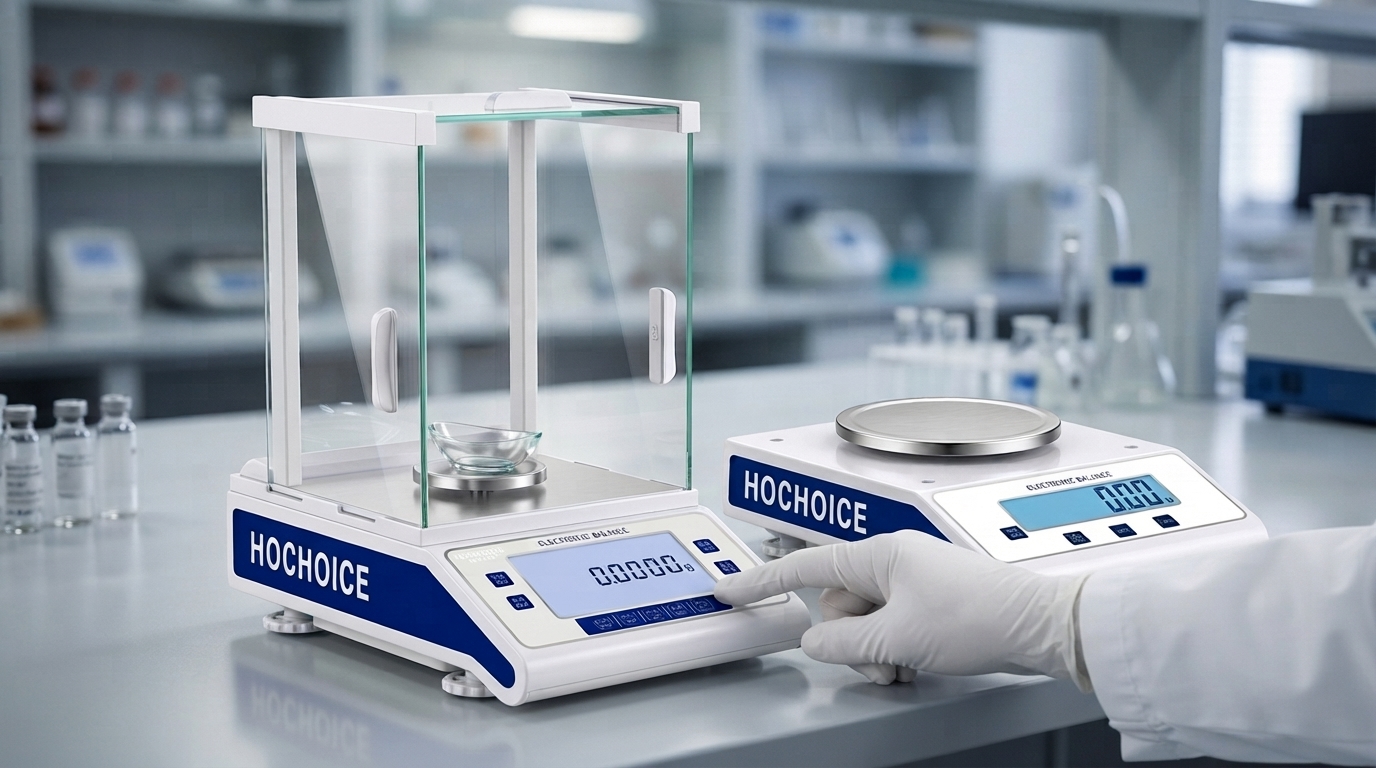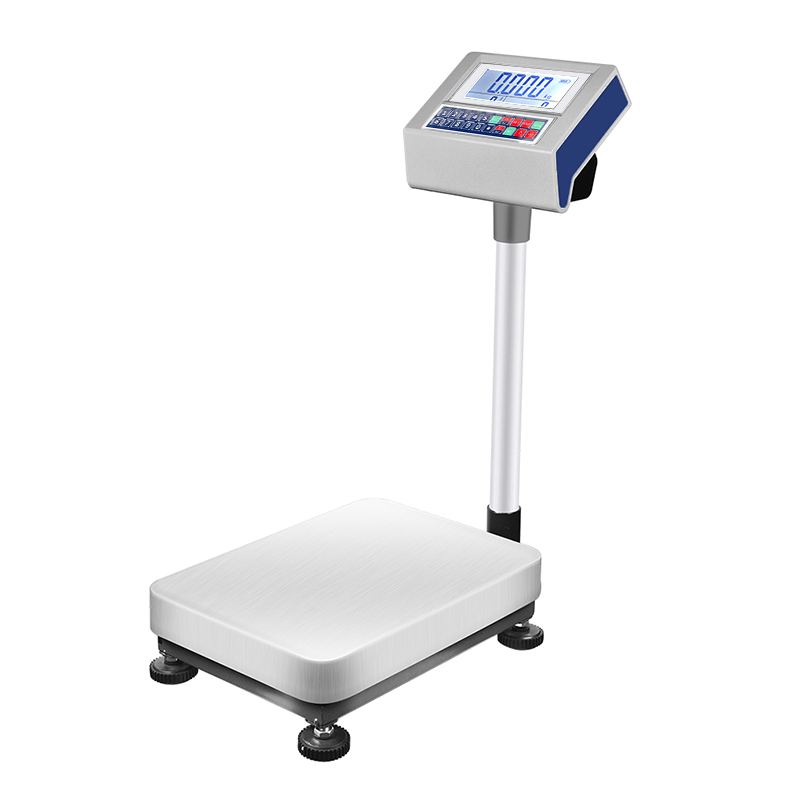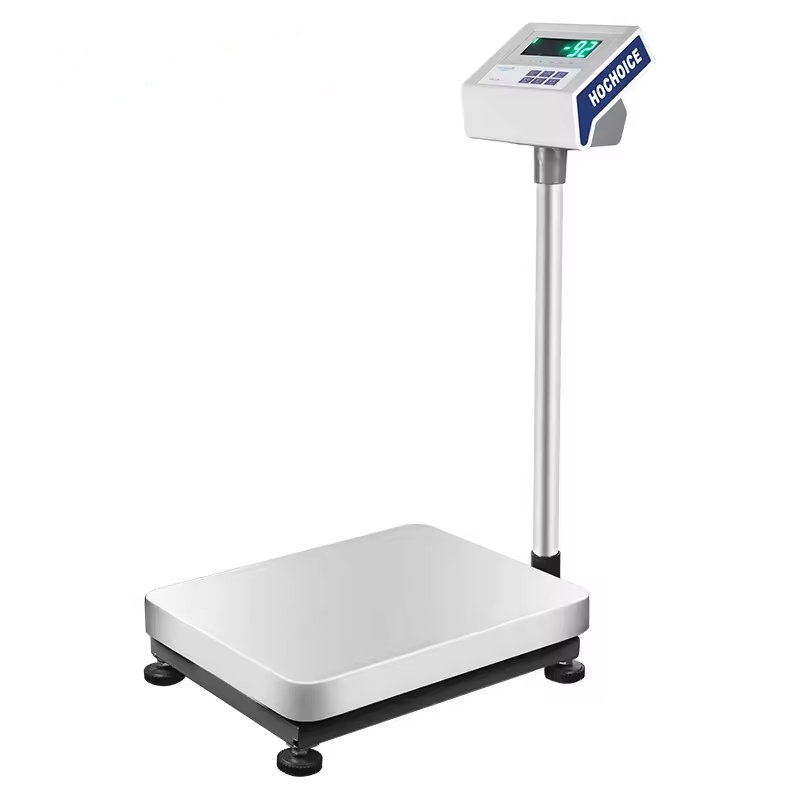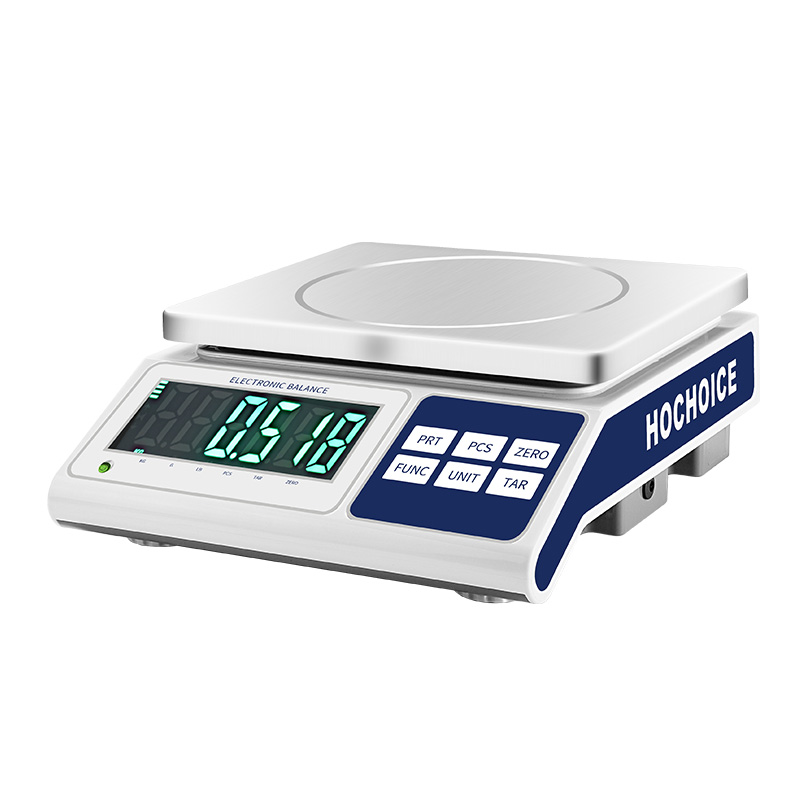

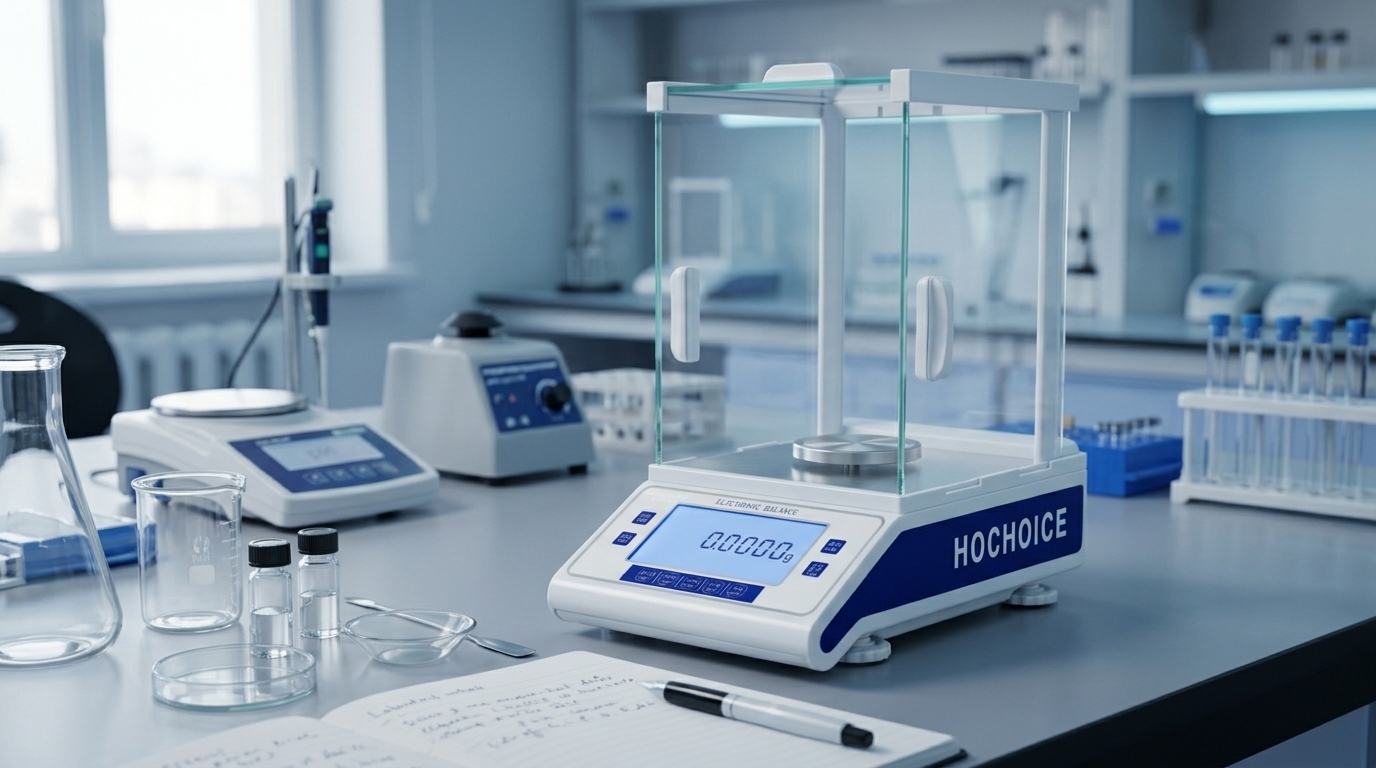
Selecting an electronic balance involves more than comparing prices or reading the number of decimal places on a product specification sheet. A suitable instrument should meet the laboratory's measurement requirements, fit the available workspace, and support the way samples are prepared, weighed, and documented.
A systematic evaluation helps laboratories avoid purchasing equipment that is unnecessarily sophisticated for routine work or insufficient for demanding measurements.
Before comparing models, define what the balance will measure and how the results will be used.
A laboratory weighing small quantities of chemical reagents may require different equipment from a quality control department weighing components or bulk materials.
Identify the smallest expected sample mass, the largest combined load, the required weighing tolerance, and the frequency of use. These factors establish the basic requirements for capacity and measurement performance.
The intended application should guide equipment selection rather than the product category alone.
Several specifications help determine whether an electronic balance is suitable for a particular task.
Readability indicates the smallest increment shown on the display. It does not, by itself, establish the accuracy of a measurement.
Repeatability describes how closely repeated measurements agree under comparable conditions. This is especially relevant when the same sample is weighed multiple times.
Linearity describes how closely the instrument's indicated values follow the expected relationship across its weighing range.
Capacity defines the maximum load the balance is designed to accommodate. The container and sample must remain within the instrument's rated capacity.
Stabilization time indicates how long the instrument takes to provide a stable result under specified conditions. Actual performance can vary with the load and operating environment.
These specifications should be evaluated together because no single number fully describes the performance of a weighing instrument.
The sample is not always the only object placed on the weighing pan. Laboratory work may involve glassware, weighing dishes, sample holders, or other containers.
Confirm that the combined mass of the container and sample fits within the available capacity. Check the pan dimensions to ensure that containers can be positioned safely and conveniently.
If the application involves very small samples, consider whether the weighing procedure and operating conditions allow the balance to deliver the required performance at that sample mass.
The laboratory environment can influence weighing results, particularly when measurements require fine readability.
Air currents can disturb the weighing pan. Vibrations from nearby equipment can affect stability. Temperature differences and electrostatic effects may also influence measurements.
Choose an appropriate installation location and follow the manufacturer's operating recommendations. For applications requiring very fine readability, a suitable draft shield and a stable work surface may be especially important.
The performance demonstrated in the actual working environment is more useful than assuming the instrument will always perform according to its best-case specifications.
A balance may need to support more than a simple mass reading.
Consider whether operators require tare, percentage weighing, parts counting, density-related functions, or other application-specific features. Confirm that the selected model actually supports each required function.
If the laboratory records measurements electronically, check whether the balance provides a compatible communication interface. Review the available connection options, software requirements, and data formats before purchasing.
For teams handling many measurements, a suitable data-recording workflow can improve consistency and reduce manual transcription.
Laboratories should also evaluate the documentation and support available for the selected instrument.
Depending on the application, relevant considerations may include the user manual, operating instructions, calibration documentation, maintenance guidance, spare parts, and technical assistance.
For quality-critical or regulated environments, define the required performance checks and documentation according to the applicable standards and internal quality system.
Do not assume that every balance model provides the same functions, accessories, or support arrangements. Confirm the details for the exact configuration being considered.
A useful comparison should connect each specification to a real requirement.
For example, a laboratory that weighs small reagent quantities may prioritize readability, repeatability, and environmental protection. A production quality control team weighing larger components may place greater emphasis on capacity, pan size, and efficient routine operation.
Compare the candidate instruments against the same set of requirements. This makes it easier to identify which specifications are essential and which features are optional.
The most suitable electronic balance is one that meets the laboratory's measurement requirements and fits the complete working process.
Evaluate readability, repeatability, linearity, capacity, environmental conditions, functions, connectivity, and support documentation together. A clear understanding of the application will lead to a more appropriate equipment choice and a more reliable weighing workflow.