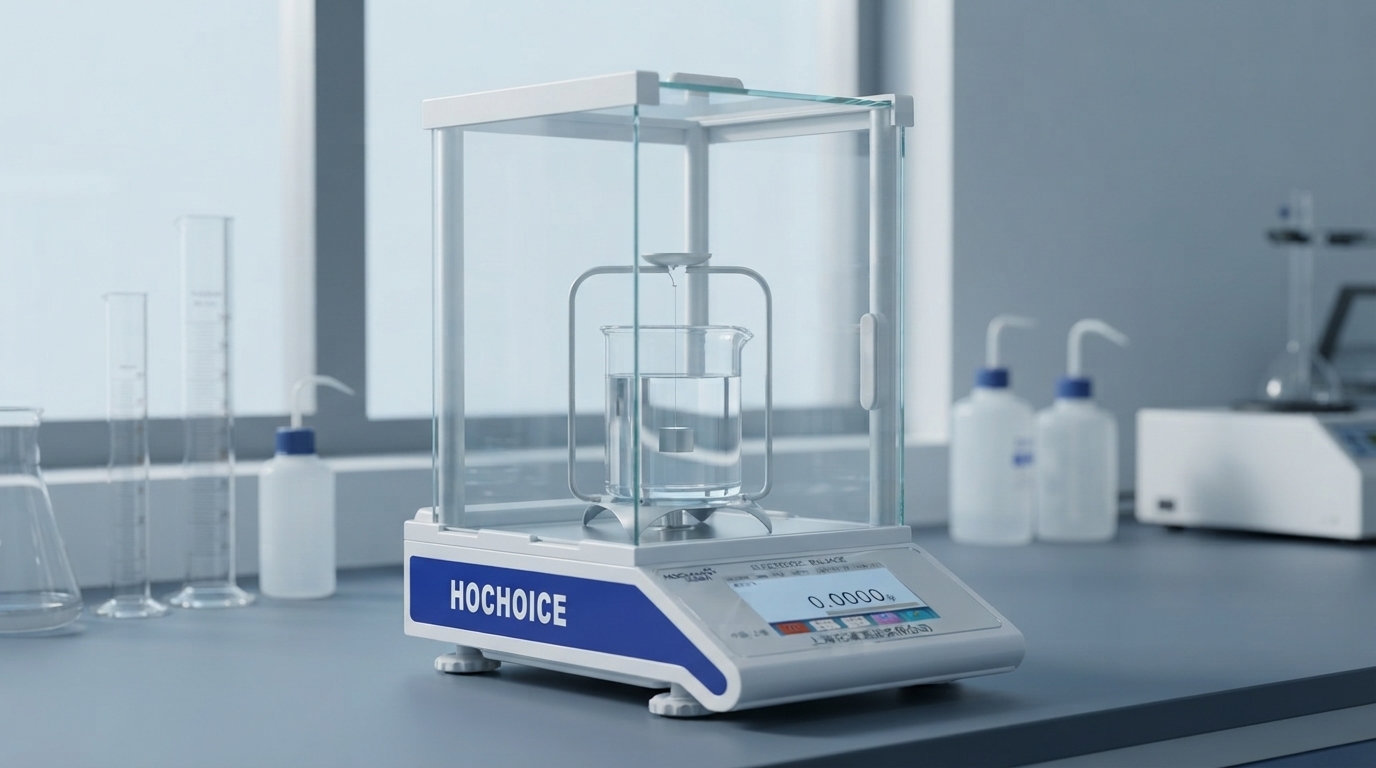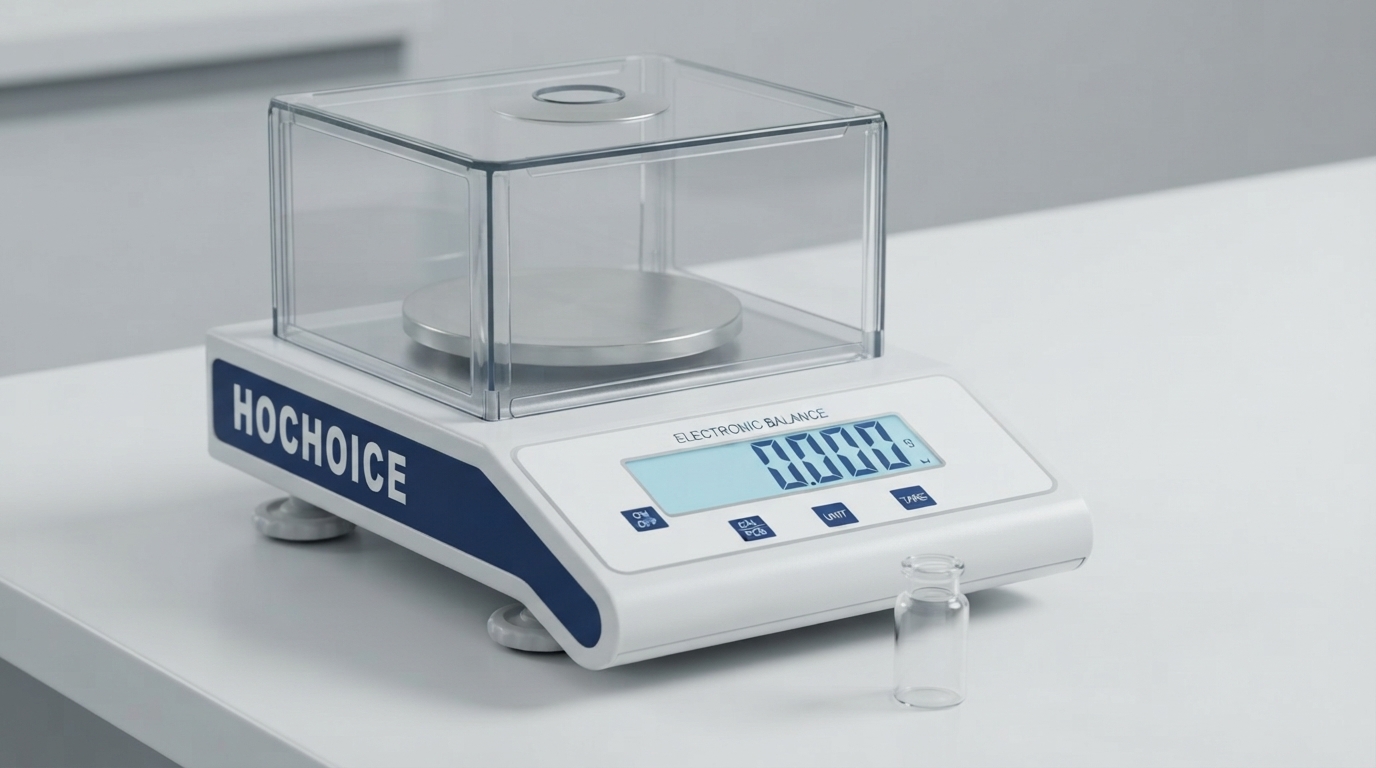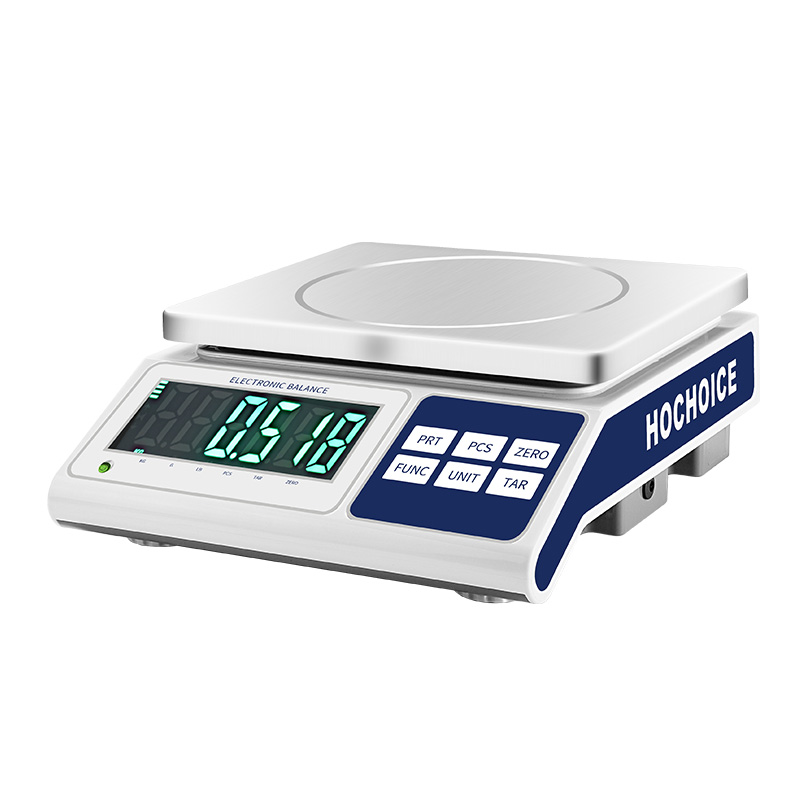

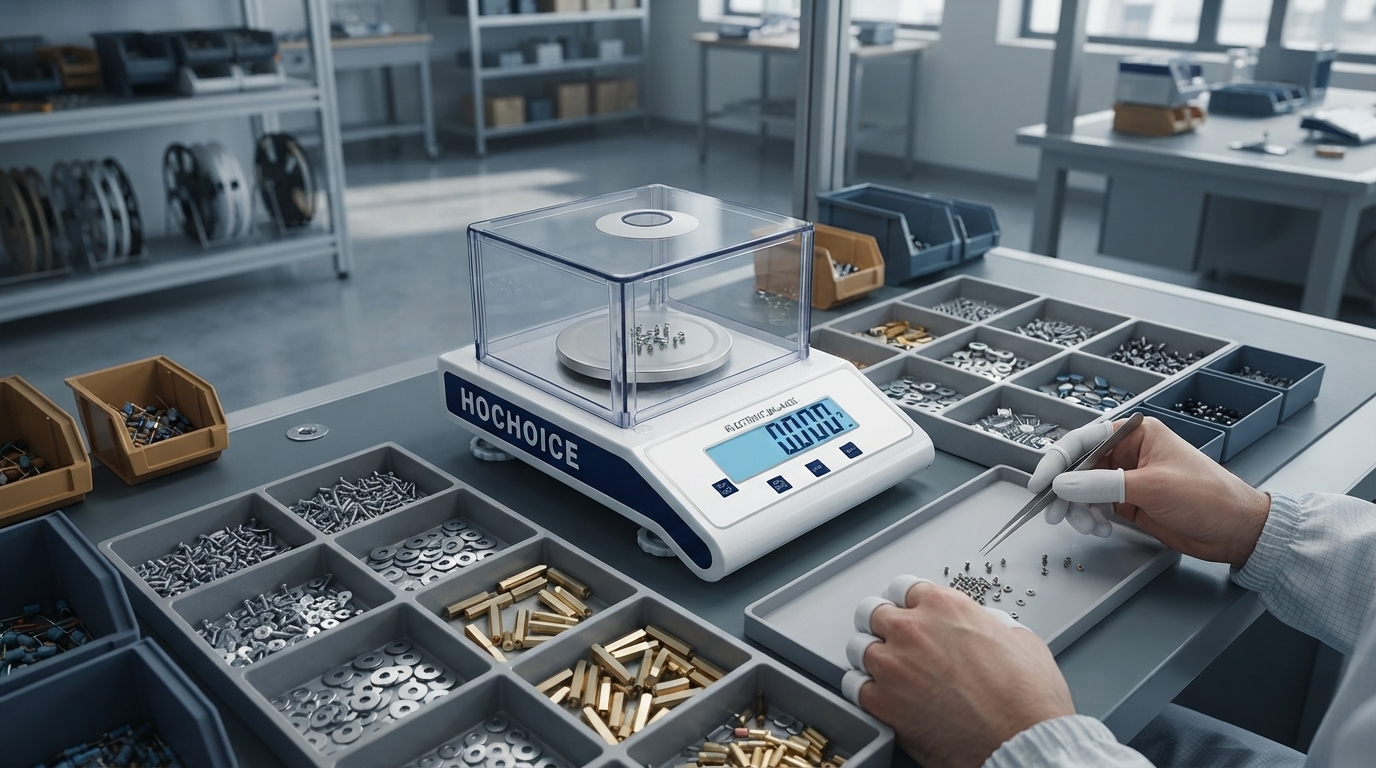
Counting small components manually can be time-consuming, especially when hundreds or thousands of similar items need to be checked. An electronic balance with a parts counting function offers a more efficient approach by estimating the number of items from their total weight.
This function is widely useful for inventory management, packaging, incoming inspection, and laboratory sample preparation. However, accurate counting depends on more than the balance itself. The consistency of individual item weights, the reference sample, and the weighing conditions all influence the final result.
The parts counting function determines the estimated quantity of similar items by comparing their total mass with the average mass of one item.
Unlike a conventional weighing mode, which displays mass in grams or another unit, counting mode converts the measured mass into a quantity.
For example, if a group of 20 identical screws has a total mass of 10 g, the average mass per screw is:
Average piece weight = 10 g ÷ 20 = 0.5 g
If another group of these screws has a total mass of 50 g, the estimated quantity is:
Estimated quantity = 50 g ÷ 0.5 g = 100 pieces
This calculation works best when individual items have similar masses. If the items vary significantly in weight, the calculated quantity may differ from the actual count.
Most electronic balances with parts counting mode use a reference sample to establish the average piece weight.
The operator selects a known number of representative items, such as 10, 20, 50, or 100 pieces, depending on the instrument and the application.
The balance measures the combined mass of the reference items. If a container is used, the operator can normally tare it first, following the instrument's instructions.
The balance divides the reference sample mass by the known number of pieces. This establishes the average piece weight used for subsequent counting.
The operator places the items to be counted on the weighing pan or platform. The balance estimates the number of pieces from their total mass and the stored average piece weight.
The precise menu names and operating steps vary by model, so users should consult the relevant operating manual.
The reference sample determines how well the calculated average piece weight represents the items being counted.
If the reference sample contains only a few pieces, a small difference in the weight of one item can have a relatively large effect on the calculated average. A larger, representative sample can reduce this influence when individual pieces vary slightly in mass.
For example, a batch of 100 components may contain small manufacturing variations that are not fully represented by a reference sample of only five pieces.
Where practical, choose a reference quantity that provides a representative average and follows the balance manufacturer's recommendations. The appropriate quantity also depends on the item mass, balance readability, and required counting accuracy.
Parts that appear identical may have different masses because of material variation, dimensions, coatings, or manufacturing tolerances.
When piece-weight variation is significant, a mass-based estimate cannot reliably replace direct counting.
If the reference sample contains unusually light or heavy pieces, its calculated average may not represent the rest of the batch.
Select reference pieces from the same production lot whenever possible.
Very lightweight components may produce a total mass that is too small for reliable counting on a balance with insufficient resolution.
Choose an instrument appropriate for the individual piece mass, reference quantity, and required accuracy.
Entering the wrong number of reference pieces causes the calculated average piece weight to be incorrect. This error can affect every subsequent count using that reference.
Air currents, vibration, an unstable work surface, and improper sample placement can affect the measured mass. These conditions should be controlled before interpreting a counting result.
For routine counting applications, use the following procedure:
Confirm that the balance has sufficient capacity and readability for the application.
Check that the weighing pan or platform is clean and correctly installed.
Select a representative group of reference items and verify their actual quantity.
Use the same reference batch and counting procedure throughout a comparison where appropriate.
Avoid mixing components with noticeably different specifications or piece weights.
Check a portion of the counted batch manually, especially during initial method setup or when accuracy requirements are strict.
Record the reference quantity and relevant operating conditions if the process requires traceability.
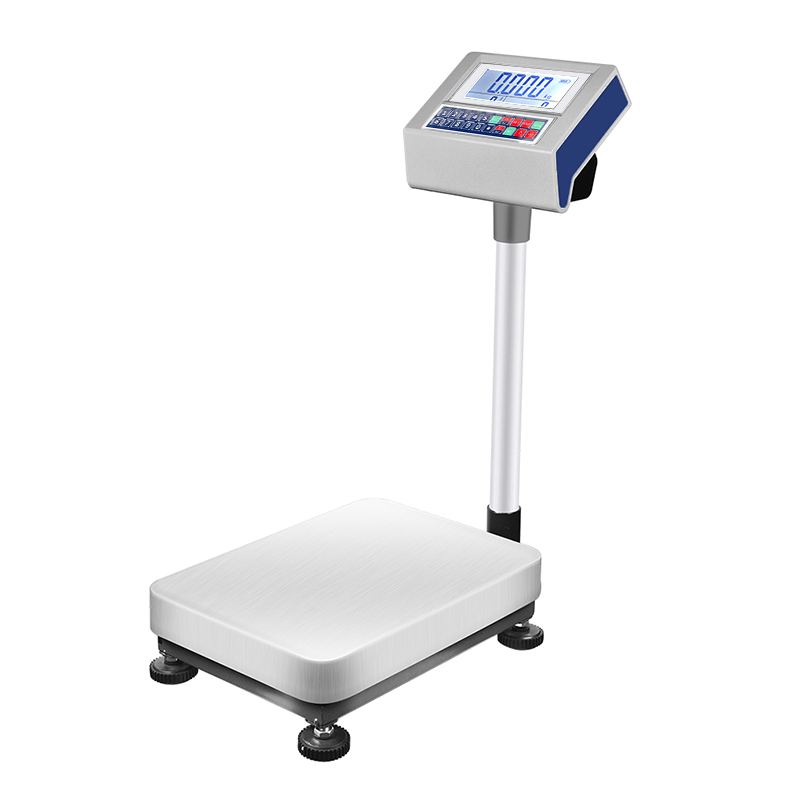
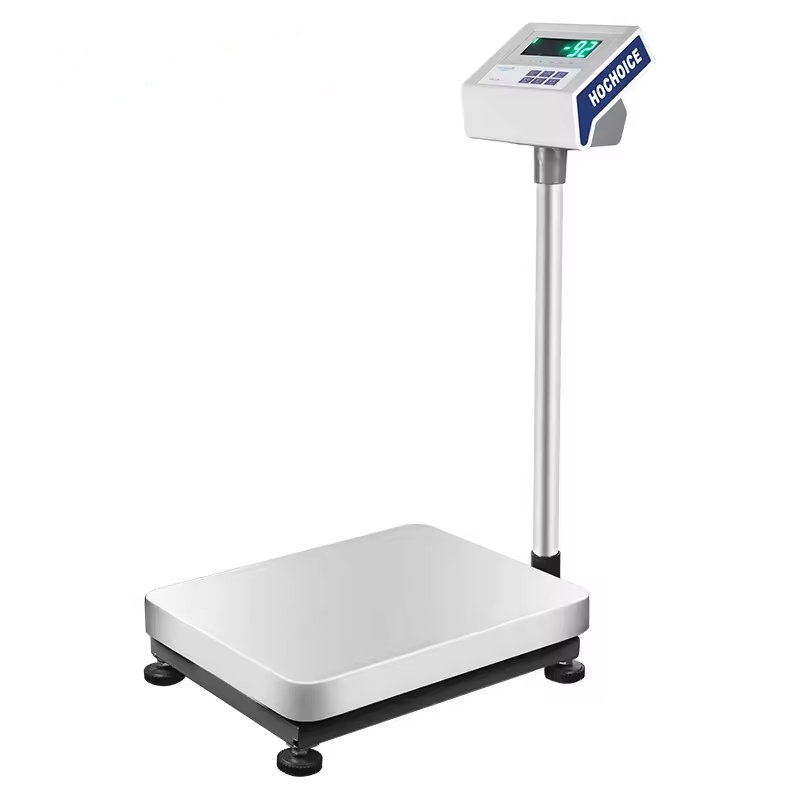
For high-volume industrial counting, a dedicated counting scale may provide additional functions, such as preset quantities, target-count alerts, or separate weighing platforms. Confirm these functions against the specifications of the selected model.
An electronic balance with counting mode is particularly useful when items are small, relatively uniform in mass, and handled in large quantities.
Typical applications include:
Counting screws, nuts, washers, and fasteners
Checking electronic components before assembly
Preparing laboratory consumables
Verifying packaged quantities
Supporting inventory checks and warehouse operations
However, weight-based counting is not suitable for every item. If the items have substantial mass variation, or if each individual item must be identified and counted independently, an alternative counting method may be more appropriate.
The parts counting function on an electronic balance estimates quantity by dividing the measured total mass by the average piece weight established from a known reference sample.
Its performance depends on representative reference items, suitable balance readability, and consistent weighing procedures. For businesses and laboratories handling large quantities of small, uniform components, this function can reduce manual workload and improve operational efficiency while retaining the need for appropriate verification.