
Density is an important physical property used to characterize materials, compare samples, and support quality-control procedures. In laboratory applications, an analytical balance can be used as part of a density determination setup, particularly when the method involves measuring mass in air and apparent mass while a sample is immersed in a liquid.
Understanding the measurement principle helps users select suitable equipment, prepare samples correctly, and recognize factors that can affect the calculated density.
Density describes the mass of a material per unit volume.
The basic equation is:
Density = Mass ÷ Volume
For example, if a solid sample has a mass of 20 g and a volume of 8 cm³, its density is:
Density = 20 g ÷ 8 cm³ = 2.5 g/cm³
The result is meaningful only when the mass and volume measurements are appropriate for the material and the required measurement uncertainty.
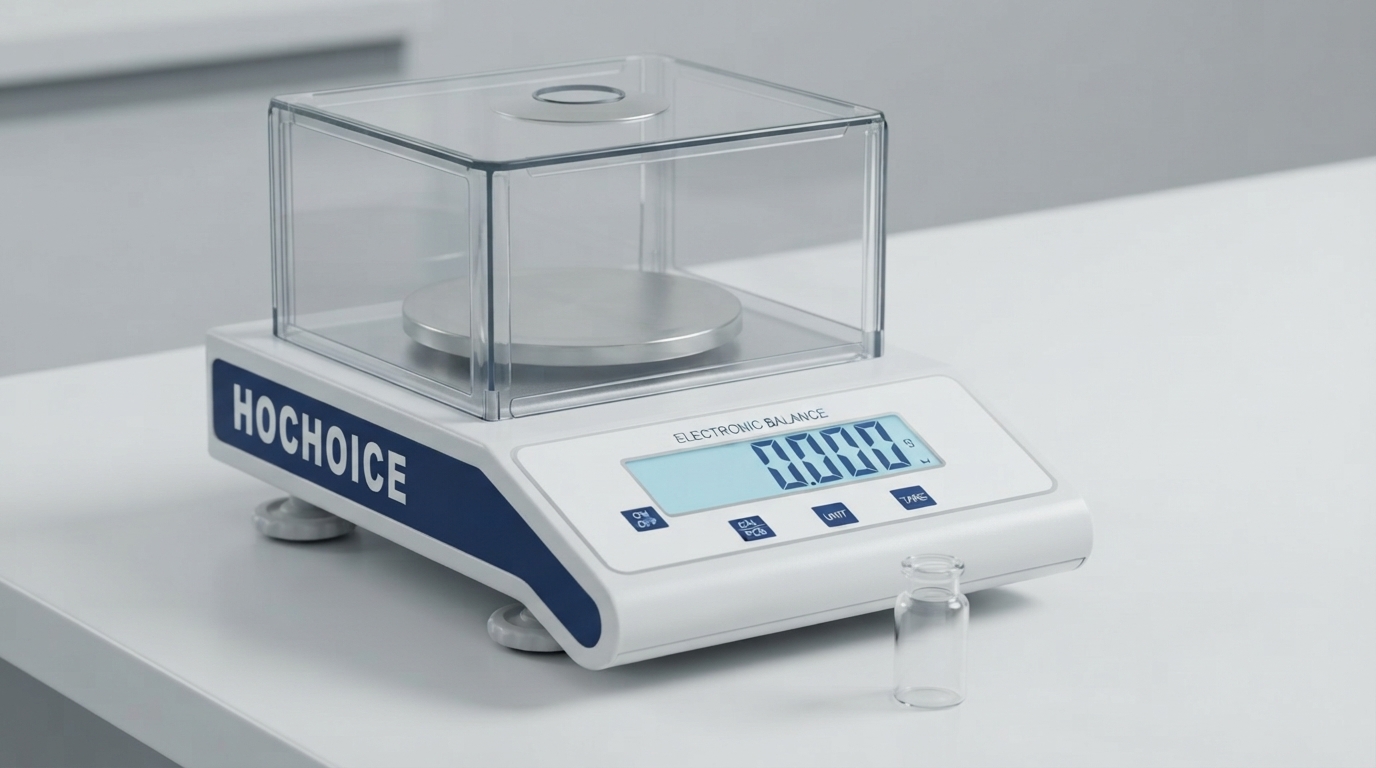
An analytical balance provides a mass measurement. Additional information or equipment is needed to determine volume, depending on the selected method.
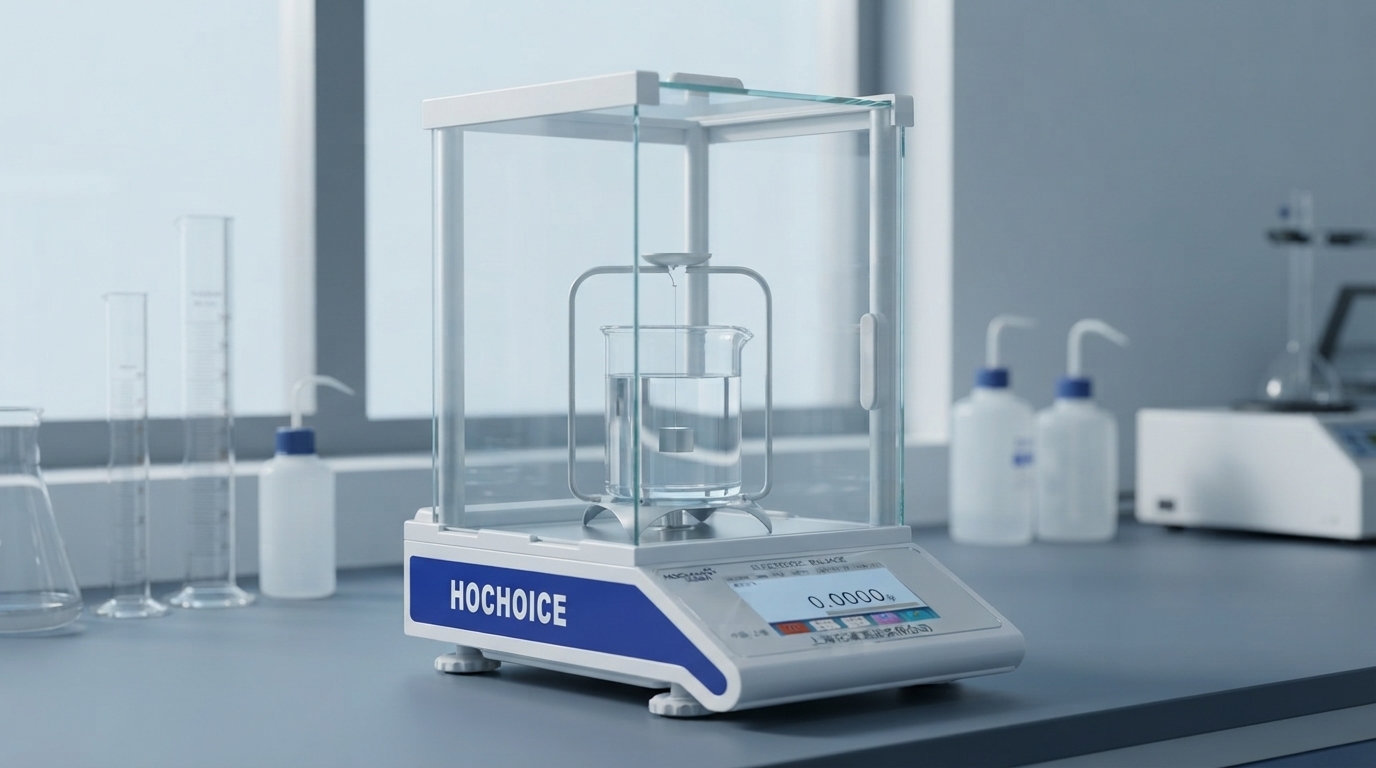
One common approach for suitable solid samples is the hydrostatic weighing method. This method uses the apparent change in weight when a specimen is immersed in a liquid.
The general principle is based on buoyancy: an object immersed in a fluid experiences an upward force related to the weight of the displaced fluid.
For an appropriate non-porous solid that does not react with or absorb the immersion liquid, density can be calculated from the specimen's mass in air and its apparent mass during immersion.
A simplified relationship is:
Density of solid = (Mass in air ÷ Mass loss during immersion) × Density of liquid
Here, the mass loss during immersion is the difference between the measured mass in air and the apparent mass under the specified immersion conditions.
This relationship assumes suitable measurement conditions and does not automatically account for every correction. The exact calculation should follow the applicable method and equipment instructions.
The setup depends on the sample and the selected procedure. A typical hydrostatic weighing arrangement may include:
An analytical balance with suitable readability and capacity
A compatible density determination kit or suspension arrangement
A container holding the immersion liquid
A suitable suspension wire or sample holder
A temperature measurement device when required by the method
A sample that is compatible with the liquid and measurement procedure
Not every analytical balance supports hydrostatic weighing directly. The balance must be compatible with the required accessories, and the complete setup must permit the specimen to be immersed without contacting the container.
Select a representative sample with a suitable shape and surface condition. Remove loose contamination and follow the method's requirements for drying, cleaning, or conditioning.
Place the specimen on the balance or suitable weighing support and record its mass according to the procedure.
Fill the container with a suitable liquid and arrange the suspension system. Ensure that the specimen can be immersed fully without touching the sides or bottom of the container.
Immerse the specimen according to the method. Remove visible air bubbles where the method permits, and allow the displayed reading to stabilize before recording it.
Use the prescribed equation, incorporating the mass measurements and the relevant density of the immersion liquid.
Check that the measurements are repeatable and that no obvious problems occurred, such as trapped bubbles, contact with the container, liquid absorption, or movement of the suspension wire.
The details may differ for porous, irregular, reactive, or liquid-absorbing materials. In those cases, the simplified procedure may not be suitable without method-specific adjustments.
The calculation depends on the density of the immersion liquid under the actual measurement conditions.
Liquid density can change with temperature. Using an inappropriate reference value may therefore introduce a systematic error into the calculated density of the specimen.
For reliable measurements:
Use a liquid suitable for the material and the prescribed method.
Measure or control the liquid temperature when required.
Use the corresponding liquid-density value for the measurement conditions.
Prevent contamination or significant changes in the liquid during testing.
For higher-accuracy applications, follow the relevant standard or validated laboratory procedure for liquid-density values and any required corrections.
Bubbles can change the effective displaced volume and affect the apparent mass. Inspect the sample during immersion and follow the method for removing bubbles safely.
If the specimen touches the beaker or another surface, the force measured by the balance may no longer represent the intended hydrostatic condition.
Changes in liquid temperature can affect its density and may influence the specimen or measurement setup.
Porous, absorbent, hollow, or liquid-reactive specimens may not behave according to the assumptions of a simple hydrostatic calculation.
The balance, suspension support, and accessories must be compatible with the method. Incorrect setup or mechanical interference can compromise the measurement.
Density determination can support a range of laboratory and industrial applications, including:
Material identification and comparison
Metal and alloy characterization
Research and development
Quality-control testing
Evaluation of selected solid materials
Educational demonstrations of buoyancy and material properties
The suitability of the method depends on the sample, required accuracy, and applicable industry or laboratory procedure.
An analytical balance can form part of a density determination system by measuring specimen mass and, in hydrostatic methods, the apparent mass change during immersion. Combined with the appropriate liquid-density information and a suitable measurement procedure, these measurements allow the density of certain solid materials to be calculated.
Reliable results require a compatible balance and accessory setup, careful specimen preparation, control of relevant environmental conditions, and attention to factors such as bubbles, liquid temperature, and sample porosity. Always select a method appropriate to the material and the required measurement quality.