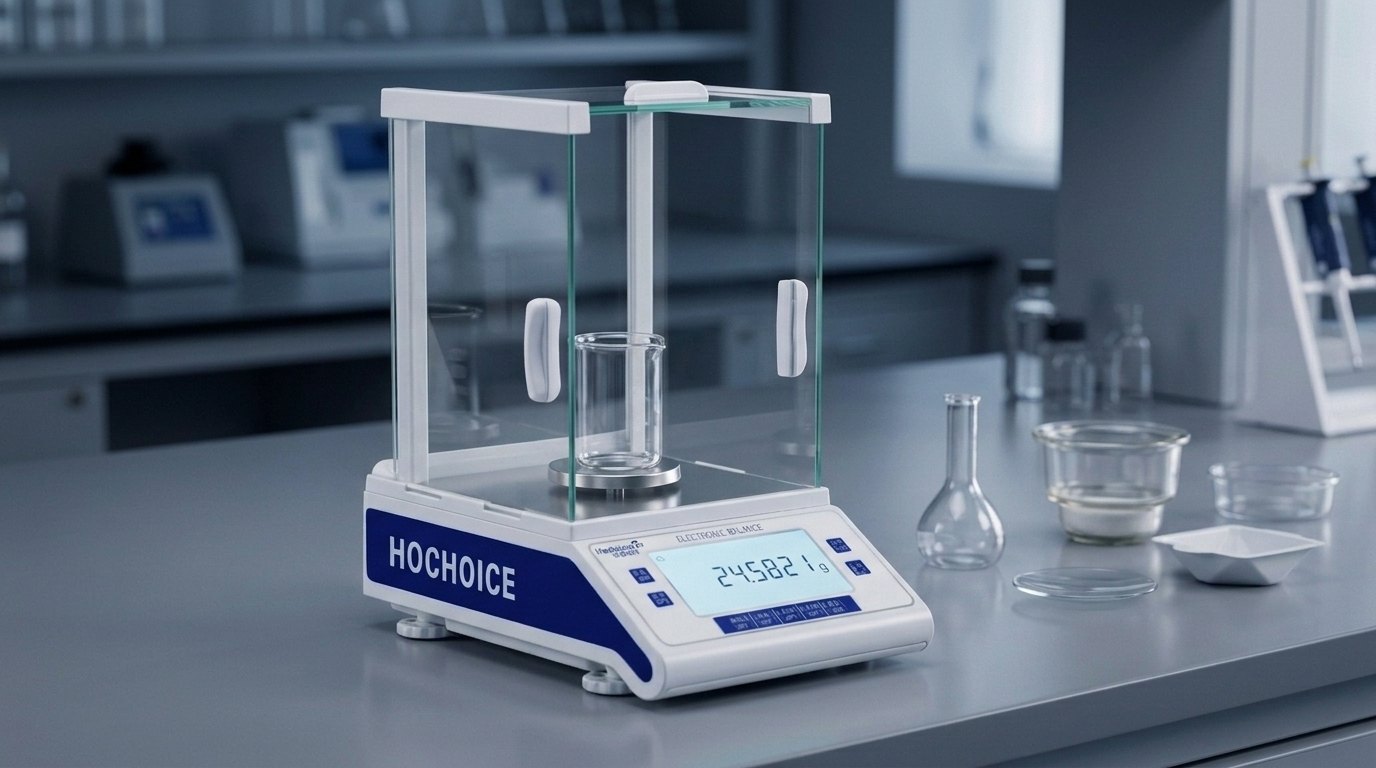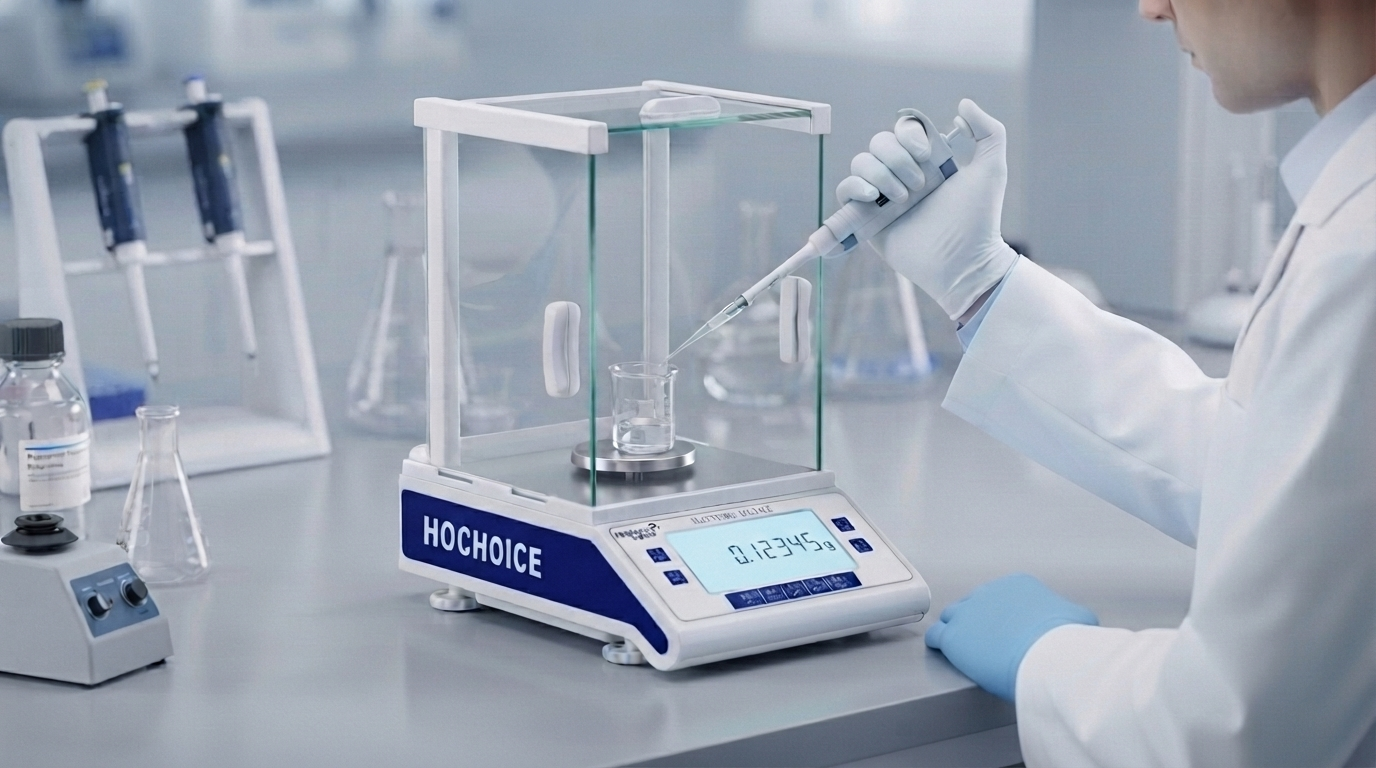

In laboratory work, samples are sometimes heated, dried, refrigerated, or stored under controlled temperature conditions before they are weighed. Although the balance may be ready for operation, placing a sample on the weighing pan while it is significantly hotter or colder than the surrounding environment can affect the measurement.
Temperature differences can create air movement around the sample, change the interaction between the sample and its surroundings, and influence the stability of the displayed value.
Understanding these effects helps laboratory personnel establish a more reliable weighing procedure.
An analytical balance measures the force acting on its weighing system and converts the result into a mass indication.
When a sample has a different temperature from the surrounding air, it can create local air movement. A warm sample heats nearby air, while a cold sample can cool the surrounding air.
These temperature differences may produce convection currents around the sample and weighing chamber. The resulting forces can influence the displayed reading.
The magnitude of the effect depends on the temperature difference, sample size, container, balance design, and surrounding conditions.
A sample that has just been removed from an oven or drying process may be considerably warmer than the laboratory environment.
As the sample cools, it can create air currents around the weighing vessel and inside the balance chamber. These currents may cause the indicated mass to fluctuate or appear different from the expected value.
The sample itself may also continue to lose moisture or volatile components during cooling. In such cases, the measured mass can change because the material is physically changing, not simply because of an instrument effect.
Samples removed from a refrigerator or cold storage area may be cooler than the surrounding laboratory air.
As the sample warms, moisture from the surrounding air may condense on its surface if the conditions allow it. This can increase the measured mass and potentially alter the sample.
Cold containers may also create temperature-related air movement around the weighing chamber.
For moisture-sensitive materials, condensation can be particularly important. Follow the method's instructions for sealed transfer, equilibration, or controlled handling rather than exposing the sample unnecessarily.
The correct conditioning procedure depends on the sample and the analytical method.
For a dried solid, the method may require cooling in a desiccator before weighing. For a refrigerated sample, it may require equilibration under controlled conditions or transfer in a sealed container.
Do not assume that every sample should simply be left open on the laboratory bench until it reaches room temperature. Some materials absorb moisture, lose volatile components, oxidize, or otherwise change when exposed to air.
Follow the method's specified cooling, storage, and handling instructions.
When a sample needs to cool before weighing, use a suitable container and handling procedure.
A desiccator may be appropriate for certain dried samples when required by the method. A sealed container may be suitable for materials that must be protected from ambient moisture or contamination.
Avoid placing hot vessels directly onto the balance unless the manufacturer and procedure explicitly permit it. Excessive heat can affect the instrument and its measurement environment.
Use appropriate protective equipment when handling hot, cold, or chemically hazardous materials.
Possible warning signs include readings that gradually change after a sample is placed on the pan, unexpected differences between immediate and later measurements, or results that vary with sample temperature.
These symptoms are not unique to temperature effects. Air drafts, vibration, static electricity, sample evaporation, and handling practices may produce similar observations.
If the reading is unstable, investigate the sample condition and the weighing environment rather than assuming that the balance is defective.
For measurements that are sensitive to temperature, define how samples are prepared, cooled or equilibrated, transferred, and weighed.
Where necessary, record relevant conditions such as the sample preparation method, cooling procedure, and measurement time.
Use the same procedure across operators and test batches. Consistent handling makes results easier to compare and helps identify unusual measurements.
Samples that are significantly hotter or colder than the surrounding environment can affect analytical balance readings through convection, condensation, moisture loss, and other temperature-related effects.
Reliable weighing requires a suitable sample-conditioning procedure that protects the material while allowing the measurement to be performed under controlled conditions. Always follow the analytical method and the instrument manufacturer's recommendations.