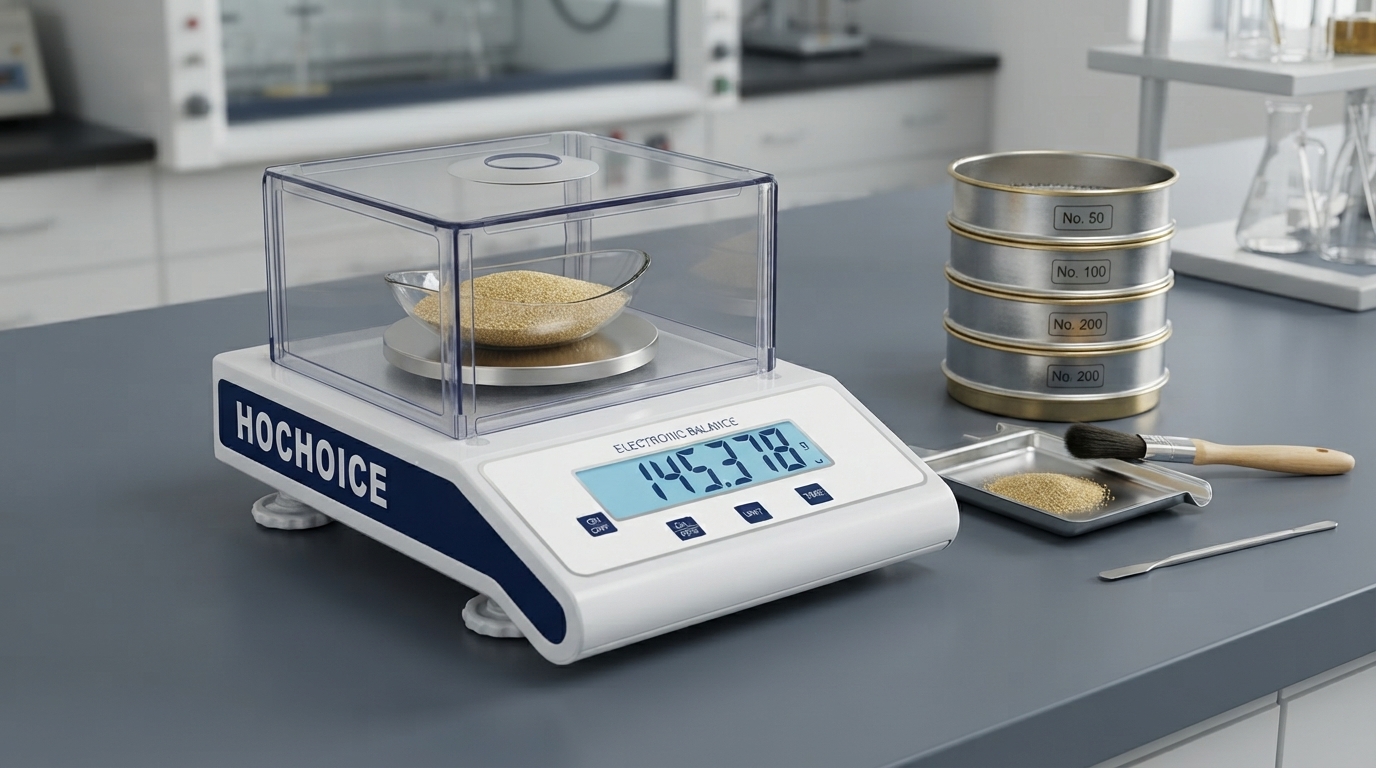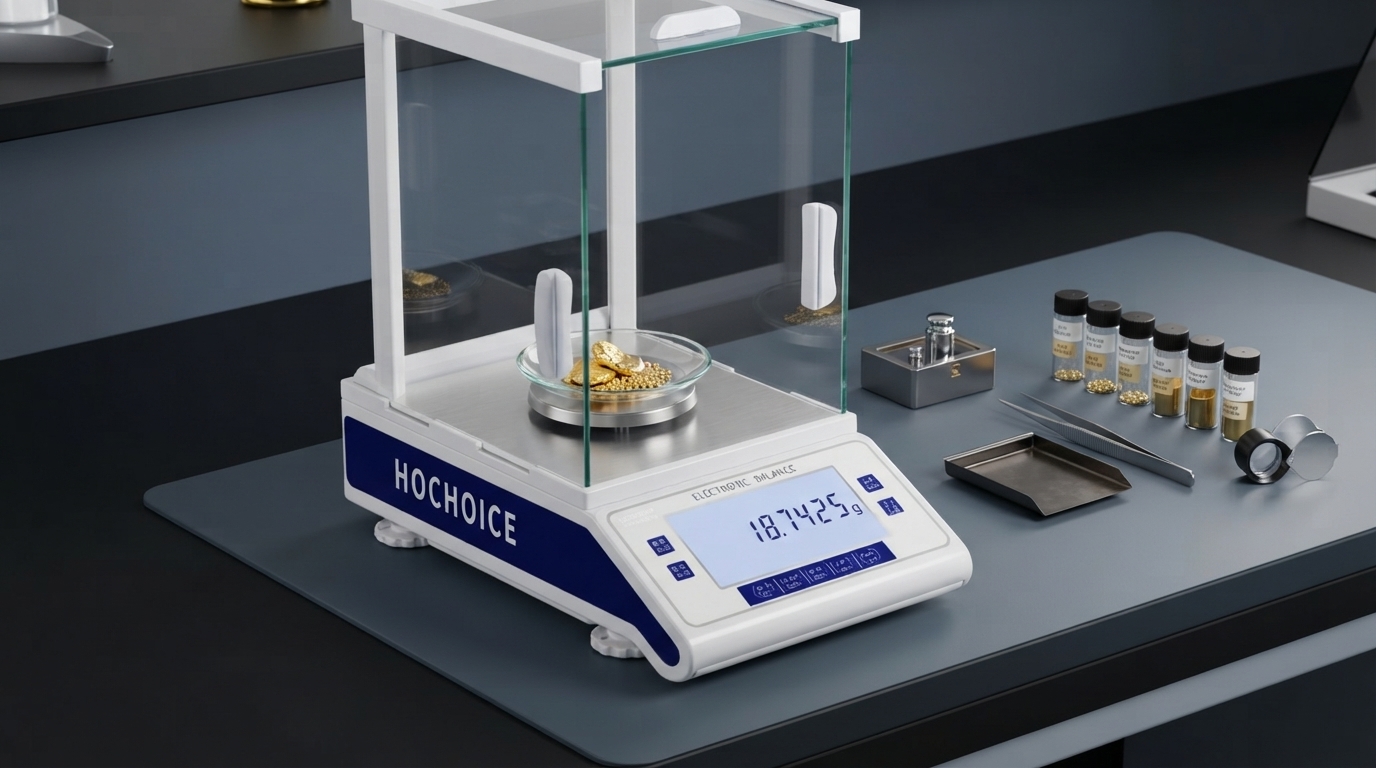

Soil analysis plays an important role in environmental monitoring, agricultural research, contamination assessment, and land management. Before a laboratory can perform chemical or physical testing, soil samples often need to be prepared and weighed according to a defined procedure.
Accurate soil sample weighing helps laboratories establish the correct test quantity and maintain consistency between measurements. However, soil is a heterogeneous material. Its composition, particle size, moisture condition, and sample preparation method can all influence the measured mass.
A suitable analytical or precision balance is therefore an important part of environmental laboratory sample preparation.
Environmental soil testing may involve measuring different properties, including nutrient concentrations, contaminant levels, organic matter, and other physical or chemical characteristics.
The mass of the test portion is important because laboratory methods often specify a particular sample quantity.
Accurate weighing helps laboratories:
Prepare test portions according to the analytical method.
Maintain consistency between different samples.
Support reliable concentration calculations.
Reduce variation caused by incorrect sample quantities.
Improve the comparability of laboratory results.
The required sample mass should always follow the applicable testing method rather than a general weighing recommendation.
Soil samples may contain stones, roots, plant fragments, and particles of different sizes. The preparation procedure should be selected according to the intended analysis.
Common preparation steps may include:
Sample homogenization
Mixing the sample helps distribute its components more evenly. This is especially important when a small portion is taken from a larger soil sample.
Particle size preparation
Some analytical methods require soil to be sieved or ground to a specified particle size. The preparation requirements depend on the test being performed.
Moisture condition
The moisture condition of a soil sample can significantly affect its mass. Laboratories should distinguish between weighing a sample in its received condition and weighing a sample after drying.
Representative subsampling
A small test portion should represent the original sample as closely as the method requires. Careful mixing and subsampling help reduce errors caused by uneven material distribution.
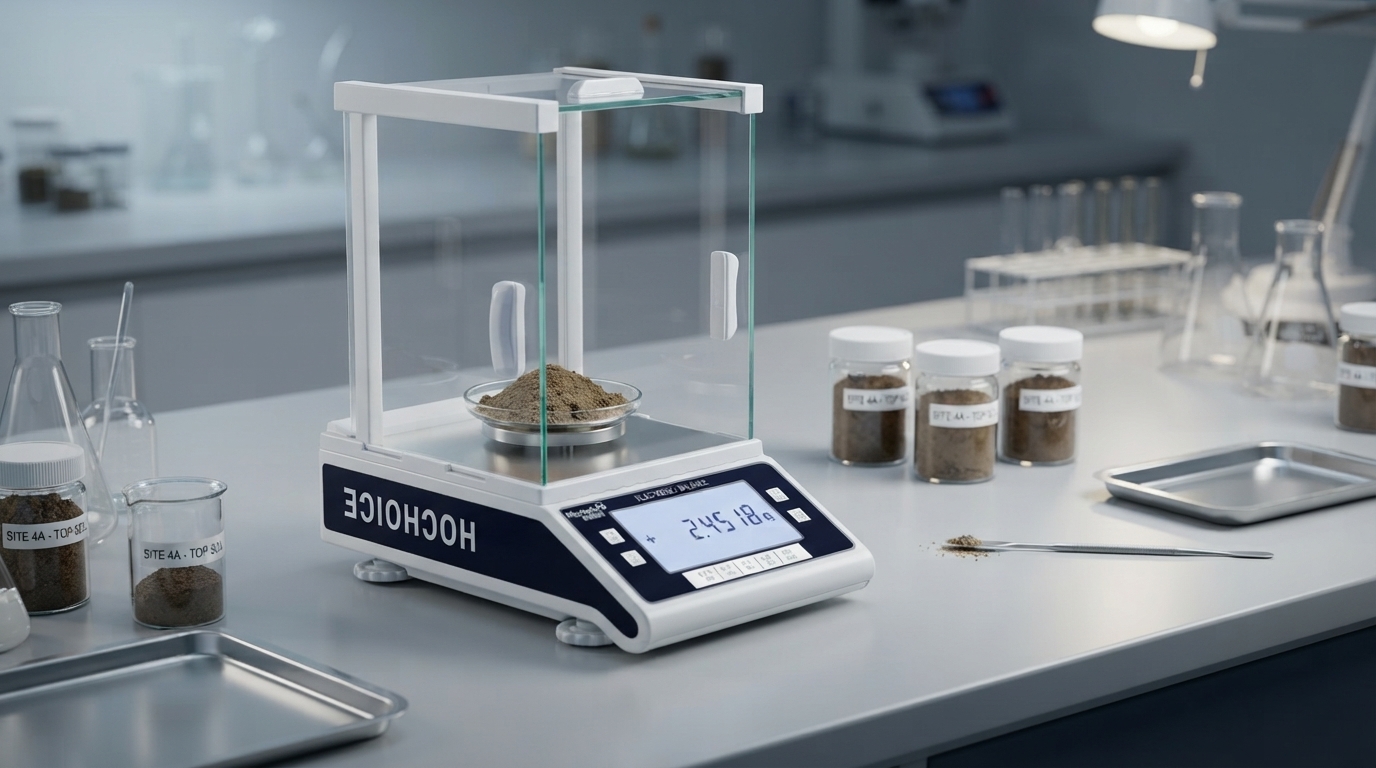
The balance should match the mass range and weighing requirements of the soil testing method.
Readability
The displayed increment should be appropriate for the required sample mass and analytical tolerance. Smaller test portions may require finer readability.
Capacity
The balance must accommodate the sample together with its weighing container.
Repeatability
Consistent weighing performance is important when several soil samples are prepared using the same procedure.
For routine sample preparation, a precision balance may be suitable for larger test portions. An analytical balance may be more appropriate when smaller quantities require finer mass measurement.
Soil samples can create several practical challenges during weighing.
Uneven sample distribution
A sample that has not been properly mixed may produce an unrepresentative test portion. Follow the sample preparation method before removing the portion for weighing.
Material loss
Fine soil particles can be lost during transfer. Use suitable weighing containers and transfer tools to minimize material loss.
Container contamination
Residue from previous samples may affect the measured mass or contaminate the next sample. Clean containers and tools according to the laboratory procedure.
Environmental disturbance
Air movement and vibration can affect balance stability. Use a stable working surface and allow the displayed reading to settle before recording the result.
A soil sample's mass is meaningful only when its condition is understood.
For example, a mass measured before drying is not directly interchangeable with a dry-mass value. If a testing method requires results to be expressed on a dry-mass basis, the laboratory must follow the specified moisture determination procedure.
Records should identify the sample, preparation condition, measured mass, and applicable test method.
This information helps analysts interpret results correctly and compare measurements from different samples.
Reliable soil sample weighing begins with proper sample preparation and an appropriate balance. Homogenization, particle size control, moisture condition, and representative subsampling all contribute to the quality of environmental laboratory measurements.
By following a standardized procedure and selecting a balance suited to the required sample mass, laboratories can improve consistency in soil analysis and environmental testing.