
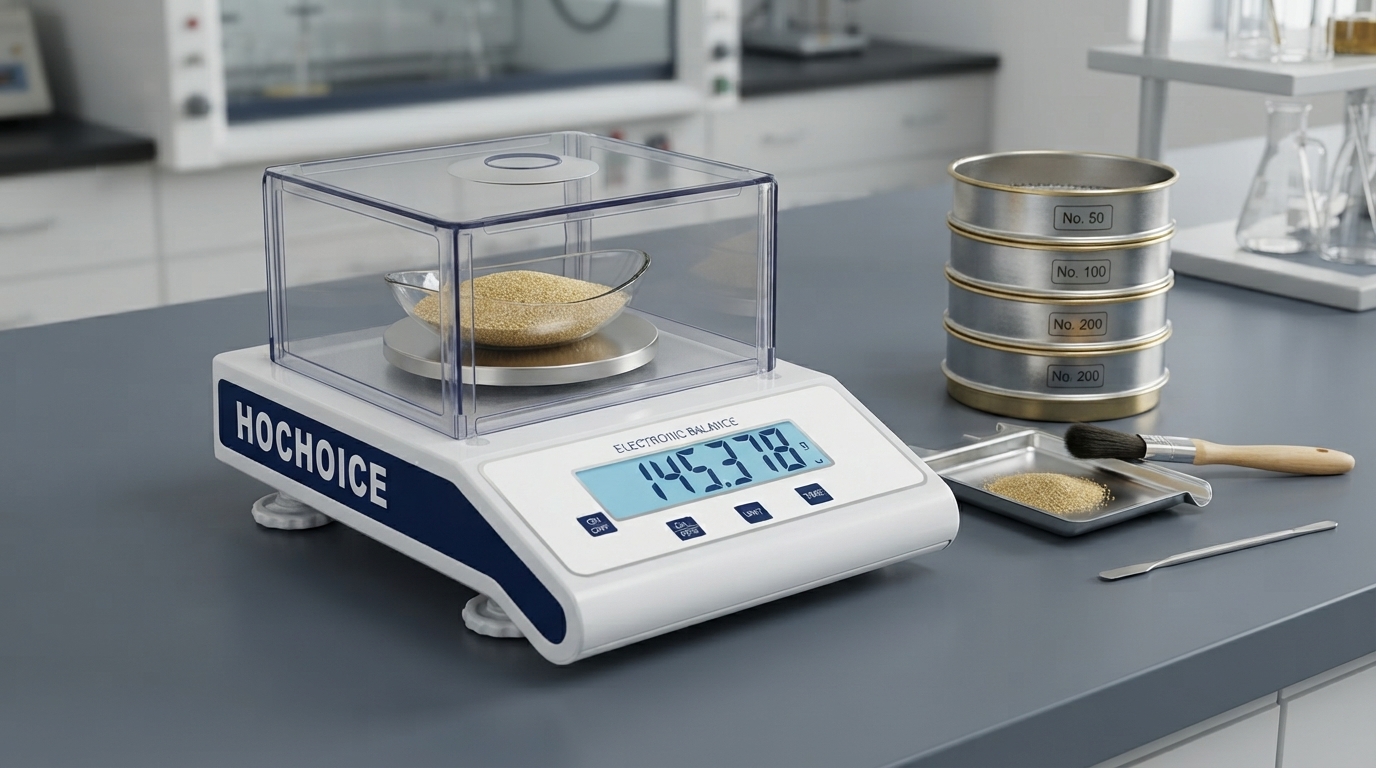
Sieve analysis is widely used in construction materials testing, mining, geology, chemical processing, and quality control. It helps determine the particle size distribution of granular materials by separating a sample through a series of sieves with different aperture sizes.
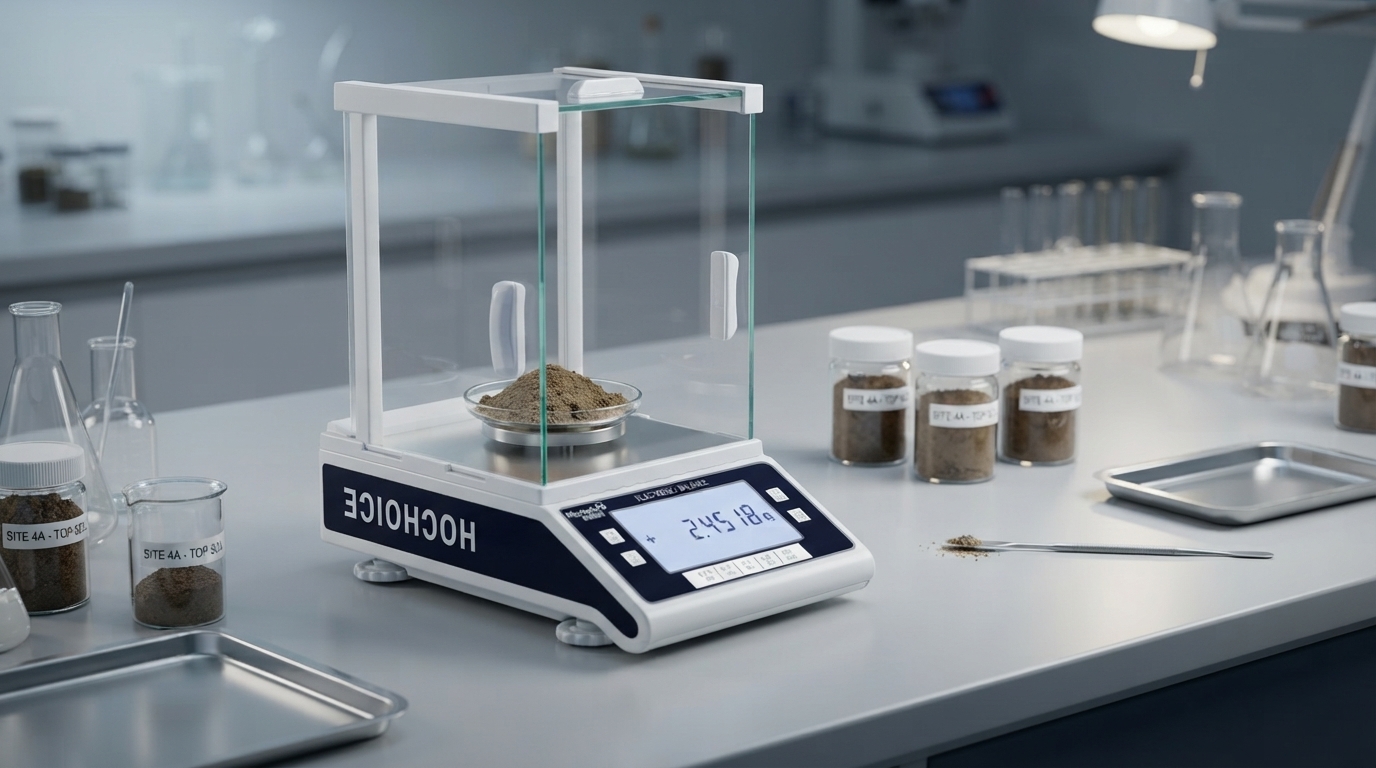
Before the sieving process begins, the original sample must be weighed. This initial mass provides the reference value for evaluating how much material is retained on each sieve and how the particles are distributed across different size ranges.
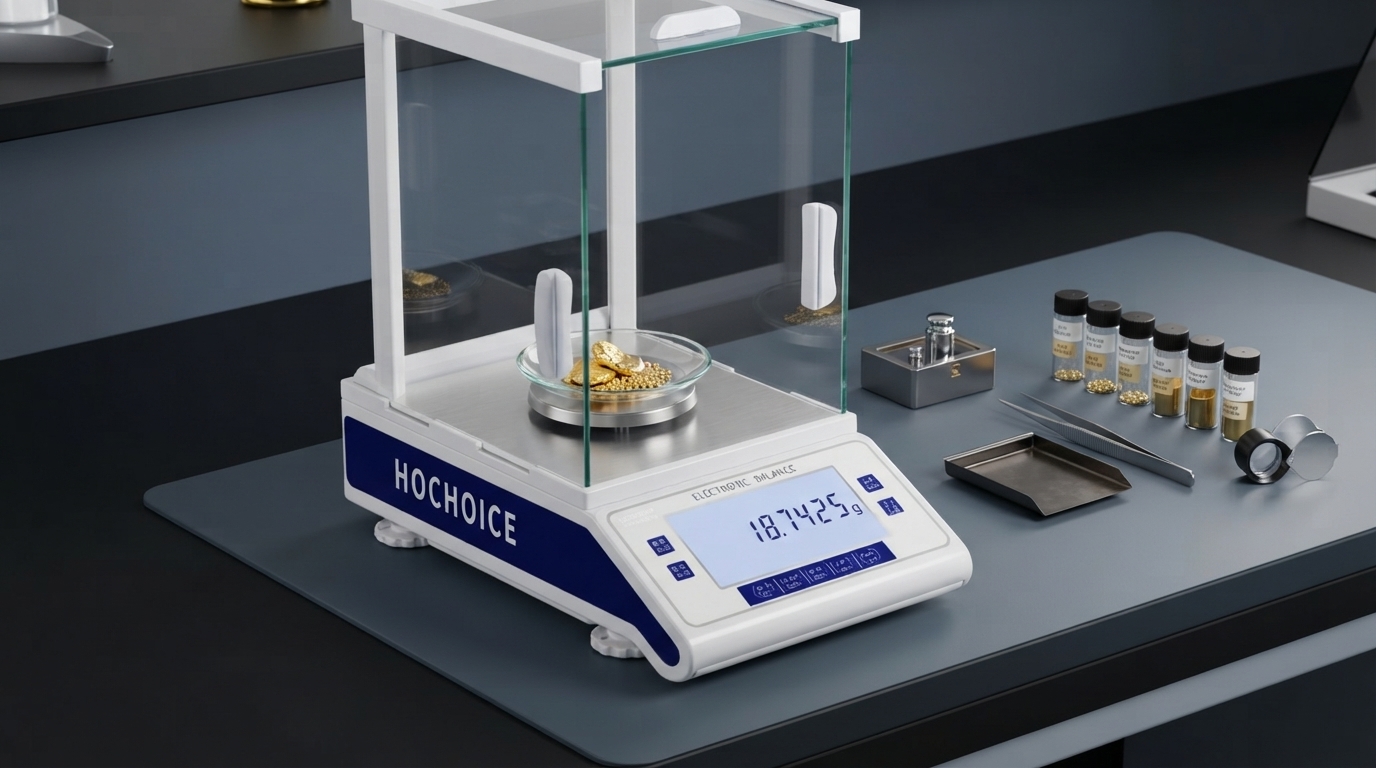
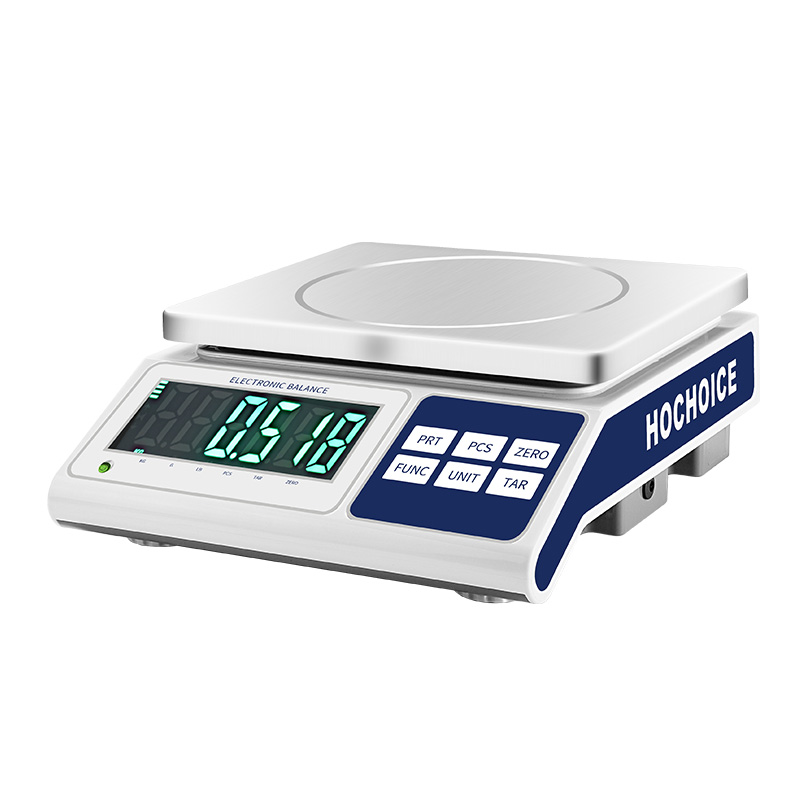
A suitable laboratory balance supports this process by providing a consistent starting mass for the analysis.
Sieve analysis is a particle size distribution test commonly used for materials such as:
Sand and gravel.
Crushed stone and aggregates.
Mineral particles.
Granular chemicals.
Certain powders and industrial materials.
A prepared sample is placed on a stack of sieves arranged from larger openings at the top to smaller openings below.
The sieves are shaken manually or with a mechanical sieve shaker. Particles are separated according to their ability to pass through each sieve opening.
After the test, the material retained on each sieve is collected and weighed according to the applicable test method.
The initial sample mass provides the reference for calculating the percentage of material retained on each sieve.
A common calculation is:
Percentage Retained = Mass Retained on a Sieve ÷ Initial Sample Mass × 100%
For example, if the initial sample mass is 500 g and 75 g remains on a particular sieve, the percentage retained is 15%.
The accuracy of this calculation depends on obtaining a suitable initial mass and following the same weighing procedure throughout the test.
If the initial sample mass is recorded incorrectly, the calculated particle size distribution may also be affected.
The balance should be selected according to the mass of the test sample and the requirements of the applicable standard.
Capacity
Aggregate and construction material samples can be relatively heavy. The balance must have sufficient capacity for the sample and its weighing container.
Readability
The required readability depends on the sample mass and the measurement tolerance specified by the test method.
Weighing platform
A suitable platform should provide enough space for the sample container and allow stable placement during measurement.
Repeatability
Consistent weighing helps laboratories compare test results across different samples and testing sessions.
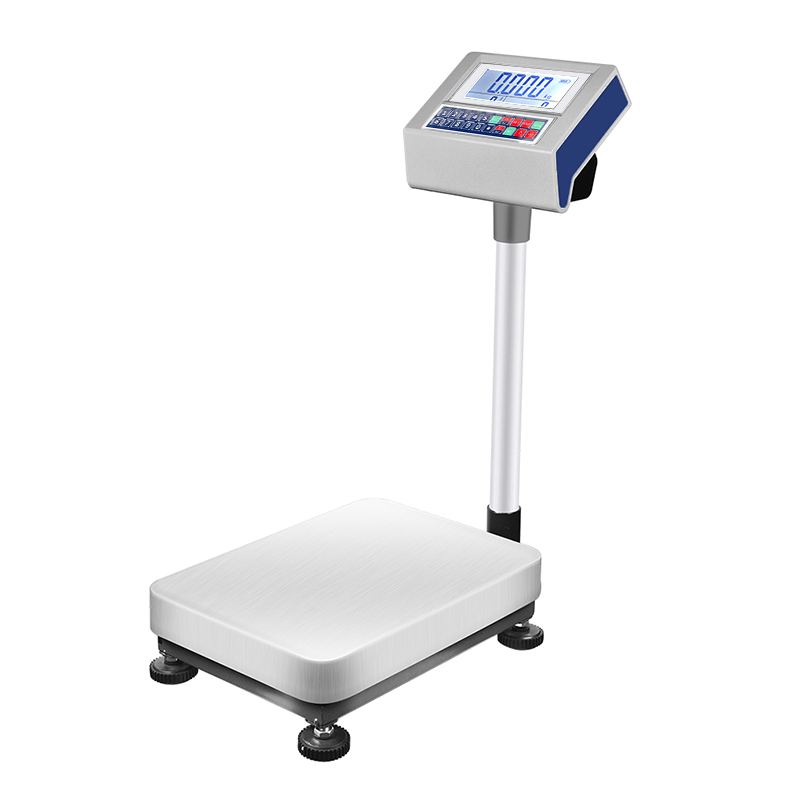
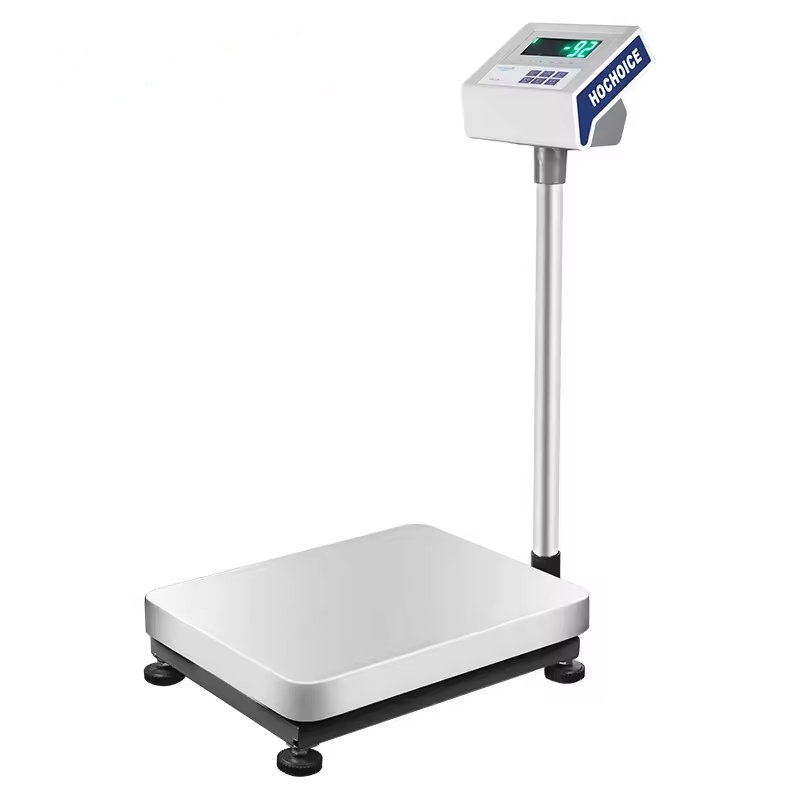
For larger aggregate samples, a suitable precision or industrial balance may be more practical than a high-resolution analytical balance.
Sample preparation has a direct influence on the quality of sieve analysis.
A representative test portion should be obtained from the original material using the specified sampling and reduction method.
Depending on the material and test standard, preparation may involve:
Removing unsuitable foreign materials when required by the method.
Mixing the sample to improve uniformity.
Reducing the sample to the required test quantity.
Drying the sample when the procedure specifies a dry-mass basis.
Allowing the prepared sample to reach the required condition before weighing.
The preparation procedure should be documented and applied consistently.
Granular materials can be lost during pouring, transferring, or moving between containers.
This can affect the relationship between the initial sample mass and the mass collected after sieving.
To reduce material loss:
Use suitable sample trays and containers.
Transfer material carefully.
Avoid unnecessary handling.
Keep the work area clean.
Collect and inspect material remaining in the preparation container when the method requires it.
The laboratory should follow the relevant testing standard when determining how to handle material that remains attached to containers or equipment.
After the sieving process, the retained material from each sieve is weighed.
The sum of the retained masses can then be compared with the original sample mass.
A significant difference may indicate material loss, incomplete transfer, sample handling problems, or other procedural issues.
Laboratories should establish acceptable mass recovery limits according to the applicable test standard. Results outside those limits should be investigated before the particle size distribution is reported.
Accurate initial sample weighing is an essential step in sieve analysis. It provides the reference mass used to calculate particle size distribution and evaluate material retained on each sieve.
By selecting a balance with suitable capacity and readability, preparing representative samples, and minimizing material loss during handling, laboratories can improve the reliability of granular material testing.