
Sample layer thickness is an important factor in halogen moisture analysis because it influences how heat reaches the sample and how moisture escapes during drying. Even when the same material and instrument are used, differences in sample distribution can contribute to variations in drying behavior and final moisture results.
For laboratories using halogen moisture analyzers, understanding the relationship between sample thickness, heat transfer, and moisture release helps improve consistency and makes results easier to compare.
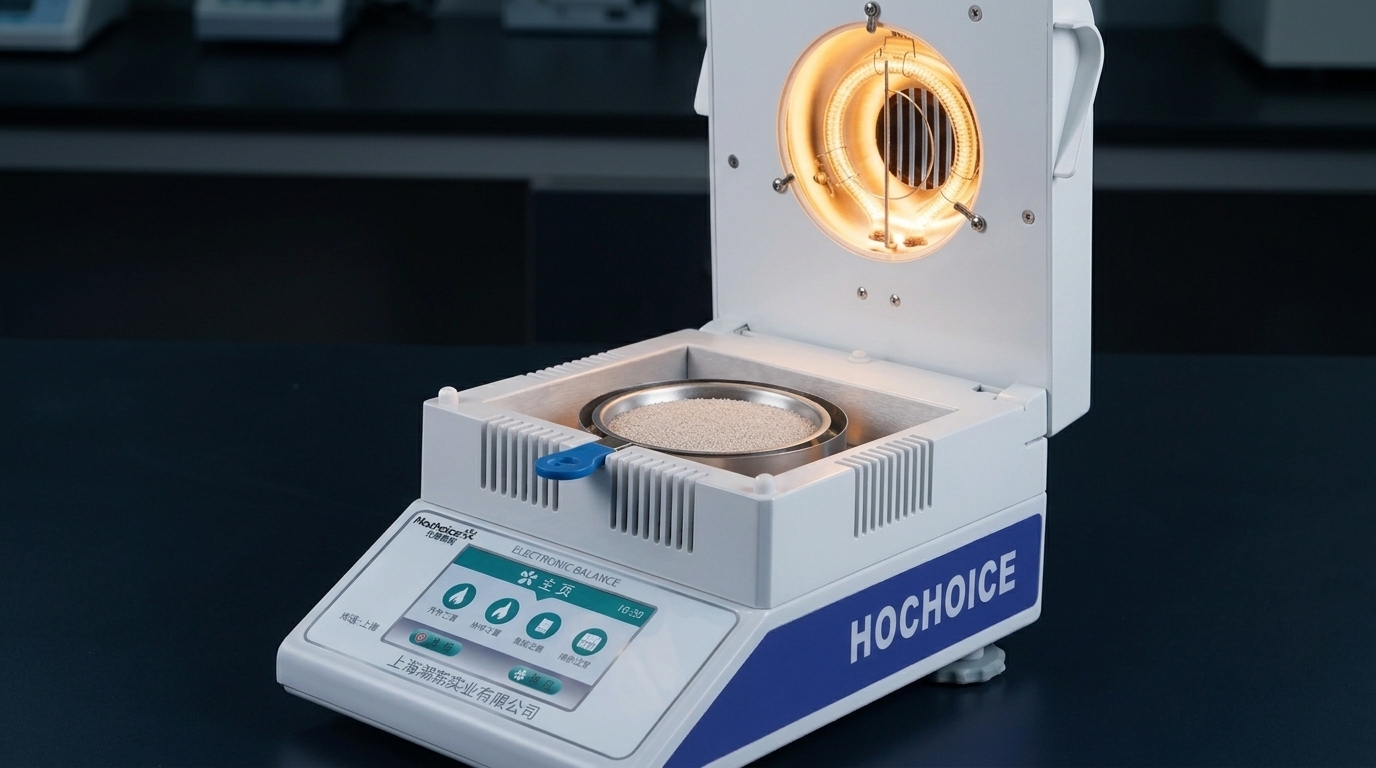
A halogen moisture analyzer typically combines a weighing system with a heating unit. The instrument records the sample mass while heating it according to a defined drying program.
As moisture evaporates, the sample mass decreases. The instrument uses the change in mass to calculate moisture content or another selected measurement result, depending on the configured method.
The measurement is based on mass loss during heating. Therefore, the result can be affected not only by the moisture in the sample but also by the drying temperature, heating duration, sample characteristics, and any non-water substances that evaporate or decompose under the test conditions.
When a sample is spread in a thick pile, the material near the surface may receive heat and release moisture differently from material in the center or lower layers.
This can create several challenges.
A thick sample layer may develop temperature differences between its outer and inner regions. As a result, different parts of the sample may dry at different rates.
Moisture from the interior of a sample may need more time to move toward the surface before evaporating. A thick layer can therefore require a different drying profile from a thin, evenly distributed layer.
If operators spread the same mass of material differently from one test to another, drying conditions may not be comparable. This can contribute to inconsistent results, particularly when the sample contains particles of different sizes or has uneven moisture distribution.
The magnitude of these effects depends on the material. A fine powder, a coarse granulate, and a fibrous sample may respond differently even when their total masses are identical.
The appropriate sample preparation method depends on the material and the validated test procedure. However, several general practices can help improve consistency.
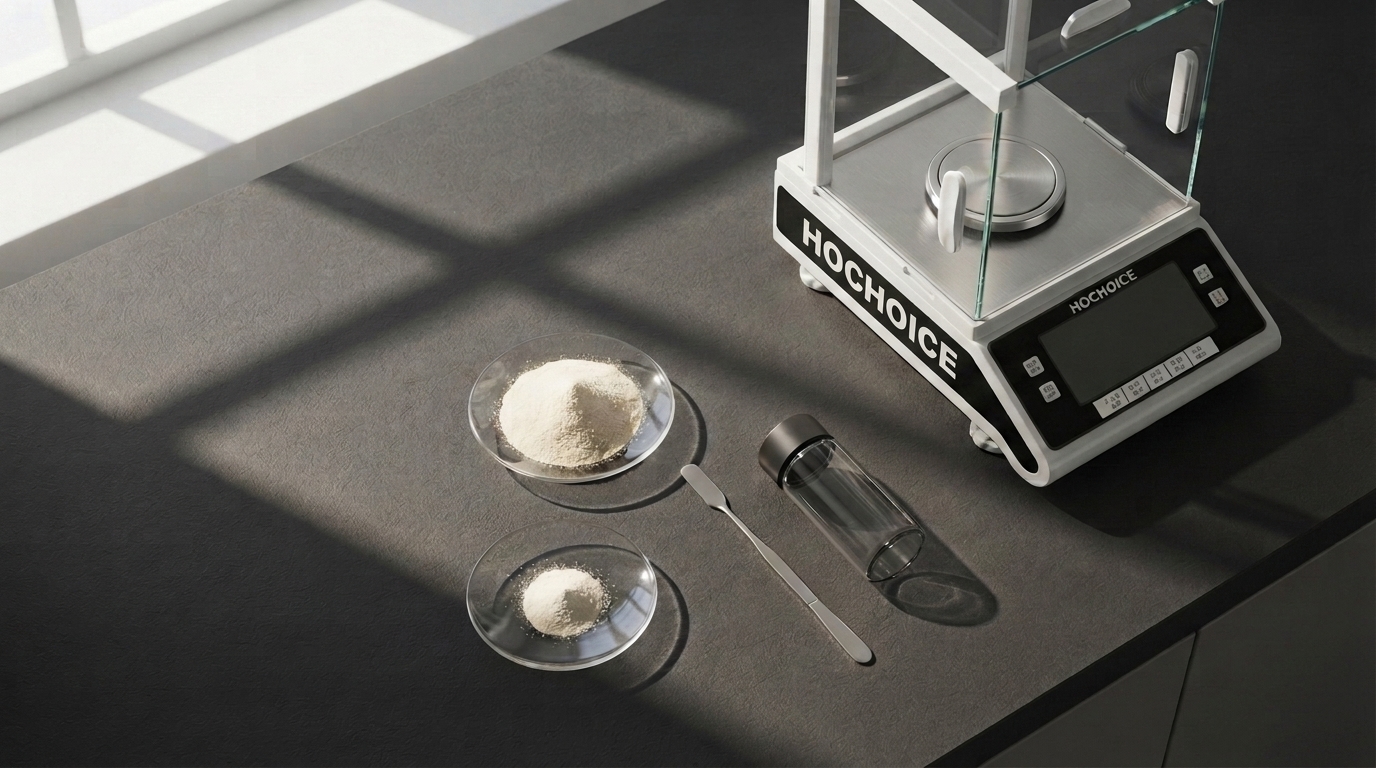
Spread the sample evenly. Where the material allows it, distribute the sample across the usable area of the pan rather than forming a tall central mound.
Avoid unnecessarily thick layers. Use a sample quantity and distribution appropriate for the material. A larger sample is not automatically better if it prevents uniform heating or moisture release.
Do not compact the sample without a defined reason. Pressing material into a dense layer can alter the pathways through which moisture escapes. Follow the method specified for the product or application.
Use consistent sample preparation. Apply the same distribution procedure to replicate measurements and comparative tests.
Prevent sample loss. Ensure that the sample remains within the pan during handling and drying. Material lost from the pan can be interpreted by a mass-loss-based instrument as part of the drying process.
Not necessarily. Although a thin layer can improve exposure to heat and facilitate moisture release for many materials, reducing the sample mass too much can introduce other problems.
A very small sample may not represent the overall material adequately, especially when the material is heterogeneous. In addition, the suitability of a small sample depends on the instrument's weighing performance and the measurement method.
The objective is not to make every sample as thin as possible. It is to select a representative sample mass and a repeatable distribution method that suit the material and test requirements.
When developing a method for a new material, a controlled comparison can help identify whether sample distribution affects the result.
Select a representative, well-mixed batch of material.
Use the same instrument, test temperature, and drying program for the comparison.
Prepare replicate samples using a consistent sample mass.
Compare the results from the standard distribution procedure with those from an alternative distribution procedure.
Review both the final moisture results and the drying curves, if the instrument provides them.
Document the selected method and confirm it with additional tests before routine use.
Change one variable at a time whenever practical. If sample mass, temperature, and layer thickness all change together, it becomes difficult to identify which factor caused the observed difference.
For quality-control applications, the sample distribution method should be defined as part of the testing procedure whenever it has a meaningful effect on the result.
The procedure may specify the sample mass, preparation technique, distribution area, heating program, and criteria used to determine the end of a test.
For materials that are heat-sensitive or contain volatile substances other than water, mass loss during heating may not correspond exclusively to water content. In these cases, the drying method should be evaluated against an appropriate reference method or application-specific requirements.
Sample layer thickness influences heat transfer and moisture release during halogen moisture analysis. Thick or unevenly distributed samples may dry less uniformly, while excessively small samples may fail to represent the material adequately.
A consistent sample mass, suitable distribution, and controlled drying procedure help improve comparability between tests. For reliable moisture measurements, laboratories should establish sample preparation conditions appropriate to the material rather than assuming that one sample thickness is suitable for every application.