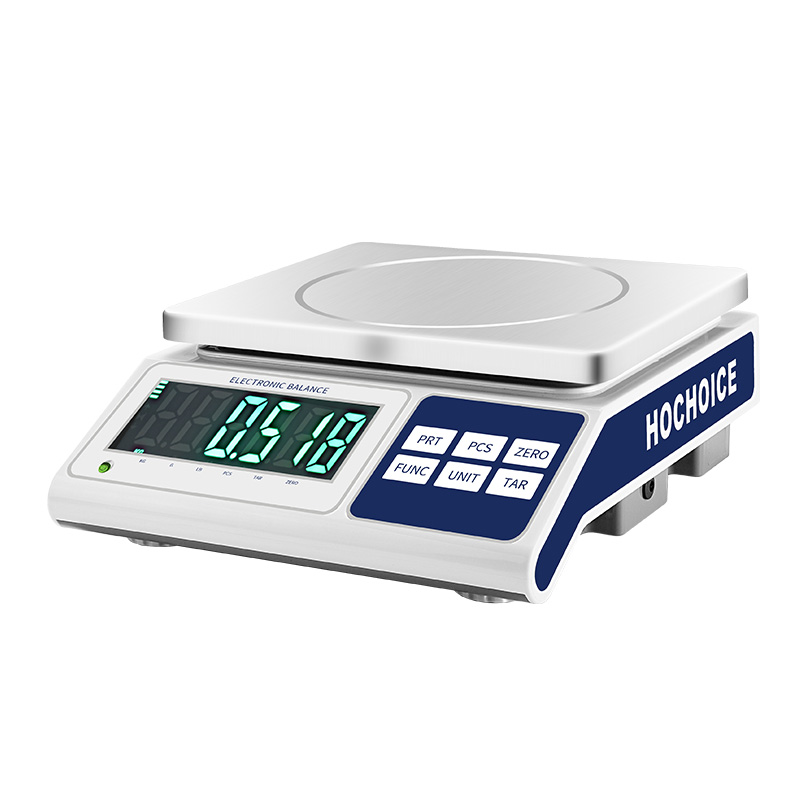


An analytical balance weighing procedure should be consistent, controlled, and appropriate for the required measurement accuracy. Even a high-resolution analytical balance can produce unreliable results if samples are handled incorrectly, containers are contaminated, or readings are recorded before stabilization.
For laboratories involved in chemical analysis, pharmaceutical research, quality control, and material testing, a standardized weighing procedure helps reduce avoidable variation and improves the reproducibility of results.
Before starting a measurement, confirm that the analytical balance is suitable for the task.
Check the following:
The balance is placed on a stable surface away from drafts, vibration, and frequently opened doors.
The instrument is level according to its level indicator and operating instructions.
The weighing pan and surrounding chamber are clean.
The balance has completed the warm-up period specified by the manufacturer.
The instrument has passed the required calibration or performance checks.
The required warm-up time depends on the balance design and model. Do not assume that all analytical balances require the same period.
Sample preparation can directly affect the quality of a weighing result.
Ensure that the sample is suitable for the intended procedure. Where required, homogenize it before taking a test portion. Use clean tools and containers, and avoid unnecessary exposure to air when the sample can absorb moisture or lose volatile components.
Samples and containers should also be allowed to reach a suitable temperature before weighing. Warm objects can create convection currents, while cold objects may cause condensation under certain conditions.
For hazardous, reactive, or moisture-sensitive materials, follow the laboratory's established handling and containment procedures.
A practical analytical balance weighing procedure can be organized into the following steps.
Switch on the balance if necessary and allow it to reach the operating condition specified by the manufacturer. Check the display for error messages and verify that the balance is ready to measure.
With the weighing pan empty, confirm that the display indicates zero or use the zero function according to the instrument instructions.
If the balance cannot establish a stable zero, investigate the condition before proceeding.
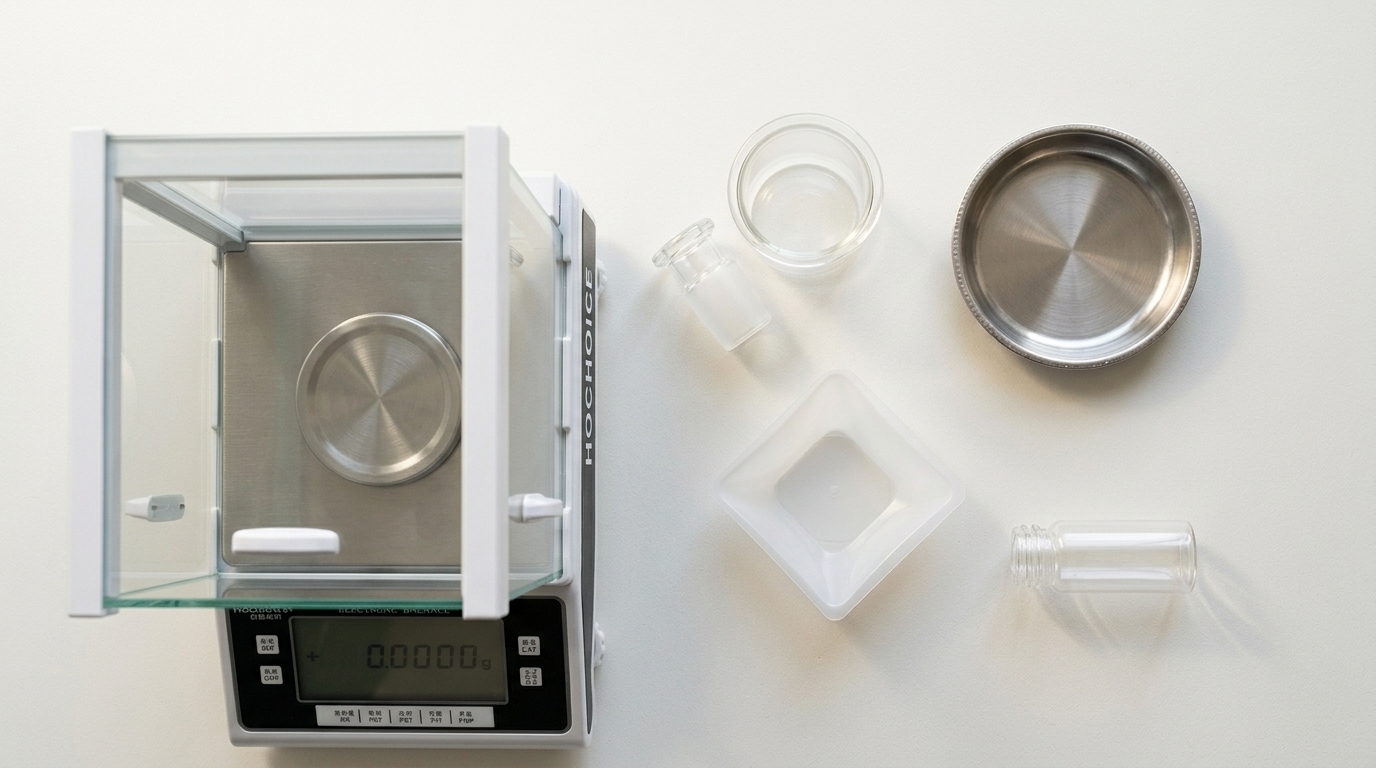
Position the weighing container carefully in the center of the pan. Avoid touching the pan with fingers or allowing the container to contact the chamber walls.
Use the tare function when the required result is the net mass of the sample. The display should return to zero before the sample is added.
If the procedure requires recording the empty container mass, capture that value before taring.
Transfer the sample using a suitable tool. Avoid spills, excessive handling, and unnecessary exposure of the sample to the surrounding environment.
For powders, add material gradually when close control of the target mass is important.
Close the draft shield if the balance has one. Wait until the stability indicator or the manufacturer's defined criterion confirms a stable reading.
Do not record a transient value simply because the display briefly shows the expected mass.
Record the displayed value, unit, sample identification, and any additional information required by the laboratory procedure. Include the balance identification or environmental information when required by the applicable quality system.
Remove the container carefully. Clean any residue using an approved method, taking care not to damage the weighing pan or introduce liquid into the instrument.
These terms describe different aspects of balance performance.
Readability is the smallest increment displayed by the instrument. A balance with 0.0001 g readability displays mass in increments of 0.0001 g, but that alone does not establish the uncertainty of the measurement.
Repeatability describes how closely repeated measurements agree when the same quantity is measured under specified conditions.
Accuracy describes how close a measurement result is to the relevant reference value. In practical laboratory work, performance is assessed using appropriate tests, reference standards, and acceptance criteria.
A balance with finer readability is not automatically the best instrument for every application. Capacity, repeatability, environmental conditions, minimum sample mass, and the required measurement uncertainty also matter.
| Mistake | Why it matters | Better practice |
|---|---|---|
| Recording before stabilization | The displayed value may still be changing | Wait for the instrument's stability criterion |
| Weighing warm samples | Temperature differences can disturb readings | Allow suitable thermal equilibration |
| Leaving the draft shield open | Air movement can affect sensitive measurements | Close the shield during measurement |
| Touching the container unnecessarily | Handling can introduce contamination or temperature changes | Use consistent, appropriate handling |
| Ignoring sample loss | Spills or material adhering to tools can change the amount weighed | Inspect transfer tools and containers |
| Assuming readability equals accuracy | Display resolution does not describe total measurement performance | Evaluate performance against the application's requirements |
Review the weighing procedure if results show unexplained variation, sample transfer is inconsistent, the displayed value takes unusually long to stabilize, or the method does not meet its acceptance criteria.
Start by checking the sample, container, environment, and handling sequence. Then perform the relevant balance performance checks in accordance with the manufacturer's instructions and laboratory requirements.
For regulated or validated applications, procedural changes should be evaluated and documented through the laboratory's quality system.
A reliable analytical balance weighing procedure combines proper instrument preparation, suitable sample handling, consistent tare practices, stable readings, and complete documentation.
By standardizing these steps, laboratories can reduce avoidable weighing errors and improve measurement consistency. The procedure should always be matched to the balance model, sample characteristics, and accuracy requirements of the application.