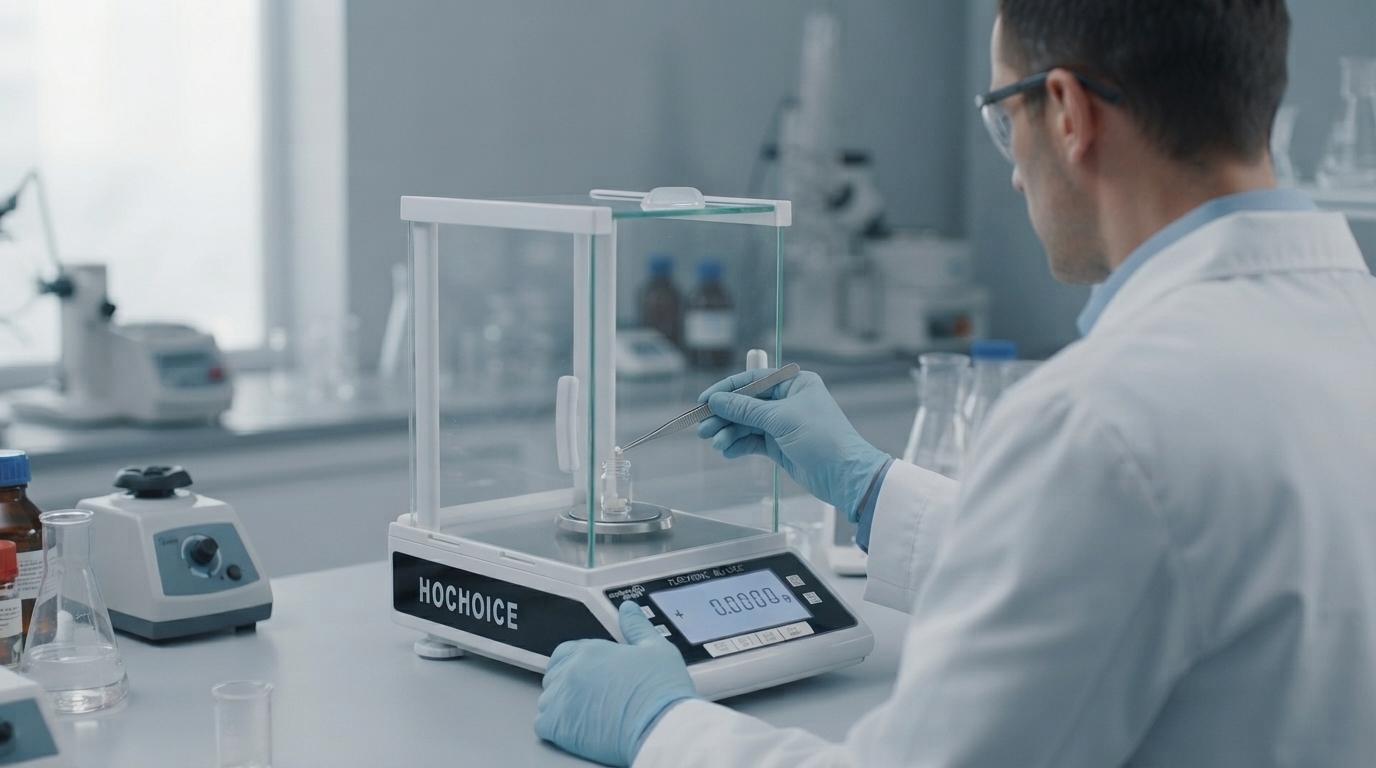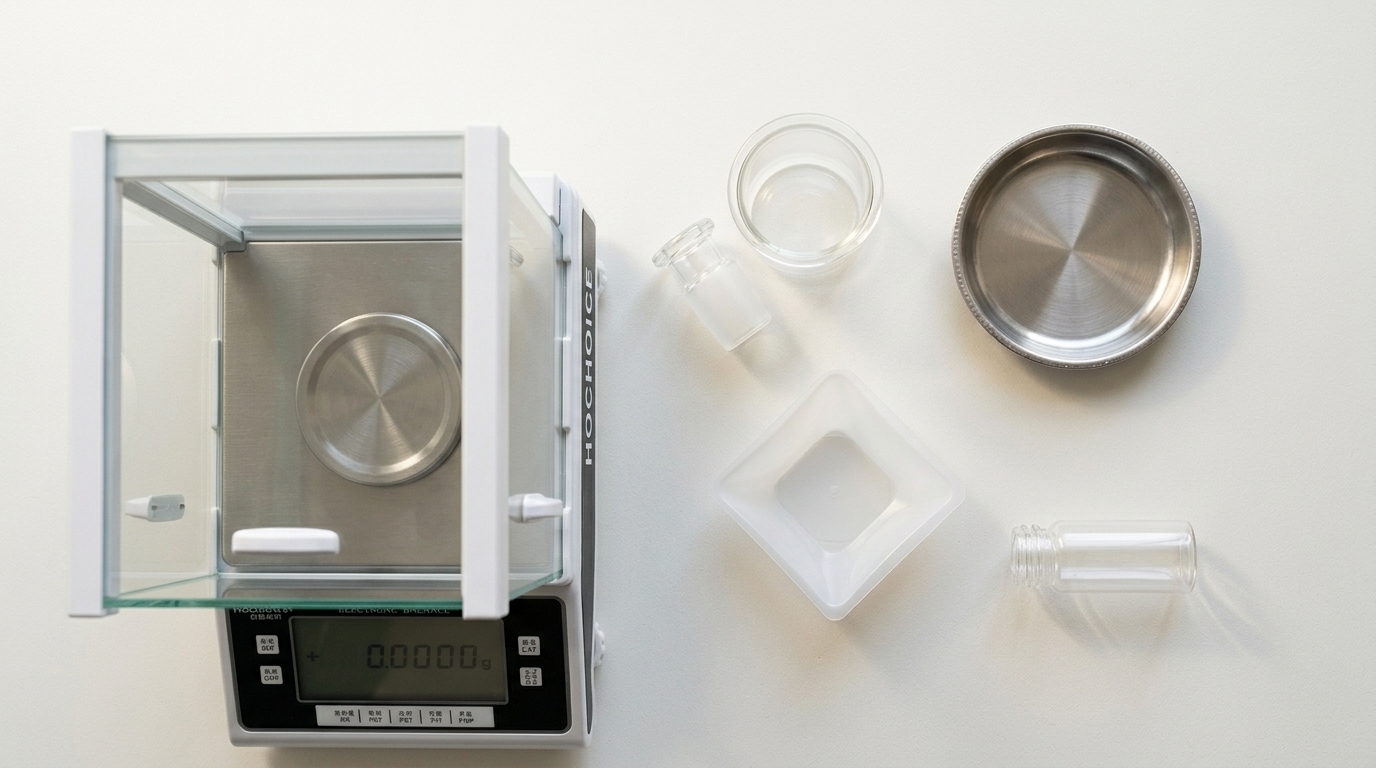

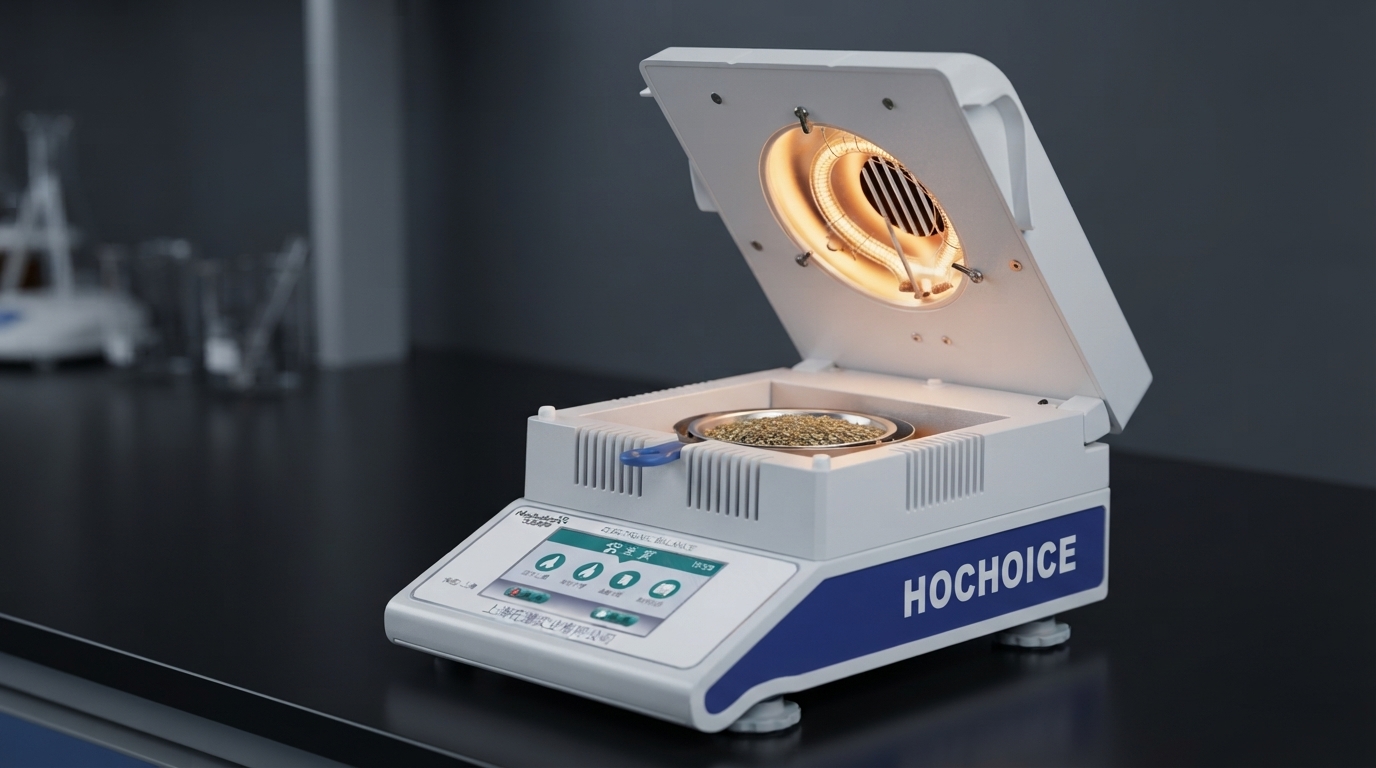
A halogen moisture analyzer is widely used for rapid moisture determination in laboratories and production environments. It combines a weighing system with a heating unit to measure the change in sample mass during drying and calculate the resulting moisture content.
However, the reported moisture percentage does not always represent water alone. Understanding what the instrument measures, how the calculation works, and which substances may evaporate during heating is essential for interpreting results correctly.
A halogen moisture analyzer uses a thermogravimetric measurement principle. The instrument records the initial mass of a sample, heats it using a halogen heating element, and continuously monitors its mass as drying progresses.
The basic process involves four stages:
Initial weighing: The instrument measures the sample's starting mass.
Heating: The halogen heater supplies energy to the sample.
Continuous mass measurement: The integrated weighing system tracks the decrease in mass during heating.
Calculation: The instrument calculates moisture content from the mass lost during the test, according to the selected calculation mode.
Because weighing and heating take place in one instrument, a halogen moisture analyzer can provide results more quickly than many conventional drying-oven procedures.
Actual testing time depends on the sample, temperature, sample quantity, drying program, and endpoint settings.
When the instrument uses a wet-basis moisture calculation, the moisture percentage is calculated from the mass lost during drying relative to the initial sample mass.
The formula is:
[
\text{Moisture Content (%)} =
\frac{m_0-m_d}{m_0}\times100
]
Where:
(m_0) = initial sample mass
(m_d) = final sample mass after drying reaches the defined endpoint
For example, suppose a sample initially weighs 10.00 g and weighs 8.50 g at the end of the test.
The mass loss is 1.50 g.
[
\frac{10.00-8.50}{10.00}\times100=15%
]
The measured moisture content is therefore 15% using the wet-basis calculation.
This example assumes that the mass loss is interpreted as moisture under the selected method. The instrument measures mass change; it does not independently identify the chemical composition of the material that evaporates.
No. This distinction is important when selecting a testing method.
During heating, a sample may lose water, but it may also release other volatile substances. Depending on the material and the test conditions, mass loss may include solvents, fragrances, alcohols, or volatile decomposition products.
For this reason, thermogravimetric moisture results should be interpreted in the context of the sample and the test method.
Food products: Heating may remove water, but some volatile flavor compounds may also be lost. The method must be suitable for the specific food matrix.
Chemical materials: Residual solvents or other volatile components may contribute to mass loss. A method that measures total volatile loss may not provide a water-specific result.
Heat-sensitive samples: Excessive temperature can cause decomposition or chemical changes, producing misleading results.
When a test requires selective determination of water rather than general mass loss, a water-specific method such as Karl Fischer titration may be more appropriate, depending on the material and required performance.
A halogen moisture analyzer's heating program strongly influences how a sample dries. Two tests using different temperatures or sample preparation procedures may produce different results even when they use material from the same batch.
A higher temperature can accelerate moisture release, but excessive heat may cause decomposition, crust formation, or the loss of other volatile components.
A lower temperature may reduce thermal damage but require a longer test.
The correct temperature should be established for the sample and verified against an appropriate reference procedure when necessary.
An excessively large sample may dry unevenly, while a very small sample may make the result more sensitive to the instrument's weighing performance and sample-handling variation.
Use a sample quantity appropriate for the instrument's capacity and the validated or established test method.
An uneven or thick sample layer can prevent uniform heat transfer and slow moisture release from the interior.
Where appropriate, spread the sample into a thin, even layer without changing its composition or causing moisture loss before testing.
Reducing particle size may increase exposed surface area and accelerate drying. However, grinding or crushing can also generate heat or expose a sample to ambient humidity.
Sample preparation should therefore be standardized and suitable for the material.
The drying endpoint determines when the instrument stops heating and reports the result.
Depending on the instrument, the endpoint may be based on a defined time or a criterion related to the rate of mass change. The exact options vary by model.
A time-based program stops after the preset duration. This approach can be useful when a procedure requires a fixed drying period.
An automatic endpoint may stop the test when the mass change falls below a specified threshold over a defined interval. This can reduce unnecessary heating, provided the selected criterion is appropriate for the sample.
A poorly selected endpoint can lead to inconsistent results. If the test stops too early, residual moisture may remain. If heating continues unnecessarily, other volatile substances may be lost or the sample may deteriorate.
The endpoint should be developed and verified for the intended application rather than chosen solely to shorten the testing time.
For more reliable moisture analysis:
Use a consistent sample preparation procedure.
Select an appropriate sample quantity and distribution.
Establish a suitable heating temperature and endpoint.
Keep the sample pan clean and use the correct pan type.
Avoid unnecessary delays between sample preparation and testing.
Check the weighing function and heating performance according to the manufacturer's instructions.
Compare results with a suitable reference method during method development or when investigating discrepancies.
For quality-control applications, document the test parameters and acceptance criteria so that results can be compared meaningfully between operators, instruments, and production batches.
Halogen moisture analyzers are useful when laboratories need relatively rapid moisture determination for routine quality control, incoming material inspection, or production monitoring.
They can be particularly practical when a repeatable test method has been established for a specific material.
However, the method must suit the material's thermal behavior and the purpose of the measurement. If the result must represent water specifically, or if the sample decomposes easily during heating, another analytical technique may be needed.
The instrument should be selected based on the required readability, sample capacity, heating range, repeatability, and method requirements—not simply on the shortest advertised testing time.
A halogen moisture analyzer determines moisture content by combining mass measurement with controlled heating. Its result is calculated from the sample's mass loss, which means that the accuracy and meaning of the reported percentage depend on the sample, heating conditions, preparation procedure, and endpoint settings.
Understanding these factors helps laboratories establish more reliable testing methods, interpret results correctly, and decide when a different analytical technique is necessary.