
Density is an important property in material identification, quality control, and laboratory research. It describes the mass of a material per unit volume and can help distinguish materials, evaluate composition, and monitor manufacturing consistency.
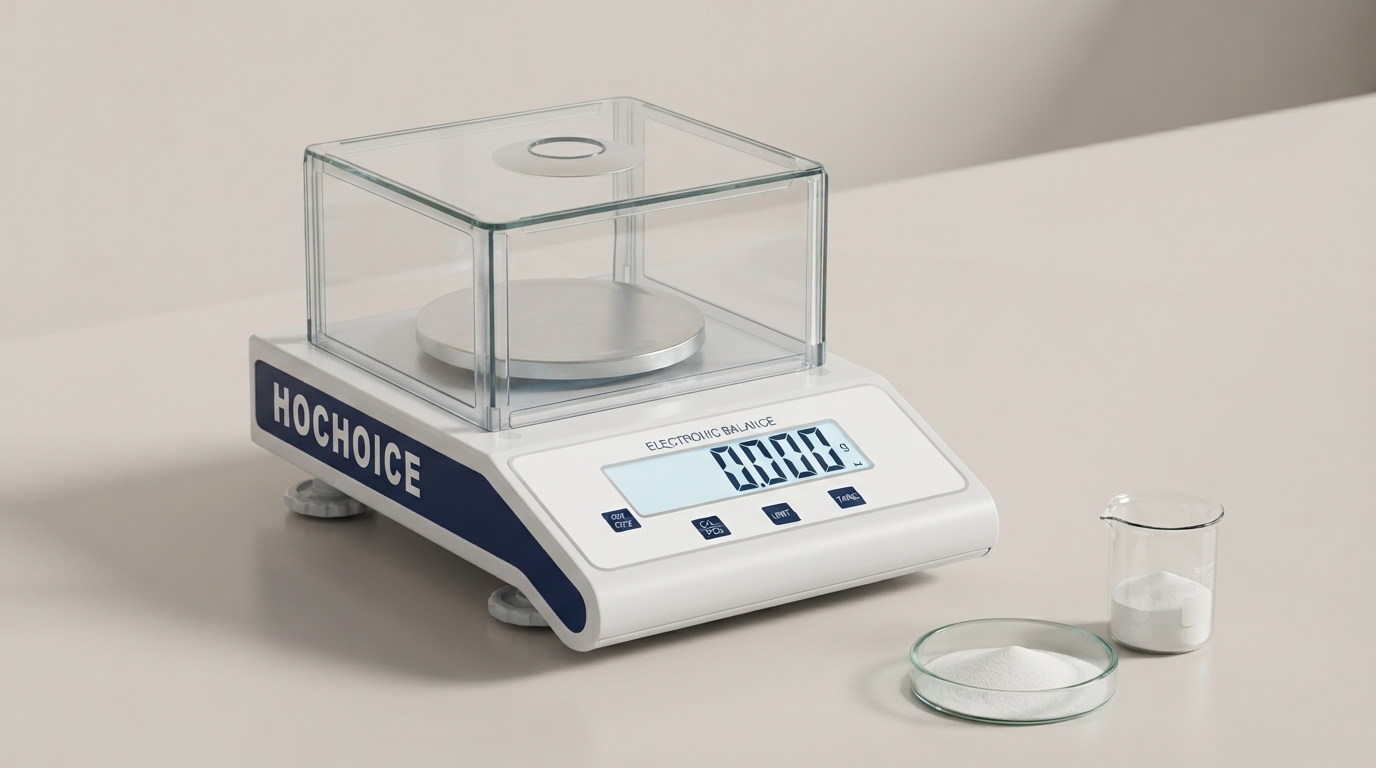
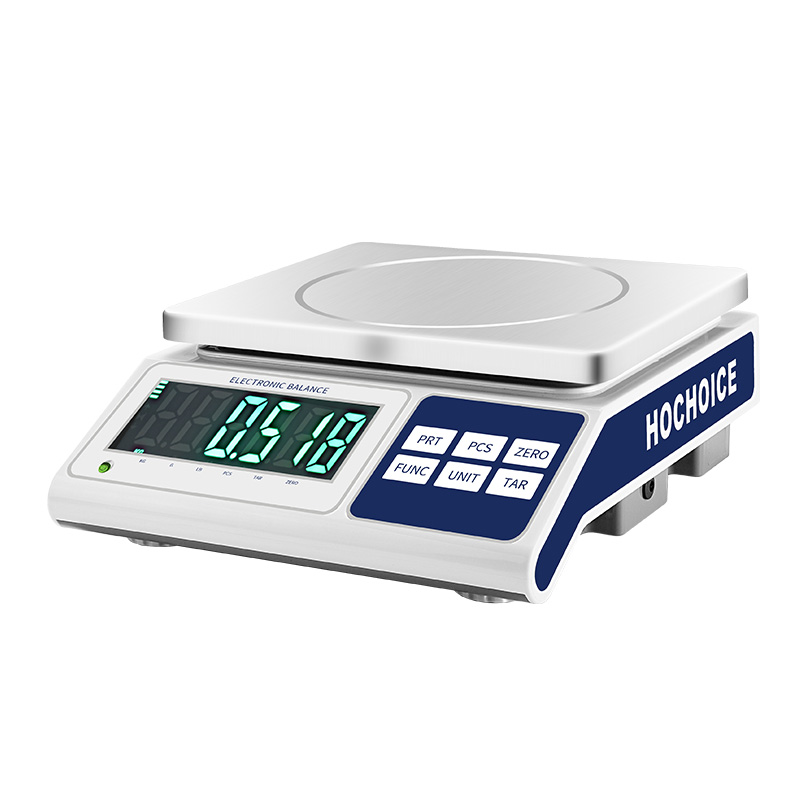
An electronic balance can support density determination when the mass is measured accurately and the sample volume is known or can be determined using an appropriate method. For solid samples, liquid samples, and materials with irregular shapes, the measurement approach may differ.
Density is calculated by dividing mass by volume.
[
\rho=\frac{m}{V}
]
Where:
(\rho) = density
(m) = sample mass
(V) = sample volume
For example, if a solid sample has a mass of 40 g and a volume of 20 cm³, its density is:
[
\rho=\frac{40}{20}=2\ \text{g/cm}^3
]
The result is 2 g/cm³.
The reliability of this calculation depends on both measurements. A highly repeatable mass reading cannot compensate for an inaccurate volume measurement.
For samples with a regular geometric shape, volume can often be calculated from measured dimensions.
For a rectangular block:
[
V=L\times W\times H
]
For a cylinder:
[
V=\pi r^2h
]
After determining the volume, measure the sample's mass using a suitable electronic balance and calculate density.
This method can be practical for solid components with clearly defined shapes and measurable dimensions. Its limitations include dimensional measurement uncertainty, surface irregularities, and difficulty determining the true volume of porous or uneven samples.
For a solid object that can be safely immersed in a suitable liquid, volume may be determined from the amount of liquid displaced.
The basic process is:
Measure the sample mass using the balance.
Determine the initial liquid volume in a suitable graduated vessel.
Immerse the sample completely, avoiding trapped air bubbles.
Record the final liquid volume.
Calculate the displaced volume by subtracting the initial volume from the final volume.
Divide sample mass by displaced volume to calculate density.
This approach can be useful for compatible solid samples that do not dissolve, react with the liquid, or absorb significant amounts of it.
However, reading graduated volume markings can limit precision. For irregular samples or more demanding applications, a suitable displacement or hydrostatic weighing method may be preferable.
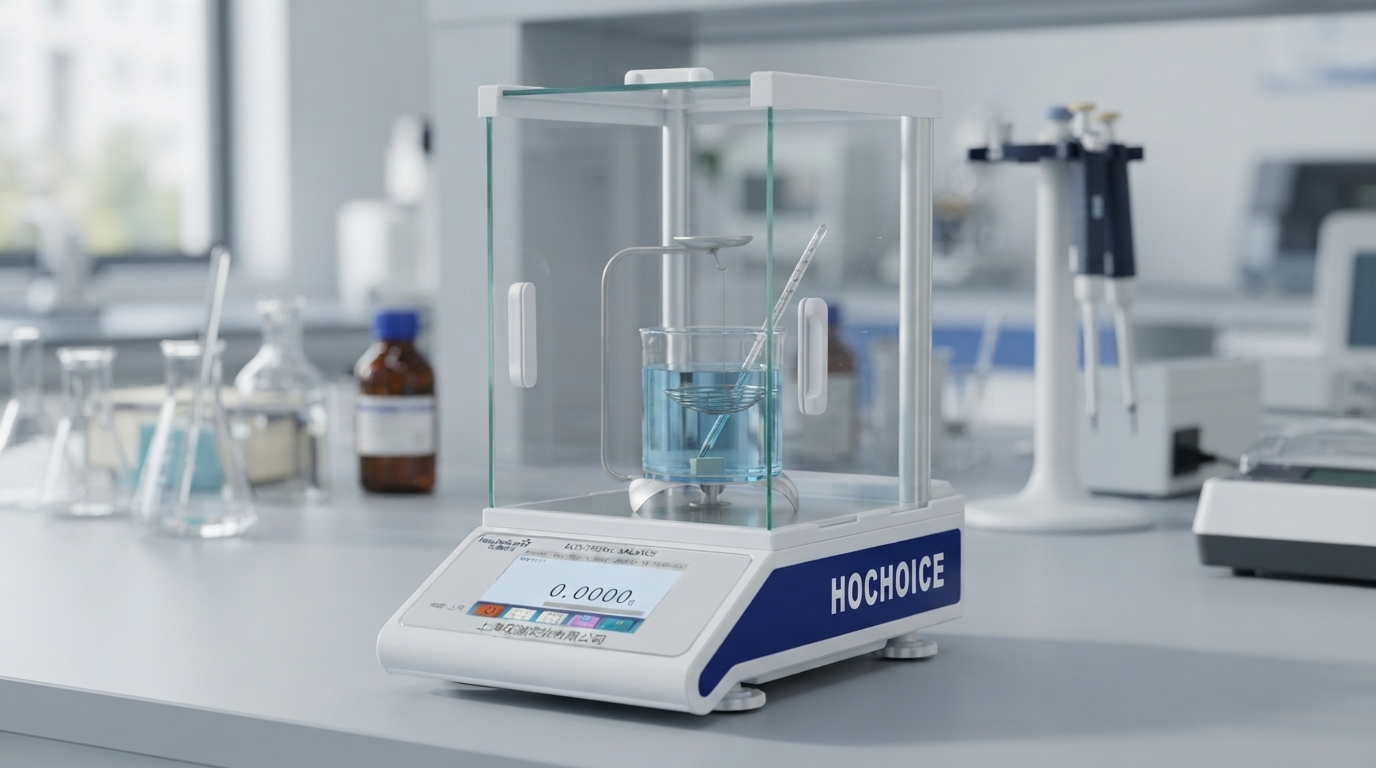
Hydrostatic weighing determines density by comparing a sample's apparent weight in air with its apparent weight while immersed in a liquid of known density.
The buoyancy force acting on the immersed sample is related to the volume of liquid displaced. With appropriate measurements and assumptions, this difference can be used to determine the sample's volume and density.
For a solid sample that is fully immersed without touching the vessel, and where the liquid density is known, a simplified relationship is:
[
\rho_s=\rho_l\frac{m_a}{m_a-m_l}
]
Where:
(\rho_s) = sample density
(\rho_l) = density of the immersion liquid
(m_a) = apparent sample mass in air
(m_l) = apparent sample mass while immersed
This simplified equation assumes that relevant corrections and effects, such as air buoyancy and suspension-wire influence, can be neglected or have been addressed.
For example, suppose a sample measures 50 g in air and 30 g while immersed in a liquid with a density of 1.00 g/cm³.
[
\rho_s=1.00\times\frac{50}{50-30}
=2.50\ \text{g/cm}^3
]
The calculated sample density is 2.50 g/cm³ under these assumptions.
An electronic hydrostatic balance or a compatible balance with a suitable density determination kit can simplify this type of measurement. Confirm that the instrument and accessories support the intended method.
Mass measurement performance: Balance capacity, readability, repeatability, and operating conditions must be suitable for the sample.
Liquid temperature: Liquid density changes with temperature. Use an appropriate density value for the measurement conditions.
Air bubbles: Bubbles attached to an immersed sample can change the apparent buoyancy and produce an incorrect result.
Sample porosity: Porous materials may absorb the immersion liquid or trap air. A suitable method must account for these characteristics.
Suspension and contact effects: In hydrostatic measurements, the sample must not touch the vessel, and the suspension arrangement must be appropriate for the method.
Sample stability: The sample should not dissolve, react, swell, or otherwise change during immersion.
The right instrument depends on the sample mass, required density uncertainty, measurement method, and laboratory workflow.
For routine work involving larger samples, a precision electronic balance may be sufficient when its performance meets the required tolerance. For smaller samples or more demanding measurements, a balance with finer readability and appropriate repeatability may be necessary.
For hydrostatic weighing, compatibility with the required suspension fixture, below-balance weighing arrangement, or density kit is also important. Not every electronic balance supports these configurations.
Before selecting equipment, confirm the required capacity, readability, accessories, operating procedure, and method-specific performance requirements.
Density determination combines accurate mass measurement with a reliable method of determining volume. Electronic balances can support this process through geometric calculations, liquid displacement, or hydrostatic weighing, depending on the sample and the required measurement quality.
By selecting a suitable method, controlling temperature and immersion conditions, and using compatible weighing equipment, laboratories can obtain more consistent density results for material testing and quality control.