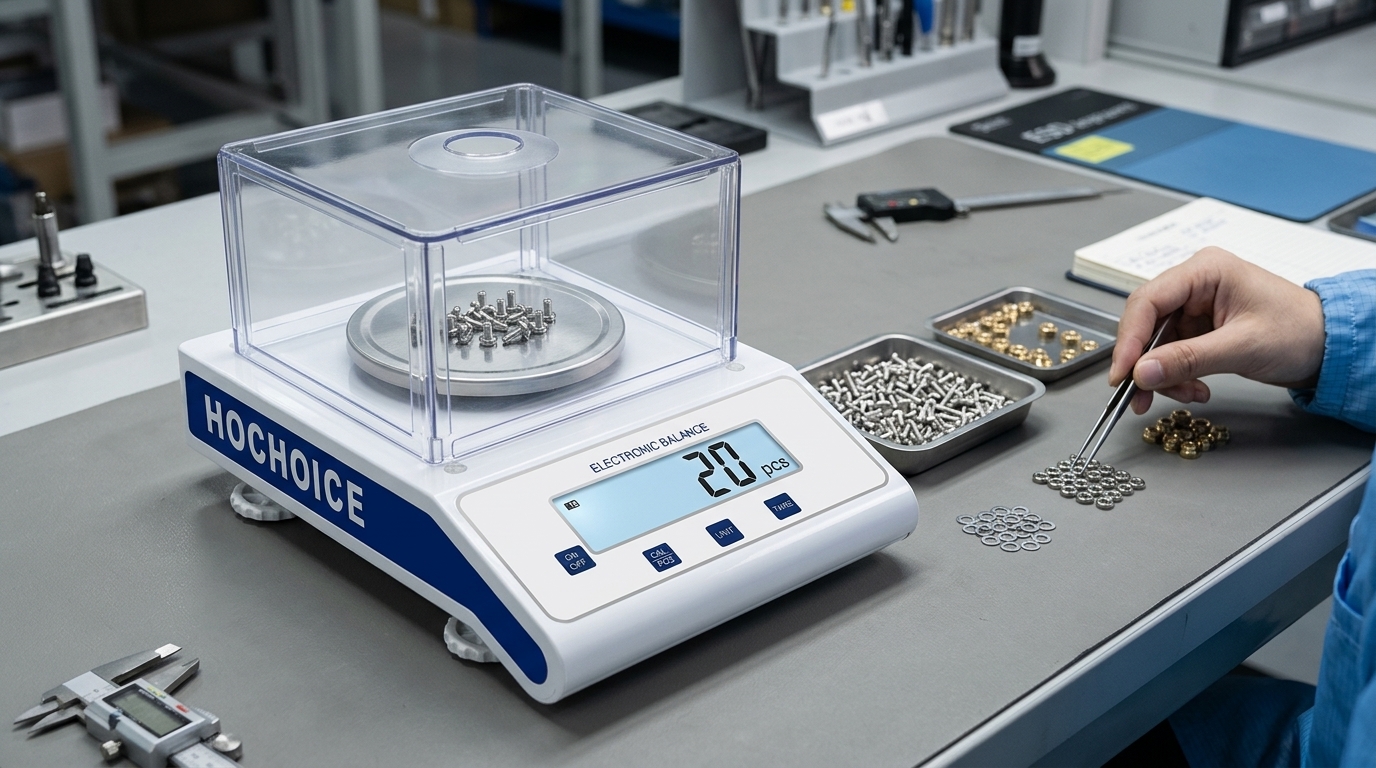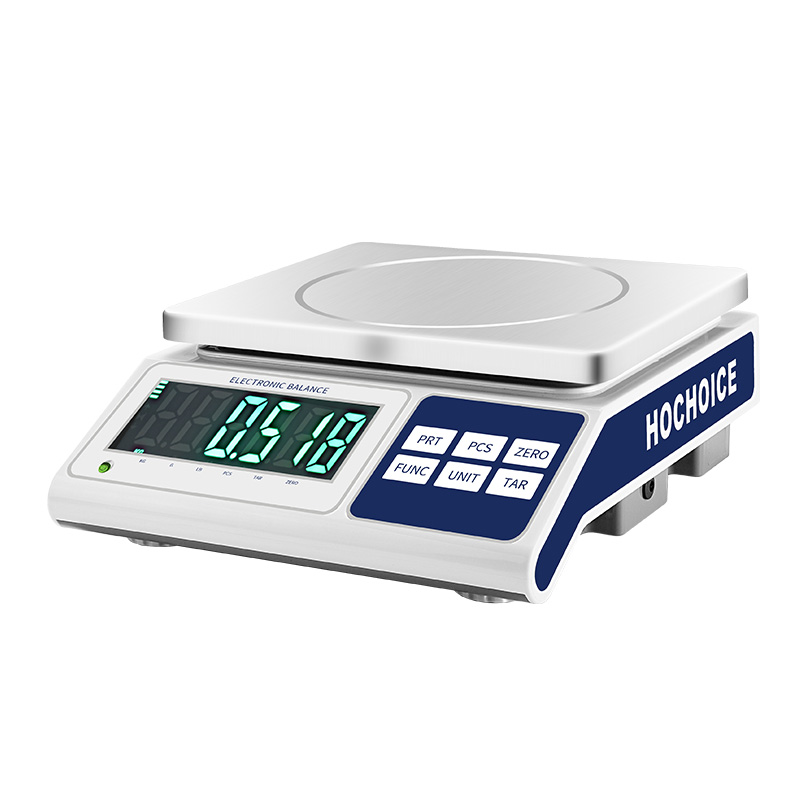

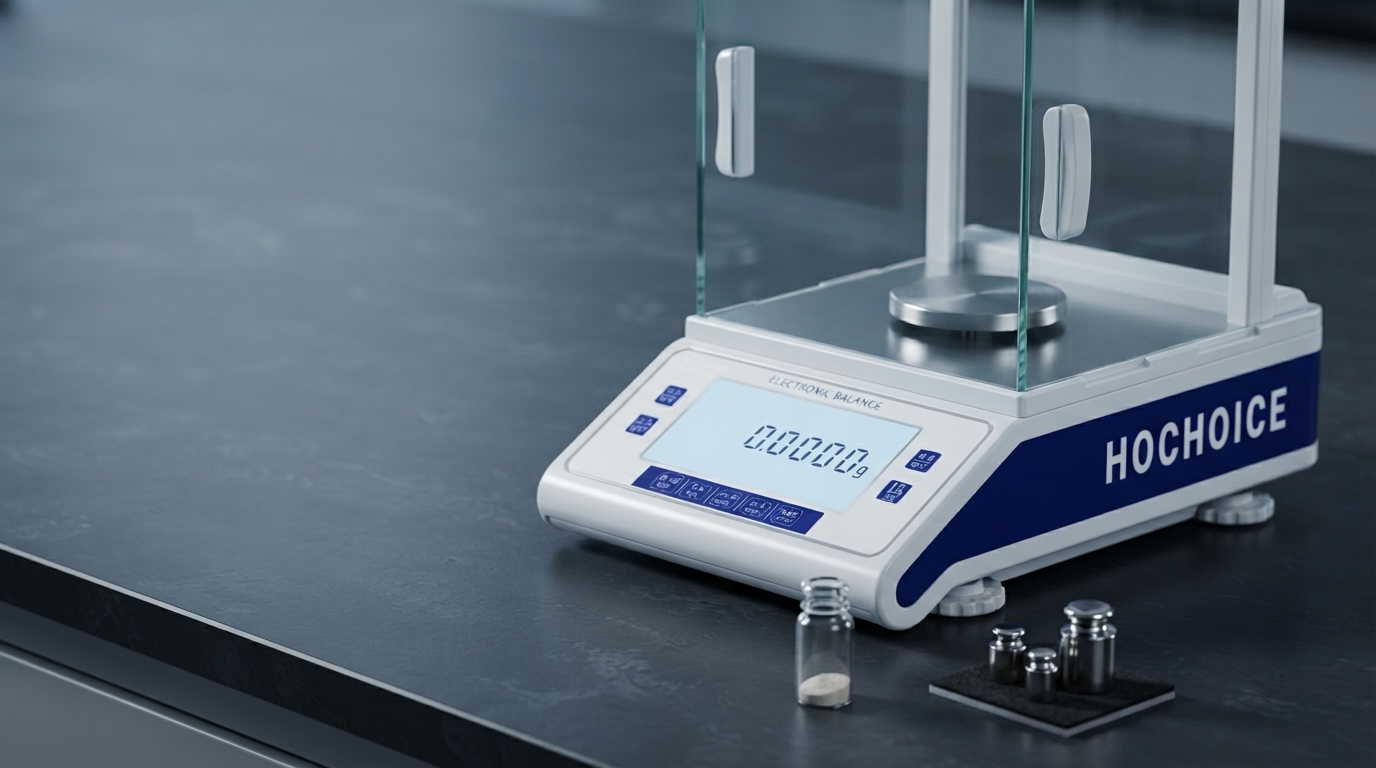
An analytical balance may display several decimal places, but that does not mean every sample can be weighed reliably at the smallest displayed increment.
For laboratories measuring small quantities of powders, chemical reagents, or reference materials, minimum sample weight is an important consideration. It connects the balance's actual performance with the measurement tolerance required by the analytical procedure.
Understanding this concept helps laboratory users choose appropriate equipment and avoid relying on readings that do not meet their required accuracy.
Minimum sample weight refers to the lowest net sample mass that can be weighed while meeting a specified weighing tolerance under defined conditions.
It is not necessarily the same as the smallest number shown on the display.
For example, a balance with 0.0001 g readability displays mass in increments of 0.1 mg. However, its practical minimum sample weight depends on its repeatability, measurement uncertainty, environment, operating procedure, and the required tolerance.
A displayed value is only one part of the performance picture.
Readability describes the smallest increment displayed by the instrument. Repeatability describes how closely repeated measurements of the same mass agree under the same conditions.
These characteristics are related, but they are not interchangeable.
A balance may have fine readability while still showing excessive variation when measuring a very small sample. Drafts, vibration, static electricity, temperature differences, and sample handling can also influence measurement performance.
Consequently, choosing a balance solely because it displays more decimal places can lead to an unsuitable measurement process.
Laboratory weighing guidance emphasizes evaluating balance suitability and uncertainty in the actual working environment.

The same absolute measurement variation represents a larger percentage of a smaller sample.
Consider a simplified example in which the absolute measurement variation is 0.1 mg.
For a 100 mg sample, 0.1 mg represents 0.1% of the sample mass.
For a 10 mg sample, 0.1 mg represents 1% of the sample mass.
The percentage increases as the sample becomes smaller, even though the absolute variation remains unchanged.
This is why minimum sample weight matters in quantitative analysis: the measurement uncertainty must be sufficiently small relative to the mass being measured.
These examples illustrate the relationship mathematically; they are not performance specifications for a particular balance.
A reliable assessment should be based on the balance's performance and the requirements of the intended application.
A practical approach includes:
Define the required tolerance. Determine the maximum acceptable relative weighing error for the method.
Evaluate repeatability. Perform repeated measurements using an appropriate test load and a documented procedure.
Assess the operating environment. Check for vibration, air currents, static effects, temperature changes, and other relevant influences.
Estimate the uncertainty. Use suitable measurement data and the laboratory's approved method to assess uncertainty at the relevant load.
Compare the result with the application requirement. Confirm that the minimum usable sample mass is compatible with the smallest quantity the method requires.
In regulated laboratories, follow the applicable pharmacopoeial requirements and internal quality procedures. For example, USP General Chapter 41 addresses balance performance requirements, while USP General Chapter 1251 provides guidance on weighing using analytical balances. The specific procedure and acceptance criteria should be determined from the current applicable standards and the laboratory's quality system.
Minimum weight is not always a fixed number that remains valid in every environment.
Factors that can influence it include:
Balance repeatability: variation in repeated readings affects the reliability of small-mass measurements.
Installation conditions: vibration and unstable support surfaces can reduce measurement stability.
Air movement: drafts may disturb readings, particularly at high resolution.
Electrostatic charge: charged samples or containers can exert forces that influence the weighing result.
Operator technique: inconsistent placement, handling, or timing can affect repeatability.
Sample properties: moisture absorption, evaporation, or temperature differences may change the sample mass during weighing.
Laboratories should therefore determine whether the balance remains suitable for the intended application under actual working conditions, rather than relying only on nominal specifications.
When selecting an analytical balance, consider the smallest net sample mass you need to measure and the tolerance required by your procedure.
Then evaluate readability alongside repeatability, linearity, capacity, stabilization behavior, environmental conditions, and available performance documentation.
A balance with 0.1 mg readability may be suitable for many routine laboratory applications, but it is not automatically suitable for every sample mass or every analytical method.
For critical work, establish and document a fit-for-purpose assessment before routine use.
Final takeaway: Minimum sample weight links instrument performance to the real requirements of a measurement. Choosing an analytical balance should begin with the sample mass and acceptable uncertainty—not simply the number of decimal places on the display.