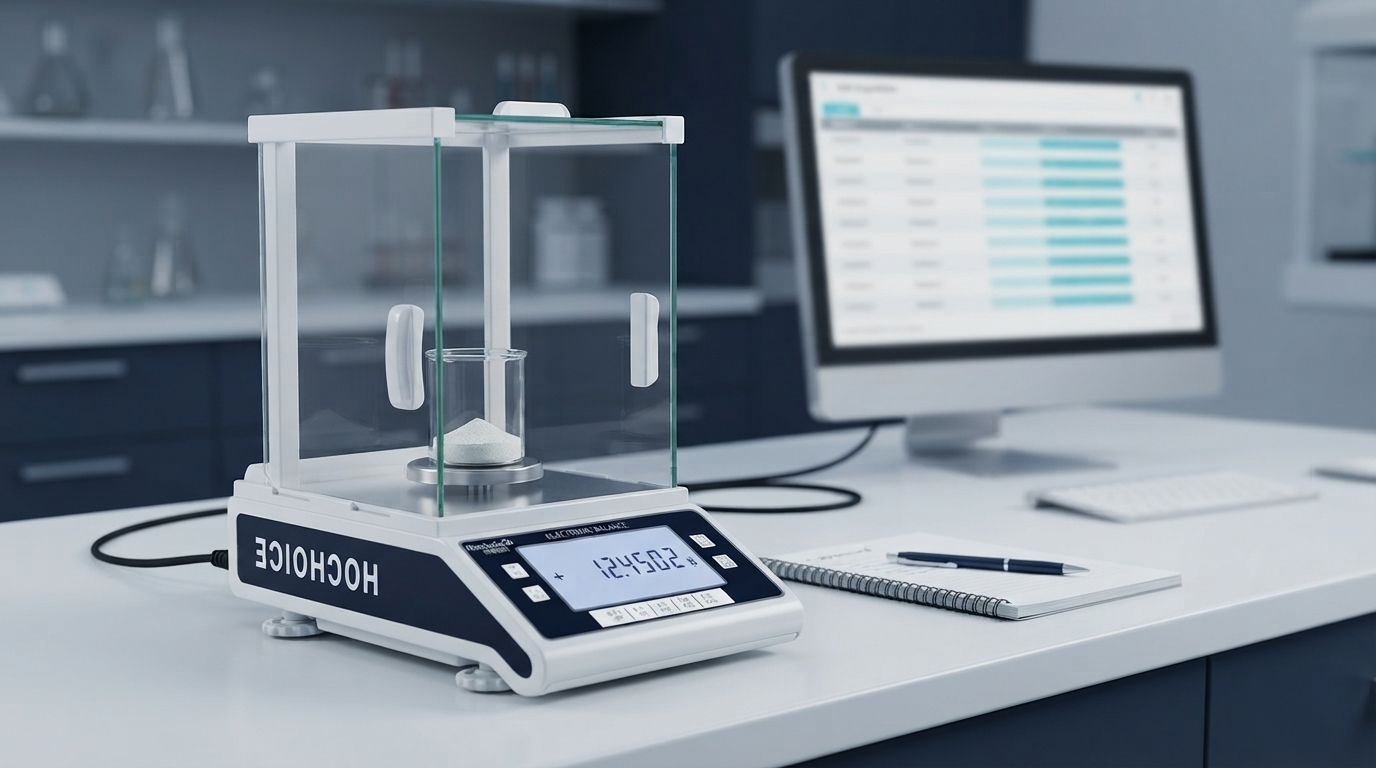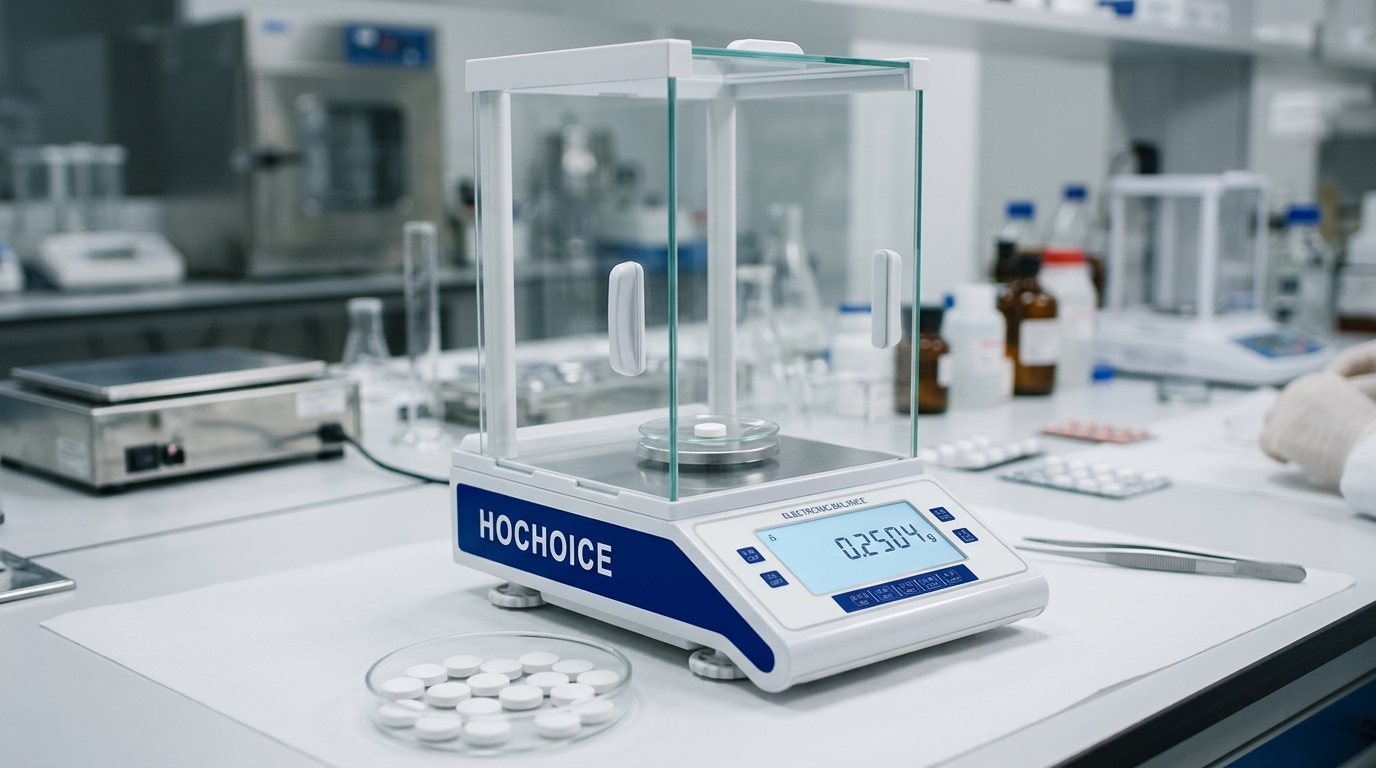

Weighing by difference is a common technique in laboratory sample preparation. Instead of measuring the mass of a material directly in its final container, the operator measures the mass of a source container before and after transferring the required material.
The difference between the two measurements represents the mass transferred.
This approach is useful when transferring powders, reagents, or other materials that are difficult to place directly into a receiving vessel without loss. It can also help determine how much material was actually delivered during a preparation step.
The principle is straightforward.
First, weigh the container holding the material. Next, transfer the required amount into the receiving vessel. Finally, weigh the source container again.
The mass transferred is calculated as:
Mass transferred = Initial container mass − Final container mass
For example, if a source container initially weighs 52.6842 g and weighs 51.9376 g after transfer, the transferred material has a calculated mass of 0.7466 g.
The calculation is based on the difference between two measurements, so both readings and the handling procedure matter.
Weighing by difference is particularly useful when a material is transferred from a bottle, weighing vessel, or other source container.
Typical applications include:
Transferring powdered reagents into a preparation vessel.
Measuring small quantities of solid chemicals.
Handling materials that may remain on a spatula or transfer tool.
Determining the amount of material actually delivered during sample preparation.
The technique should be selected according to the material and the analytical method. It is not automatically suitable for every substance or transfer process.
The balance should provide suitable performance for the expected mass difference.
Consider readability, repeatability, linearity, capacity, and the required measurement uncertainty. The source container must fit on the weighing pan, and its total mass must remain within the balance's rated capacity.
When the transferred amount is very small compared with the mass of the source container, the measurement requirements become especially important. A balance with insufficient performance may not distinguish the mass difference reliably.
Readability alone is not enough to establish suitability. Evaluate the complete instrument performance over the relevant weighing range.
Use containers that are clean, dry, and compatible with the material.
Before weighing, confirm that the source container is stable on the pan and that its lid or closure is handled consistently. If the procedure requires weighing with a cap, use the same arrangement for both measurements.
Prepare the receiving vessel so that the transfer can be completed without unnecessary movement or spillage.
For moisture-sensitive or volatile materials, follow the relevant method for limiting exposure during transfer.
Record the initial mass of the source container. Transfer the required material into the receiving vessel using an appropriate tool and handling technique.
Avoid spilling material onto the balance, work surface, or outside of the receiving vessel. Keep the transfer process consistent and follow the laboratory's safety requirements.
After transfer, return the source container to the balance in the same configuration used for the initial measurement. Allow the displayed reading to stabilize before recording the final mass.
Weighing by difference involves two mass readings. Changes between the initial and final measurements can influence the calculated result.
Potential influences include:
Material remaining on the transfer tool.
Moisture absorption or loss during handling.
Evaporation of volatile substances.
Material spilled outside the receiving vessel.
Changes in container configuration between measurements.
Environmental disturbances affecting balance readings.
If the source container loses material for reasons other than the intended transfer, the calculated mass may not represent the amount delivered to the receiving vessel.
Do not record only the calculated difference when the laboratory procedure requires traceability.
Retain the initial mass, final mass, calculated transferred mass, sample identification, container identification, balance identification, date, and operator details as required.
Recording both readings makes it easier to review unexpected results and investigate discrepancies.
Weighing by difference is a practical technique for determining the amount of material transferred from one container to another. It is especially useful when direct weighing in the receiving vessel is inconvenient or when the actual transferred mass needs to be established.
Reliable results depend on suitable balance performance, consistent container handling, careful transfer, and accurate recording of both measurements.