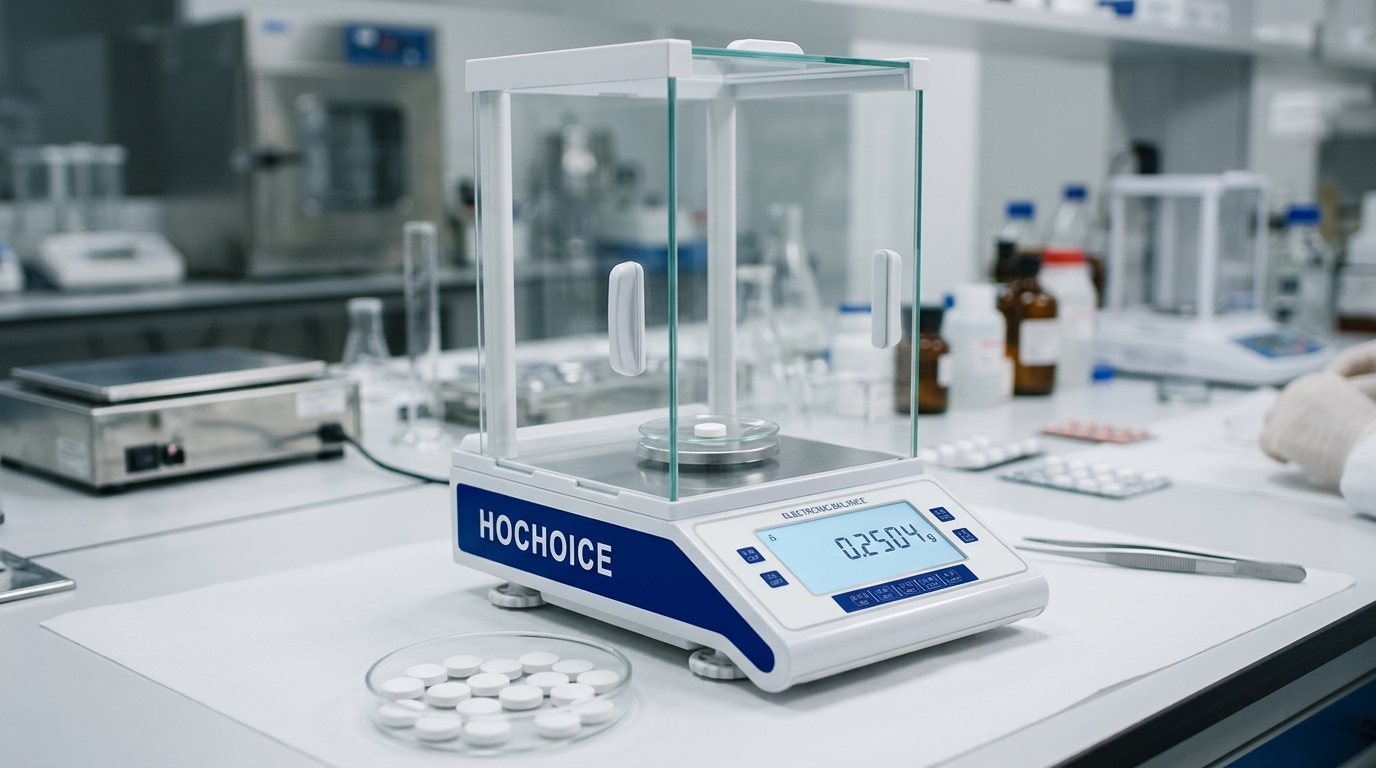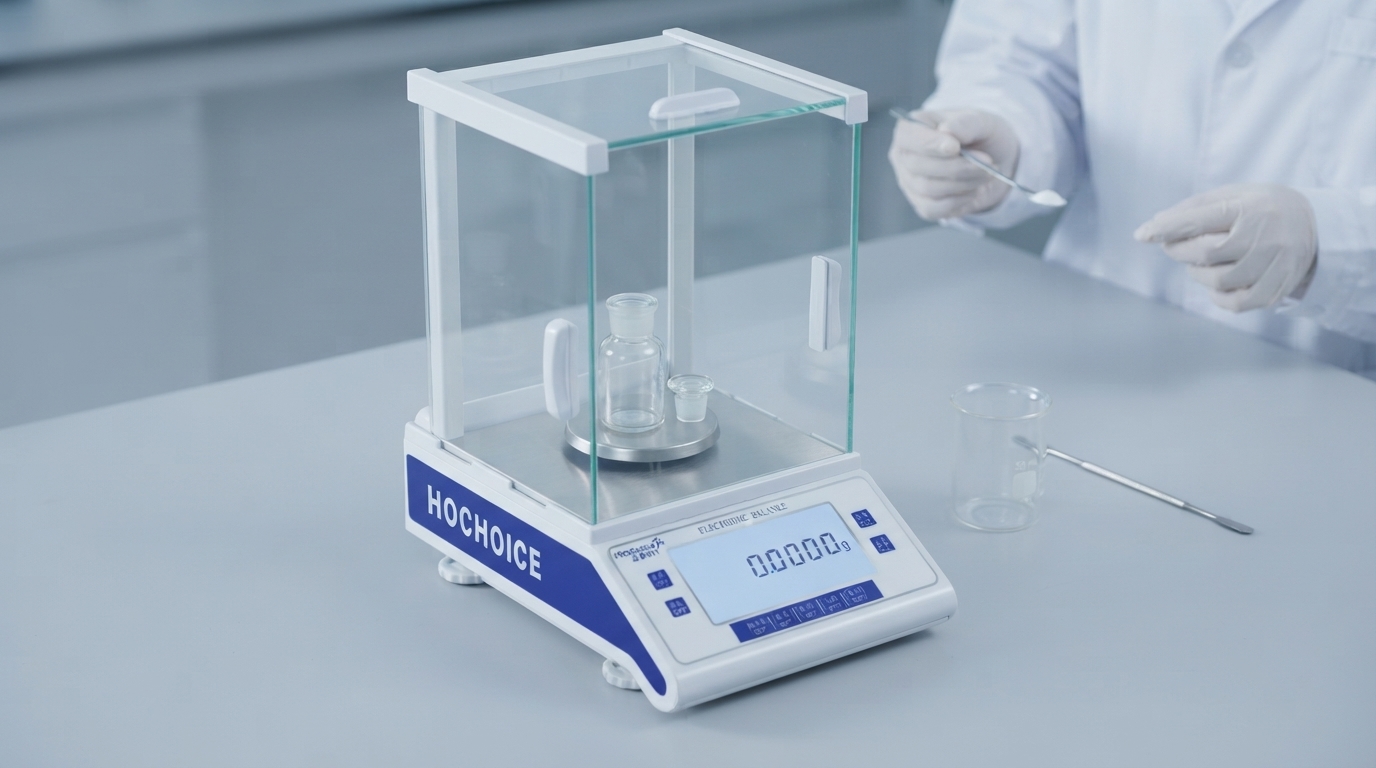

Laboratory weighing results are often used to support calculations, analytical reports, product inspections, and quality decisions. For these results to be useful, laboratories need to know not only what value was measured, but also which sample was weighed, when the measurement occurred, and how the result was recorded.
Data integrity and traceability help laboratories maintain confidence in measurement records and investigate unexpected results.
An electronic balance is an important part of this process, but reliable data management also depends on procedures, software, operator practices, and record controls.
A mass value has limited practical meaning if it cannot be connected to the correct sample.
Before weighing, establish a clear sample identification system. Depending on the application, this may include a sample number, batch number, material code, supplier reference, or test request identifier.
Ensure that the sample identity remains associated with the measurement throughout the process.
For laboratories handling multiple samples, a consistent labeling and identification procedure helps reduce the risk of mixing results.
A useful weighing record should contain enough information to understand and review the measurement.
Depending on the laboratory's procedure, relevant information may include:
Sample identification and material description.
Measured mass and unit.
Balance identification.
Measurement date and time.
Operator identification.
Relevant preparation or handling details.
Any required review or approval information.
The exact record requirements depend on the laboratory's quality system and applicable regulations.
The value shown on an electronic balance is only one part of the measurement record.
A complete record may also need to identify the sample, instrument, operator, time, method, and any relevant processing or calculation.
Copying a displayed number into a spreadsheet without maintaining its connection to the original sample or measurement context can create traceability problems.
Establish a process that preserves the relationship between the displayed result and its associated laboratory record.
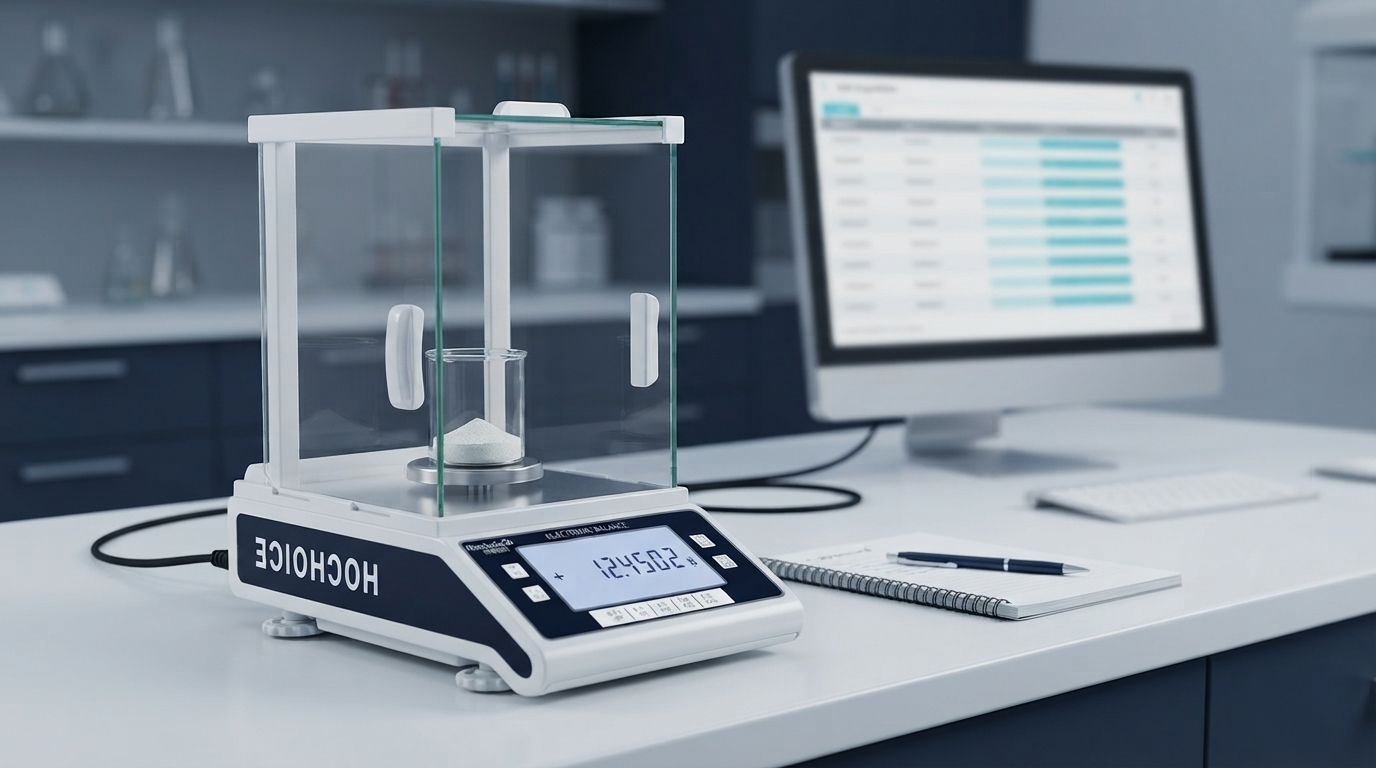
Some electronic balances provide communication interfaces that allow measurement values to be transferred to external devices or software.
Depending on the model, these options may include serial communication or other supported interfaces.
Before integrating a balance into a laboratory system, confirm:
Whether the instrument supports the required interface.
Whether the receiving software is compatible.
How sample identification is associated with the transmitted result.
Whether units and decimal places are transferred correctly.
How failed or incomplete transfers are detected.
Whether the system retains the information required by the laboratory.
The availability of a communication interface does not automatically provide a validated data management system.
Manual transcription can introduce errors when operators transfer readings from the balance display to a paper form or computer.
A clearly defined recording procedure helps reduce these risks.
Use consistent units and decimal-place conventions. Review entries for incorrect digits, misplaced decimal points, missing sample identifiers, and unit conversion mistakes.
For critical measurements, the laboratory may require an independent review or another documented verification step.
A traceable record should make it possible to understand what was originally recorded and how any later correction was made.
Laboratories should define how records are reviewed, corrected, approved, retained, and protected from unauthorized changes.
If electronic systems are used, access permissions, audit trails, backups, and retention arrangements should be evaluated according to the applicable quality and regulatory requirements.
Do not assume that a spreadsheet or simple data connection automatically meets formal electronic-record requirements.
Measurement traceability also depends on knowing which instrument produced the result.
Assign a unique identification to each balance and maintain the relevant equipment records. Depending on the quality system, these may include calibration information, performance checks, service history, and maintenance records.
When an instrument is replaced, moved, or serviced, update the relevant equipment documentation so that historical measurements can still be interpreted correctly.
Even a well-designed electronic system can produce unreliable records if operators do not understand the procedure.
Training should cover sample identification, balance operation, data recording, review requirements, and how to respond to missing or unexpected results.
Operators should understand that data integrity is part of the weighing process, not an administrative task performed after measurement.
Laboratory weighing data integrity depends on connecting every result to the correct sample, instrument, operator, and measurement procedure.
Clear records, controlled data transfer, careful review, appropriate electronic-system controls, and operator training help improve traceability.
By treating data management as part of the complete weighing workflow, laboratories can make measurement records easier to review, reproduce, and defend during quality assessments.